
Illusion of knowledge
Knowledge, in its essence, is the accumulation of facts, information, and skills acquired through experience or education. It is the understanding of a subject or an area. However, knowledge is inherently limited. It is confined to what has been discovered, what has been experienced, and what has been taught. It is a tool that helps us navigate the world, but it is not the world itself.
Knowledge can bring about advancements in our physical world, it can lead to technological progress and scientific discoveries. However, it is important to understand that these are not creations in the truest sense. They are extensions, expansions, or modifications of what already exists. They are born out of the intellect, which, while powerful, is limited in its scope.

Our consciousness, which is what we are, is made up of our reactions, beliefs, prejudices, fears, and insecurities. This consciousness is shared with all human beings. We all experience pain, pleasure, fear, and a multitude of other emotions. We all have beliefs, opinions, and prejudices. In this sense, we are not individuals. We are part of a collective consciousness, a shared human experience.
This realization can be unsettling. It challenges our sense of individuality, our belief that we are separate from the rest of mankind. However, it is only by acknowledging this shared consciousness that we can begin to understand the true nature of creativity.
Creativity is not the product of thought or knowledge. It is not an extension or modification of what already exists. True creativity is the birth of something entirely new, something that has never existed before. It is the manifestation of the unknown, the unexplored, the undiscovered.
Creativity is not limited to the arts or sciences. It is present in every aspect of life. It is in the way we perceive the world, the way we interact with others, the way we respond to challenges. It is in our ability to transcend our limitations, to break free from our conditioned responses, to see beyond the known.
We are human beings first, not just professionals or individuals defined by our roles in society. As human beings, we have the capacity for true creativity. However, to tap into this creativity, we must learn the art of living.
The art of living is not about accumulating knowledge or achieving success. It is about understanding ourselves, our shared consciousness, and our place in the world. It is about transcending our limitations, breaking free from our conditioned responses, and embracing the unknown. It is about living in the present, fully aware and fully engaged.
In conclusion, knowledge, while valuable, can never be creative in the truest sense. True creativity lies beyond knowledge, in the realm of the unknown. It is a manifestation of our shared consciousness, our human experience. It is the essence of the art of living.
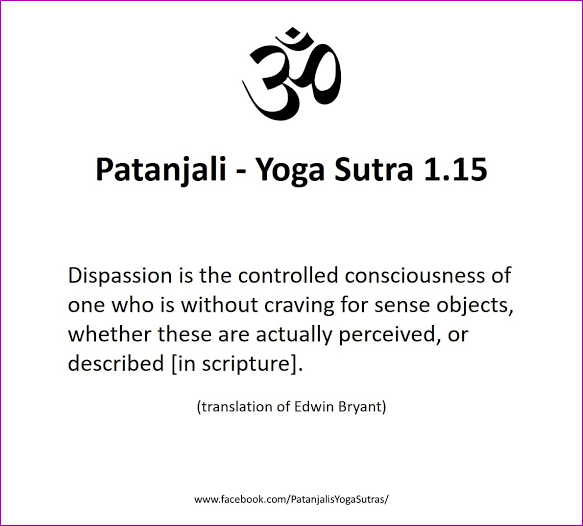
Patanjali Yoga Sutra: Detachment is the perception of mastery or control over the craving for objects seen or heard
Sutra 1.15: “Dṛṣṭānuśravika-viṣaya-vitṛṣṇasya vaśīkārasaṃjñā vairāgyam”
Translation: “Detachment is the perception of mastery or control over the craving for objects seen or heard.”
In Sutra 1.15 of Patanjali’s Yoga Sutras, the concept of vairagya, or detachment, is introduced. Vairagya is an essential aspect of the yogic path and plays a significant role in achieving liberation and inner freedom. This sutra explains that detachment is the ability to master or control the desires and cravings for external objects that are seen or heard.
Detachment does not imply a complete withdrawal from the world or a rejection of worldly possessions. It is not about denying ourselves pleasure or living an ascetic life. Instead, it is about developing a balanced and healthy relationship with the objects and experiences of the world.
The sutra uses the term “dṛṣṭānuśravika-viṣaya” to describe the objects of perception that can trigger cravings. These objects refer to the things we see and hear in our daily lives. It could be material possessions, sensory pleasures, or even emotional attachments. The sutra suggests that the perception of mastery or control over these cravings leads to detachment.
Detachment is not indifference or apathy towards the world. It is an inner state of freedom where we are no longer bound by our desires and attachments. It is the ability to observe and engage with the world without being consumed by it. We become aware of our cravings, but we do not let them dictate our thoughts, actions, and emotions.
The practice of detachment involves cultivating a deep sense of self-awareness and mindfulness. We observe our desires and attachments without judgment or identification. We become witnesses to our thoughts, emotions, and the external objects that trigger them. Through this observation, we gain insight into the impermanent and transient nature of these cravings. We begin to see that clinging to them only leads to suffering and bondage.
Detachment does not mean suppressing or repressing our desires. It is about understanding their nature and the underlying causes of our attachment. We examine our motivations, expectations, and fears that drive our cravings. By shining the light of awareness on these patterns, we can start to loosen their grip on us.
Practicing detachment requires inner discipline and discernment. It is about making conscious choices and aligning our actions with our deeper values and aspirations. We learn to differentiate between genuine needs and superficial wants. We develop the ability to let go of what no longer serves our growth and well-being.
Detachment is not an overnight achievement but a gradual process that unfolds over time. It requires patience, perseverance, and self-reflection. As we continue to cultivate detachment, we experience a sense of inner freedom and peace. We are no longer at the mercy of external circumstances or the demands of our desires. We find contentment and fulfillment within ourselves, independent of external conditions.
The practice of detachment also deepens our understanding of the transient nature of the world. We realize that everything is impermanent and subject to change. By letting go of our attachments, we open ourselves to the flow of life and embrace the present moment with equanimity. We become less affected by the ups and downs of life and find a sense of stability and serenity within.
Through the practice of detachment, we free ourselves from the constant cycle of desire and dissatisfaction. We gain clarity, inner peace, and the ability to navigate life’s challenges with grace and resilience.
Detachment does not mean that we become detached from our responsibilities or relationships. It is not about withdrawing from the world or becoming indifferent to the suffering of others. Instead, it is a state of being where we are no longer enslaved by our desires and attachments. We can fully engage in life while remaining grounded in our own inner center.
Practicing detachment requires self-awareness and mindfulness. It starts with observing our thoughts, emotions, and desires without judgment or attachment. We cultivate the ability to detach ourselves from the stories and narratives that we create around these desires. We begin to see them as passing phenomena, arising and dissolving in the field of awareness.
Detachment also involves letting go of our identification with external roles, possessions, and achievements. We recognize that our true essence is not defined by these external factors. We connect with the unchanging core of our being that is beyond the transient realm of form.
One of the key aspects of detachment is developing non-attachment to outcomes. We learn to release our attachment to specific results and surrender to the natural flow of life. This does not mean that we stop setting goals or making efforts. It means that we detach ourselves from the need for a particular outcome to define our happiness and well-being. We learn to trust in the inherent intelligence of the universe and have faith that everything unfolds as it should.
Detachment also involves cultivating compassion and unconditional love. When we are not caught up in our own desires and attachments, we can truly empathize with others and offer support without expecting anything in return. We develop a deep sense of interconnectedness and recognize that we are all part of the same tapestry of life.
In the journey of detachment, challenges may arise. We may encounter resistance from our ego, fear of the unknown, or societal conditioning that emphasizes attachment and accumulation. It requires courage and a willingness to question our beliefs and conditioning. But as we continue to practice detachment, we gradually break free from the chains of attachment and experience a newfound sense of liberation.
The practice of detachment is not a destination but a lifelong journey. It is a continuous process of self-discovery and inner transformation. It requires patience, self-compassion, and a commitment to self-awareness. As we deepen our practice, we become more attuned to the present moment and the subtle workings of our mind.
Patanjali Yoga Sutra: Practice becomes firmly grounded when it is attended to for a long time, without interruption, and with sincere devotion
Sutra 1.14: “Sa tu dīrgha-kāla-nairantarya-satkārāsevito dṛḍha-bhūmiḥ”
Translation: “Practice becomes firmly grounded when it is attended to for a long time, without interruption, and with sincere devotion.”
In the Yoga Sutras of Patanjali, Sutra 1.14 highlights the importance of consistent and dedicated practice on the path of yoga. It emphasizes that true progress and transformation can only be achieved when we approach our practice with long-term commitment, unwavering dedication, and sincere devotion.
The journey of yoga is not a quick fix or an instant solution to our problems. It is a lifelong process of self-discovery, self-realization, and spiritual growth. Sutra 1.14 reminds us that to truly benefit from our practice, we must cultivate a strong foundation, rooted in regular and uninterrupted effort.

The first aspect mentioned in the sutra is “dīrgha-kāla” or “long time.” This highlights the need for patience and perseverance in our practice. Yoga is not about achieving quick results or immediate gratification. It requires consistent effort over an extended period. Just as a seed takes time to grow into a fully blossomed flower, our practice needs time to unfold and bear fruit. It is through sustained practice that we develop strength, flexibility, concentration, and inner awareness.
The next aspect is “nairantarya” or “without interruption.” This emphasizes the importance of maintaining continuity in our practice. It is not enough to practice sporadically or only when it is convenient. We must establish a regular routine and make our practice a priority in our daily lives. By committing to consistent practice, we create a steady momentum and build a solid foundation for our spiritual growth. It is through the regularity of our practice that we begin to integrate the teachings of yoga into our daily existence.
The third aspect mentioned is “satkārāsevito” or “with sincere devotion.” This points to the attitude with which we approach our practice. It is not merely going through the motions mechanically, but rather cultivating a deep reverence and love for the practice. It is an acknowledgment that our practice is sacred and transformative. When we approach our practice with sincere devotion, we open ourselves to the wisdom and guidance that it offers. We engage with our practice wholeheartedly, bringing an attitude of humility, gratitude, and reverence.
The final aspect of the sutra is “dṛḍha-bhūmiḥ” or “firmly grounded.” This refers to the stability and solidity that we develop through consistent and devoted practice. As we continue our practice over time, we establish a strong foundation within ourselves. We become anchored in the present moment, rooted in our inner strength and clarity. Our practice becomes a source of stability amidst the ever-changing nature of life.
Sutra 1.14 reminds us that true transformation occurs when our practice becomes an integral part of our being. It is not something separate from our daily lives but an embodied experience that permeates every aspect of our existence. Through long-term, uninterrupted, and devoted practice, we begin to witness profound changes within ourselves. We develop resilience, inner peace, self-awareness, and a deep connection to our true nature.
To illustrate the significance of Sutra 1.14, let us consider the analogy of a tree. A tree starts as a tiny seed, and with consistent watering, nourishment, and care, it grows into a majestic tree with strong roots and expansive branches. Similarly, our practice is like the seed that, when nurtured with long-term commitment, becomes firmly grounded and blossoms into the full expression of our potential.
When we approach our practice with dedication and sincerity, we embark on a profound journey of self-discovery. We begin to peel away the layers of conditioning, limitations, and false identifications that hinder our growth. With each practice, we cultivate awareness, mindfulness, and inner stillness. We develop a deeper understanding of ourselves, our patterns, and our reactions. Through the consistent exploration of yoga asanas, pranayama, meditation, and self-reflection, we unlock the dormant potential within us.
Consistent practice provides us with a steady anchor amidst the storms of life. It becomes a refuge, a sanctuary where we can retreat to find solace, balance, and inner peace. Regardless of the external circumstances, our practice remains a constant source of support and guidance. It reminds us of our inner strength and resilience, enabling us to navigate challenges with grace and equanimity.
Moreover, uninterrupted practice allows us to experience the transformative power of yoga on a deeper level. It allows us to dive into the depths of our being, exploring the realms of body, mind, and spirit. Through sustained practice, we begin to dissolve the barriers that separate us from our true essence. We cultivate a direct connection with our inner wisdom, intuition, and authentic self. The practice becomes a gateway to self-realization and the realization of our interconnectedness with all beings.
Sincere devotion infuses our practice with purpose and meaning. It is the heart’s offering, a dedication to our own growth and the well-being of all. Devotion brings a sense of sacredness to our practice, reminding us that it is not merely a physical exercise or a routine, but a sacred communion with the divine within and around us. It deepens our connection to the teachings, the lineage, and the spiritual essence that underlies yoga.
Through sincere devotion, we cultivate an attitude of gratitude and humility. We acknowledge the immense blessings that our practice brings and approach it with reverence. We recognize that we are part of a larger tapestry of seekers and practitioners throughout history. We honor the wisdom passed down by our teachers and ancestors and hold the intention to continue the lineage with integrity and authenticity.
As we engage in consistent, uninterrupted, and devoted practice, we begin to experience the transformative power of yoga. We witness the gradual dissolution of the ego, the dissipation of limiting beliefs, and the expansion of our consciousness. We awaken to the interconnectedness of all beings and the interplay between the individual and the universal. Our practice becomes a vehicle for self-transcendence and self-realization.
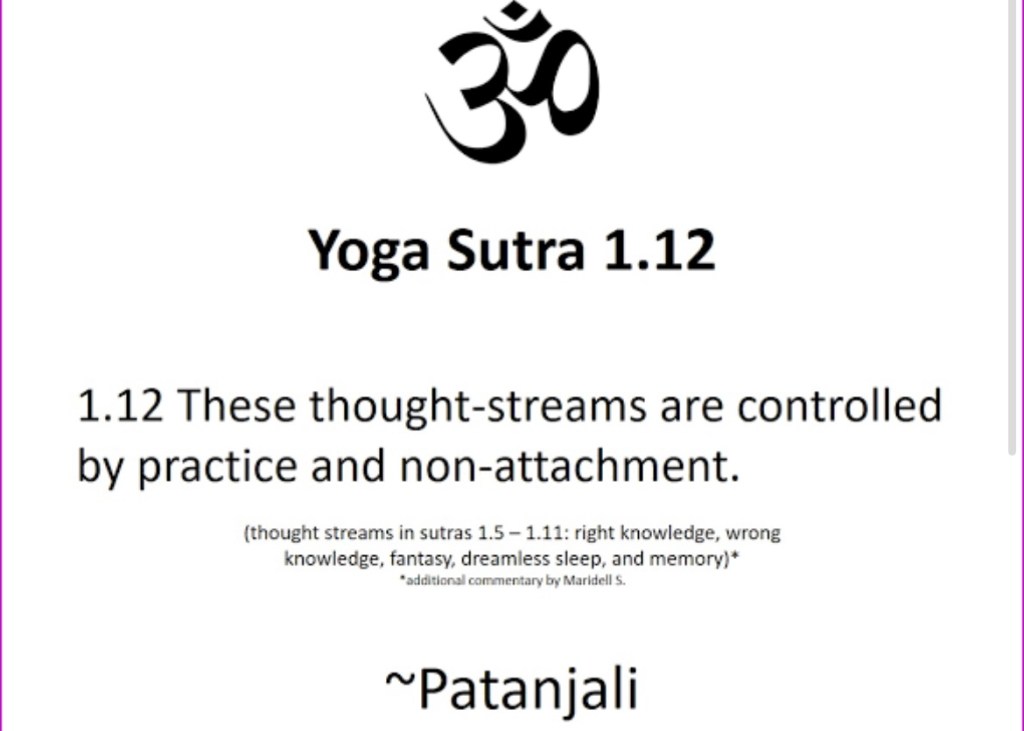
Patanjali Yoga Sutra: Abhyāsa-vairāgyābhyāṁ tan-nirodhaḥ
Sutra-12: अभ्यासवैराग्याभ्यां तन्निरोधः।
(Translation: Abhyāsa-vairāgyābhyāṁ tan-nirodhaḥ)
This translates to: “The cessation of all mental modifications can be achieved by practice and non-attachment.”
1. Abhyasa (Practice)
The first part of Sutra-12 mentions “Abhyasa” which directly translates to practice. The context in which it is used here refers to the practice of controlling and focusing the mind. It signifies persistent effort in a disciplined and dedicated manner. Just as physical skills, such as playing a musical instrument, require regular and consistent practice to master, so too does the calming and focusing of the mind.
By this, Patanjali suggests that to master our thoughts and control our mind, we must commit to persistent practice, to gently direct our attention back whenever it wanders. Over time, this practice can lead to deeper concentration, greater mindfulness, and, ultimately, a state of meditation.
2. Vairagya (Non-Attachment)
The second part of the sutra talks about “Vairagya” or non-attachment. Vairagya doesn’t denote a physical abandonment of worldly possessions or relationships, but it refers to an inner state of freedom from desires and attachments. It is the ability to be in the world, fully engaged, yet not bound by it.
It requires an understanding of the transient nature of all things, a recognition that clinging to the impermanent will invariably lead to suffering. By practicing Vairagya, we learn to enjoy the world around us without becoming entangled in it, to be at peace regardless of circumstances, and to maintain equanimity in all situations.
The Interplay of Abhyasa and Vairagya
Patanjali proposes that the mind’s modification and the attainment of inner tranquillity require both Abhyasa and Vairagya to work in conjunction. While Abhyasa provides the mind with the discipline it requires to maintain focus and concentration, Vairagya allows the mind to let go of distracting desires and attachments. When these two are practiced in tandem, they help one to quiet the mind and lead to a state of stillness and equanimity.
Patanjali’s Yoga Sutra-12 can be a potent guide to living a fulfilled life. In our daily existence, it encourages us to embrace a disciplined practice of mental focusing – be it through meditation, prayer, or mindfulness. Simultaneously, it advocates for a detached interaction with worldly matters, teaching us not to be swayed by success or failure, and to find peace amidst chaos.
It is a challenging yet liberating practice that can lead to increased mental clarity, reduced stress, and ultimately, a deeper understanding of oneself and the world.
Applying the Sutra in Your Yoga Practice
The teaching of this sutra can be reflected upon during asana (physical postures), pranayama (breathing exercises), and dhyana (meditation) practices. Here are some ways to do this:
- Asana Practice: While practicing yoga poses, make it a regular habit (Abhyasa) to observe your body’s alignment, breath, sensations, and thoughts. This will help in training your mind to focus and be present. Simultaneously, cultivate Vairagya by not becoming attached to any specific outcome, such as perfecting a pose. Instead, appreciate the journey of progressing in each posture.
- Pranayama Practice: Regular practice of pranayama techniques can enhance concentration and control of the mind. While practicing, cultivate Vairagya by accepting where you are in your practice, not striving for more breaths or deeper inhalations and exhalations. Accept the flow of your breath as it is.
- Meditation Practice: Meditation is the most direct form of practice (Abhyasa) for achieving the mind’s control. When you meditate, practice Vairagya by not attaching to or judging any thoughts or feelings that arise. Observe them and let them pass like clouds in the sky.
Guilt Trap of duality from Zen Perspective
In our everyday lives, we are constantly faced with dualistic concepts. Society, culture, and personal beliefs often categorize experiences, actions, and people into binaries of right and wrong, good and bad. These divisions can create a sense of judgment and guilt when we perceive ourselves or others as falling short of the ideals and standards set by these dualistic frameworks.
However, from a Zen perspective, these dualities are ultimately illusory. They are constructs of the mind, products of our conditioning and cultural influences. The truth of existence is not confined to these polarities, but rather transcends them. In Zen, we aim to penetrate the illusion of duality and recognize the interconnectedness and interdependence of all phenomena.

Guilt arises when we judge ourselves or others based on these dualistic constructs. We feel remorse or regret for actions or thoughts that are deemed morally or ethically wrong. This guilt traps us in a cycle of self-judgment and self-condemnation, creating inner turmoil and preventing us from experiencing true freedom and liberation.
In Zen practice, we are encouraged to investigate the root of guilt and the underlying assumptions and beliefs that give rise to it. We inquire into the nature of the self, asking: Who is the one feeling guilty? What is the source of this guilt? By bringing awareness to these questions, we can begin to unravel the layers of conditioning and delusion that perpetuate the guilt trap.
One of the key teachings in Zen is the concept of non-duality, or the realization that there is no inherent separation between self and other, good and bad, right and wrong. This understanding allows us to transcend the dualistic framework and embrace the inherent wholeness and interconnectedness of existence.
To transcend the guilt trap, we must cultivate self-compassion and self-acceptance. Rather than clinging to rigid notions of right and wrong, we develop an attitude of non-judgmental awareness towards our thoughts, emotions, and actions. We recognize that we are imperfect beings on a path of growth and learning, and that mistakes are inevitable in the process.
In Zen, we also emphasize the importance of mindfulness and present-moment awareness. By anchoring ourselves in the present, we can let go of regrets about the past or worries about the future. We realize that guilt arises when we dwell in the realm of memory or anticipation, rather than fully experiencing the richness of the present moment.
Another essential aspect of overcoming the guilt trap is cultivating insight and wisdom. Through meditation, introspection, and contemplative practices, we develop a deeper understanding of the nature of our thoughts, emotions, and experiences. We begin to see the impermanence and emptiness of all phenomena, including our judgments and guilt. This insight liberates us from the grip of duality and opens the door to genuine self-transformation and freedom.
It is important to recognize that the path to transcending the guilt trap is not linear or instantaneous. It requires patience, perseverance, and a commitment to self-inquiry and inner exploration. We may encounter moments of resistance, fear, or discomfort as we challenge deeply ingrained beliefs and conditioning. However, with time and dedicated practice, we can gradually loosen the grip of guilt and open ourselves to a more expansive and compassionate way of being.
In Zen, we often use the metaphor of the empty cup. When our cup is full of preconceived ideas, judgments, and guilt, there is no space for new insights and understanding to arise. By emptying our cup, we create the opportunity to see things as they truly are, beyond the limitations of dualistic thinking.
The key to transcending the guilt trap lies in cultivating awareness, acceptance, and compassion. Through mindfulness and meditation practices, we can develop the ability to observe our thoughts and emotions without attachment or judgment. We can witness the arising of guilt and gently let it go, recognizing it as a conditioned response rather than a fixed truth.
It is also important to cultivate self-compassion and self-forgiveness. Acknowledge that you are a human being with strengths and weaknesses, and that making mistakes is part of the learning process.
It is worth noting that transcending the guilt trap does not mean disregarding ethical considerations or condoning harmful actions. Rather, it is about moving beyond the narrow confines of guilt and expanding our perspective to include compassion, forgiveness, and the recognition of our shared humanity.
In the Zen tradition, we often engage in practices that cultivate mindfulness and present-moment awareness, such as seated meditation, walking meditation, or mindful eating. These practices can help bring us into direct contact with the present moment and allow us to experience the richness of life beyond the filters of guilt and judgment.
Ultimately, the journey to transcend the guilt trap is a deeply personal one. It requires self-reflection, self-inquiry, and a willingness to let go of deeply ingrained patterns of thinking and behaving. Remember that this journey is not about achieving a fixed state of perfection or enlightenment. It is about embracing the ever-unfolding nature of life, and the continuous process of self-discovery and growth. Approach it with patience, compassion, and a sense of adventure, and you will gradually find yourself experiencing greater freedom, clarity, and authenticity in your life.
Problem and its root cause
In our lives, we all encounter problems—challenges, conflicts, and difficulties that seem to arise relentlessly. These problems often stem from the complex web of our thoughts, emotions, and conditioned patterns of behavior. We find ourselves caught in a cycle of seeking solutions, searching for escapes from the turmoil we experience.
But what if I were to tell you that the very act of seeking escapes from our problems is, in fact, a part of the problem itself? That our constant pursuit of solutions and escapes only perpetuates the cycle of suffering and prevents us from truly understanding and resolving our challenges?
Problems arise when there is a conflict between what is and what we think should be. They emerge when we resist or deny the present moment, clinging to our desires, fears, and expectations. Problems are born out of the fragmented state of mind, caught in the duality of right and wrong, good and bad, success and failure.
Our natural response to problems is to seek escapes—to find solutions that will alleviate our discomfort and restore a sense of security and harmony. We turn to various forms of distractions, addictions, and psychological defenses to shield ourselves from the discomfort and uncertainty that problems bring.
But here lies the irony: in our pursuit of escapes, we often overlook the opportunity to understand the root cause of our problems. We jump from one escape to another, seeking quick fixes, temporary relief, and external solutions. We fail to realize that the escape itself becomes another layer of the problem, trapping us in a cycle of avoidance and denial.
The truth is that genuine understanding and resolution of problems require us to face them directly, without seeking escapes. It calls for a deep inquiry into the nature of our thoughts, emotions, and conditioned responses. We must be willing to observe and question our beliefs, assumptions, and the very structure of our thinking.
To truly understand a problem, we must move beyond the habitual patterns of thought and perception. We need to cultivate a state of awareness that is free from judgment and preconceived notions. This heightened awareness allows us to observe the problem in its entirety, without being consumed by it.
In the process of observation, we begin to unravel the layers of conditioning and attachments that perpetuate the problem. We discover that the problem itself is not separate from us; it is a reflection of our own inner state, our fears, desires, and the deeply ingrained patterns of thought and behavior.
As we delve deeper into self-inquiry, we realize that the resolution of a problem does not lie in external solutions or escapes. It is an internal journey, a transformation of consciousness. The true resolution comes when we are able to transcend the limitations of our conditioned mind and tap into a deeper level of awareness.
This awakening to a higher level of consciousness brings about a radical shift in our relationship with problems. We no longer view them as obstacles to be overcome, but as opportunities for growth, self-discovery, and transformation. Problems become catalysts for inner exploration, leading us to a profound understanding of ourselves and the nature of reality.
In this process, we discover an inner freedom—a freedom that is not dependent on external circumstances or the resolution of problems. It is afreedom that arises from a deep understanding of the self and the interconnectedness of all things. It is a freedom that allows us to navigate life’s challenges with clarity, compassion, and wisdom.
But how do we make this shift from seeking escapes to facing our problems head-on? It begins with cultivating a quality of mind that is attentive, aware, and non-judgmental. We must develop the ability to observe our thoughts, emotions, and reactions without getting entangled in them.
Meditation and mindfulness practices play a crucial role in this process. Through regular meditation, we train the mind to be present, to observe the arising and passing away of thoughts and emotions without clinging to or pushing them away. We cultivate a spacious awareness that allows us to see our problems from a fresh perspective.
As we practice meditation, we become more attuned to the present moment, and our ability to stay present in the face of difficulties grows stronger. We develop the capacity to hold our problems in a spacious awareness, free from the compulsion to immediately seek solutions or escapes. This opens up the possibility of deep insight and transformation.
In the space of awareness, we can inquire into the nature of our problems. We can explore the beliefs, fears, and attachments that underlie them. We can question the validity of our assumptions and challenge the habitual patterns of thinking that keep us trapped in cycles of suffering.
It is important to remember that this journey of self-exploration is not a quick fix or a one-time effort. It requires patience, persistence, and a willingness to face discomfort. It demands that we confront our deepest fears and insecurities. But in doing so, we uncover the gems of wisdom and liberation that lie hidden within.
As we gain insight into the nature of problems, we begin to realize that they are not separate from life itself. Life is an ever-changing flow, and problems are an integral part of that flow. They arise, they transform, and they dissolve. By embracing the impermanence of problems, we free ourselves from the need for immediate resolution.
In this process, we also discover the profound interconnectedness of all beings. We recognize that our problems are not isolated occurrences but are interconnected with the problems of others. We develop empathy, compassion, and a sense of responsibility to work towards the well-being of all.
Let us embrace the challenges that life presents as opportunities for growth and transformation. Let us cultivate the capacity to stay present, to observe without judgment, and to inquire deeply into the nature of our problems.
In doing so, we open the door to a life of greater authenticity, wisdom, and freedom. We step out of the cycle of seeking escapes and enter into a realm of self-discovery and liberation. Our problems no longer hold power over us; instead, they become the catalysts for our awakening.
May we have the courage to face our problems, to embrace the unknown, and to walk the path of self-inquiry with open hearts and minds. And in this journey, may we find the inner peace and freedom that transcend the limitations of problems and lead us to the boundless expanse of our true nature.
The Liberation of the Present
What are the most important things needed to live a good life?
Once upon a time, in a bustling city, there lived a young man named Siddharth. Siddharth was a bright and ambitious individual, but he often found himself trapped in the patterns of conditioned behavior. His mind was always preoccupied with thoughts of the past and worries about the future. He longed for a sense of freedom and spontaneity in his life.
One day, as Siddharth was walking through a park, he came across an old man sitting peacefully under a tree. Intrigued by the man’s serene presence, Siddharth approached him and asked, “Sir, how do I break free from the shackles of conditioned behavior and embrace the present moment?”
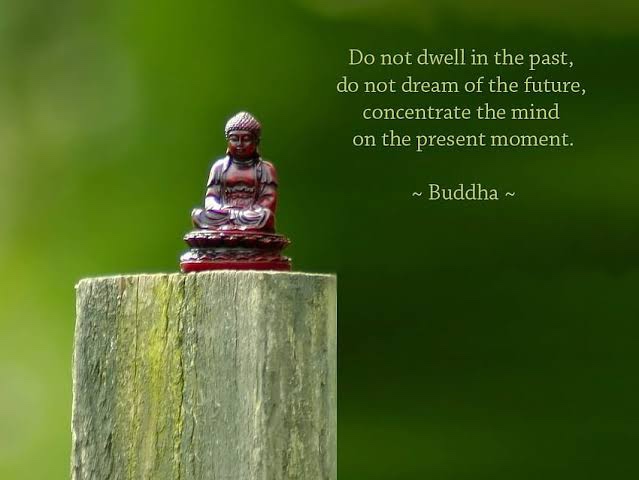
The old man smiled warmly and began to share a story.
“There was once a bird confined in a golden cage,” the old man began. “The bird had wings to fly and explore, yet it remained trapped within the boundaries of its cage. It yearned for the freedom of the open sky, where it could soar without limitations.”
Siddharth listened attentively, relating to the bird’s longing for freedom. The old man continued, “One day, a gentle breeze blew open the door of the cage, inviting the bird to step out. However, the bird hesitated, as it had become accustomed to the security of the cage. It was afraid of the unknown and the risks that lay beyond.”
The old man paused for a moment, allowing Siddharth to absorb the lesson. He then continued, “Like the bird in the cage, we too often confine ourselves within the walls of our conditioning. We cling to the familiar, afraid to step into the unknown. But true liberation lies in embracing the present moment and letting go of the attachments that hold us back.”
Intrigued by the old man’s wisdom, Siddharth asked, “But how can we break free from the grip of conditioned behavior and live with spontaneity?”
The old man smiled and replied, “It starts with self-awareness and a willingness to let go. Observe the patterns of your thoughts and behaviors without judgment. Notice the ways in which the past and future influence your actions in the present. Cultivate a deep sense of presence and openness to each moment.”
Siddharth realized that breaking free from conditioned behavior required a conscious effort to be fully present. He decided to embark on a journey of self-discovery and transformation. He began practicing meditation, engaging in self-reflection, and embracing the teachings of wise masters.
As Siddharth delved deeper into the practice of presence, he noticed a subtle shift within himself. He became aware of the moments when the past and future clouded his perception of the present. With each breath, he let go of attachments and surrendered to the flow of life. As a result, he experienced moments of pure spontaneity and joy.
With newfound clarity and freedom, Siddharth’s life began to transform. He let go of old grudges, forgave past mistakes, and embraced the unknown with open arms. He approached each day with curiosity and enthusiasm, fully immersed in the richness of the present moment.
People around Siddharth noticed a radiant energy emanating from him. They were drawn to his authenticity and genuine presence. Siddharth’s relationships deepened, and he discovered a profound connection with others, free from the constraints of conditioned expectations.
In time, Siddharth became an inspiration to those around him. He shared his journey of liberation from conditioned behavior and encouraged others to embrace the power of the present moment. His story touched the hearts of many, igniting a spark of awareness and transformation in their lives as well.
And so, Siddharth’s journey continued to unfold, and he realized that the liberation of the present was not a destination but a continuous process. He understood that every moment held the potential for growth and self-discovery. Each day presented new opportunities to let go of the past and embrace the gift of the present.
Siddharth encountered various challenges along the way, moments when the pull of conditioned behavior threatened to take hold once again. But he had developed the tools and awareness to recognize those patterns and consciously choose a different path. He understood that true freedom came from breaking free from the constraints of the mind and living in alignment with the truth of each moment.
Through his own transformation, Siddharth became a source of inspiration and guidance for others seeking liberation. He held workshops and retreats, sharing his wisdom and experiences. People from all walks of life resonated with his message and were drawn to the possibility of living in the present moment.
One day, during a retreat in a serene mountain setting, Siddharth gathered a group of individuals who were seeking a deeper understanding of themselves and the nature of existence. As they sat in a circle, Siddharth shared his insights on the power of the present moment and the freedom that comes with letting go of conditioned behavior.
He spoke of the beauty and richness that can be found in fully embracing life as it unfolds, without the burdens of past regrets or future worries. He encouraged the participants to observe their own thoughts and actions, to question the beliefs that kept them trapped in patterns of conditioning. He urged them to be open to the infinite possibilities that arise when one surrenders to the flow of the present.
As the days passed, the participants engaged in meditation, self-reflection, and group discussions. They shared their stories, fears, and aspirations. The energy in the retreat space was palpable, as each person experienced glimpses of their own liberation from conditioned behavior.
On the final day of the retreat, as they gathered one last time, Siddharth looked into the eyes of each participant and acknowledged their journey. He reminded them that the path to freedom was not always easy, but it was worth every step. He encouraged them to continue their practice, to stay committed to the present moment, and to trust in the wisdom that arises from within.
As the participants departed, they carried with them a renewed sense of purpose and a deepened connection to the present. They understood that the liberation of the present was not an isolated event but a lifelong journey of self-discovery and transformation. They were inspired to integrate the teachings into their daily lives, bringing the essence of the present moment into every interaction and experience.
And so, Siddharth’s story of liberation from conditioned behavior continued to ripple out into the world, touching the lives of countless individuals. His journey reminded others that the power to break free from the past and live with spontaneity resided within each one of them. The path was not always easy, but the rewards were immeasurable—a life lived fully, authentically, and in harmony with the present.
Patanjali Yoga Sutra: yatra yogashchittavrittinirodhah
यत्र योगश्चित्तवृत्तिनिरोधः॥११॥
Transliteration: yatra yogashchittavrittinirodhah
Translation: “The restraint of the modifications of the mind-stuff is Yoga.”
In the eleventh sutra of Patanjali’s Yoga Sutras, we are presented with a profound insight into the essence of Yoga. The sutra encapsulates the fundamental practice of restraining the fluctuations of the mind, which is at the core of the yogic path.
To understand the depth of this sutra, we must explore the meaning of each component. The word “yatra” refers to a state or condition, indicating a specific realm or dimension. “Yoga” is the state of union or connection, often understood as the union of the individual self with the universal consciousness. “Chittavrittinirodhah” refers to the restraint or cessation of the modifications of the mind-stuff.

The mind, with its ever-changing thoughts, emotions, and desires, can be likened to a turbulent ocean. It is constantly in motion, easily swayed by external circumstances and internal fluctuations. This constant agitation of the mind creates a veil that obstructs our true nature and hinders our ability to experience the deeper realms of consciousness.
The practice of Yoga is not merely about physical postures or breathing exercises. It is about gaining mastery over the mind and transcending its limitations. The eleventh sutra emphasizes the importance of restraining the modifications of the mind-stuff to attain a state of clarity and stillness.
When the mind is free from the incessant fluctuations of thoughts and desires, it becomes like a calm and serene lake, reflecting the truth of our being. In this state of stillness, we can directly experience the boundless nature of consciousness and the interconnectedness of all things.
The practice of restraining the mind requires discipline, awareness, and self-inquiry. It involves observing the patterns of the mind, noticing the arising thoughts and emotions without getting entangled in them, and gradually quieting the mental chatter. Through regular practice, we cultivate a space of inner silence where true understanding and insight can arise.
It is important to note that the restraint of the modifications of the mind does not imply suppression or denial of thoughts and emotions. Rather, it is a process of witnessing them with non-judgmental awareness, allowing them to naturally arise and subside without being carried away by their transient nature.
As we delve deeper into this practice, we begin to recognize the intrinsic connection between the mind and our perception of reality. The mind, with its constant fluctuations, shapes our perception and colors our experience of the world. By restraining the modifications of the mind, we gain the ability to see things as they truly are, free from the distortions created by our conditioned patterns of thinking.
In this state of pure awareness, the limitations of the individual self dissolve, and we enter into a state of union with the larger tapestry of existence. We realize our interconnectedness with all beings and the underlying unity that permeates the universe. This realization brings profound peace, harmony, and a sense of oneness.
The eleventh sutra serves as a reminder of the transformative power of Yoga. By restraining the modifications of the mind-stuff, we unlock the door to higher states of consciousness, expanding our perception and deepening our connection to the divine. It is an invitation to go beyond the surface-level fluctuations of the mind and discover the vastness of our true nature.
Incorporating the practice of restraining the mind into our daily lives, both on and off the mat, allows us to cultivate a state of inner stillness where clarity and wisdom can naturally arise. It is a journey of self-discovery, where we learn to observe our thoughts and emotions without judgment, and cultivate a sense of detachment from the constant stream of mental activity.
As we delve deeper into the practice, we may encounter challenges and resistance. The mind, accustomed to its habitual patterns, may rebel against the discipline of restraint. It may tempt us with distractions, enticing us to indulge in the endless stream of thoughts and desires. But it is through perseverance and dedication that we can gradually loosen the grip of the mind’s fluctuations and find moments of genuine stillness.
In the state of mind-stuff restraint, we discover the freedom to choose our responses rather than being driven by unconscious reactions. We become aware of the choices available to us in every moment and can act from a place of clarity and authenticity. This cultivates a sense of empowerment and enables us to navigate life’s challenges with grace and equanimity.
The practice of restraining the modifications of the mind also has a profound impact on our relationships. As we become more attuned to the present moment, we develop a deeper sense of empathy and understanding towards others. We listen attentively, without the burden of preconceived judgments or projections. This fosters authentic connections and enhances our capacity for compassionate communication.
It is important to acknowledge that the process of restraining the mind’s fluctuations is not a quick fix or a one-time achievement. It is an ongoing practice that requires patience, self-compassion, and gentle persistence. We may experience moments of progress followed by periods of regression, but with each step, we deepen our understanding and strengthen our capacity to abide in a state of stillness. May the practice of restraining the mind’s modifications lead us to a state of profound peace, liberation, and the unshakable recognition of our interconnectedness with all of existence.
Seeking the Unseen: A Journey of Zen Awakening
Once upon a time, in a small village nestled at the foot of a majestic mountain, there lived a young villager named Takeshi. Takeshi was known for his strong desire to seek enlightenment and uncover the mysteries of life. He had heard tales of Zen masters and their profound teachings, and he yearned to experience the depths of wisdom they possessed.
One day, Takeshi decided to embark on a journey to the nearby Zen monastery, where renowned Zen master, Master Hakuin, resided. He believed that under the guidance of the master, he would find the answers he sought. With determination in his heart and curiosity driving him forward, Takeshi set off on the path to the monastery.
After several days of traveling through forests, across rivers, and over hills, Takeshi arrived at the monastery gates. The grandeur of the temple and the serene atmosphere left him in awe. He was greeted by the head monk, who informed him that Master Hakuin was known for his unconventional teaching methods and the use of enigmatic stories called koans.
Eager to begin his spiritual quest, Takeshi immersed himself in the monastic routine, attending meditation sessions, participating in communal work, and seeking moments of solitude for contemplation. But as the days turned into weeks, and the weeks into months, Takeshi’s frustration began to grow. He yearned for direct guidance from the master, believing that a few words of wisdom would instantly unlock the doors of enlightenment.
One evening, after a particularly arduous day of meditation, Takeshi sat alone in the garden, gazing at the moon illuminating the night sky. In his weariness, he wondered if his efforts were in vain. Doubts plagued his mind, and he began to question his own abilities and worthiness to attain enlightenment.
Just as he was about to give in to despair, a figure appeared before him. It was Master Hakuin, clad in simple robes and radiating an aura of tranquility. Takeshi’s heart skipped a beat, and he bowed respectfully to the master.

The master smiled knowingly and began to speak. “Takeshi, my young seeker, what is it that you truly seek?” he asked, his voice filled with compassion.
Takeshi hesitated for a moment, unsure of how to articulate his deepest longings. Finally, he replied, “Master, I seek enlightenment. I yearn to understand the nature of reality, to transcend suffering, and to find true peace.”
Master Hakuin nodded and said, “Enlightenment is not found by seeking something external. It is not a destination to be reached. Rather, it is a deep realization of your own true nature, the nature of existence itself.”
Takeshi was taken aback by the simplicity of the master’s words. He had expected complex teachings and profound revelations. But Master Hakuin continued, “To understand the nature of existence, you must go beyond the limitations of your conceptual thinking. You must embrace the paradoxes, the uncertainties, and the contradictions of life.”
Curiosity sparked within Takeshi as he listened intently to the master’s words. The master continued, “In the garden of your mind, there are seeds of longingness, seeking, and attachment. These seeds create a maze of illusions that perpetuate suffering. To find the truth, you must let go of these attachments and be fully present in each moment.”
Takeshi contemplated the master’s words, realizing the depth of their meaning. He understood that his constant seeking was a product of his own conditioned mind, always grasping for answers and validation. In that moment, he felt a sense of liberation, as if a heavy burden had been lifted from his shoulders.
Master Hakuin gently touched Takeshi’s shoulder and said, Remember, Takeshi, that the essence of Zen lies not in the words spoken or the concepts understood, but in the direct experience of this very moment. The truth cannot be found in the past or the future; it can only be realized in the present.
With these words echoing in his mind, Takeshi embarked on a new phase of his spiritual journey. He embraced the practice of mindfulness, bringing a heightened awareness to each moment, whether it was walking in the monastery gardens, sipping tea, or engaging in daily tasks. He learned to observe the thoughts and emotions that arose within him without clinging to them or getting lost in their stories.
As Takeshi delved deeper into the practice of mindfulness, he discovered that the compulsive need to seek and the attachments that fueled his suffering began to lose their grip on him. He realized that the nature of seeking itself was rooted in a misconception—that true fulfillment lay in acquiring something external, whether it be knowledge, possessions, or spiritual experiences. Through his dedicated practice, he cultivated a sense of inner contentment and realized that he already had everything he needed within him.
Takeshi also learned to embrace the paradoxes and uncertainties of life. He understood that seeking certainty in an ever-changing world was futile. Instead, he surrendered to the ebb and flow of existence, allowing himself to fully experience both the joys and sorrows that life presented. He recognized that the seeking mind was a source of perpetual dissatisfaction, always chasing after an illusory idea of perfection. By letting go of the need for certainty and control, he found a profound sense of freedom.
Over time, Takeshi’s practice deepened, and he became a source of inspiration for others on the path. He shared his insights with fellow seekers, guiding them to look within and discover the truth for themselves. His presence radiated a calmness and clarity that touched the hearts of those around him, inviting them to embark on their own journey of self-discovery.
As the years passed, Takeshi’s understanding continued to evolve. He realized that the seeking mind and the attachments that arise from it were not to be eradicated but to be understood and transcended. They were like passing clouds in the vast sky of awareness. Through the practice of mindfulness, he cultivated a profound sense of presence and aliveness, fully embracing the richness of each moment.
Takeshi’s journey was a testament to the transformative power of Zen. It taught him that true liberation lies not in the accumulation of knowledge or external accomplishments, but in the direct experience of life as it unfolds. He realized that the greatest treasure was not to be found in some distant destination, but in the present moment, in the deep understanding that the seeking mind and the sought-after are ultimately inseparable.
In the end, Takeshi understood that the path of Zen is not a linear journey with a final destination. It is a continuous exploration, an ever-deepening understanding of the nature of existence and our own true nature. The seeking mind gradually fades away, replaced by a profound acceptance and appreciation of life in its entirety.
And so, Takeshi continued on his path, walking the way of Zen with an open heart and a mind free from the entanglements of seeking. He reveled in the simple joy of being, fully embracing the mysteries of existence, and inspiring others to embark on their own journey of self-discovery and awakening.
May we all find the courage to let go of our seeking minds and discover the boundless beauty that lies within each and every moment.
Patanjali Yoga Sutra: Abhava Pratyaya Alambana Vritti Nidra
Sutra 10 (in Devanagari script): अभाव प्रत्ययालम्बना वृत्तिनिद्रा (Abhava Pratyaya Alambana Vritti Nidra)
Sutra 10: “Abhava Pratyaya Alambana Vritti Nidra” – Sleep is the state where the mind no longer grasps external objects due to the absence of mental modifications
Patanjali’s Yoga Sutra 10 brings our attention to the nature of sleep and its relation to the mind. Sleep is a state where our consciousness temporarily withdraws, and the mind ceases its engagement with external objects. In this state, the mental modifications or vrittis that usually arise during our waking state are absent. Patanjali points out that by understanding the dynamics of the mind and non-identification with its fluctuations, we can transcend the state of sleep.
- Sleep as Unconsciousness: Sleep is a state of temporary unconsciousness where the mind’s engagement with the external world ceases. In this state, our awareness is not actively focused on sensory perceptions or mental activities.
- Non-Identification with Mental Modifications: Patanjali emphasizes the importance of non-identification with the mental modifications or vrittis of the mind. These modifications include thoughts, emotions, and sensory experiences. By recognizing that our true nature is beyond these fluctuations, we can overcome the grip of sleep and awaken to higher states of consciousness.
- Transcending Sleep: Through self-awareness and self-realization, we can transcend the state of sleep. By understanding the impermanence of mental modifications and disidentifying from them, we become aware of the underlying consciousness that transcends all states, including sleep.
- Awakening to Pure Consciousness: Sutra 10 invites us to awaken to our true nature, which is pure consciousness. By going beyond the fluctuations of the mind, we tap into the eternal source of awareness that is unaffected by the states of waking, dreaming, or deep sleep.

How to apply:
- Cultivate Mindfulness: Practice mindfulness throughout the day to enhance your awareness of mental modifications. Observe your thoughts, emotions, and sensory experiences without judgment or attachment, cultivating a sense of detachment from the ever-changing nature of the mind.
- Practice Self-Inquiry: Engage in self-inquiry to inquire into the nature of your true self beyond the fluctuations of the mind. Reflect on questions like “Who am I?” or “What is the nature of my consciousness?” to deepen your understanding of your essential nature.
- Explore Meditation: Incorporate meditation into your daily routine to develop greater self-awareness and non-identification with the mental modifications of the mind. By observing the breath, mantra, or a chosen object of focus, you can cultivate a state of centeredness and transcendent awareness.
- Cultivate: a Sleep Routine: Establishing a consistent sleep routine can help optimize the quality of your rest. Create a conducive sleep environment, maintain regular sleep and wake times, and engage in relaxation techniques before bed, such as gentle stretching, deep breathing, or meditation.
- Practice Pranayama: Explore the practice of pranayama, the control and regulation of breath. Certain pranayama techniques, such as Nadi Shodhana (alternate nostril breathing) or Shitali Pranayama (cooling breath), can help balance the mind, calm the nervous system, and enhance overall relaxation.
- Cultivate Awareness of Consciousness: Throughout your day, pause and bring your attention to the underlying field of pure consciousness that is present in every moment. Recognize that your true essence is beyond the fluctuations of the mind and that sleep is just one aspect of your existence.
Benefits of Sutra-10:
- Enhanced Conscious Awareness: By understanding the nature of sleep and non-identification with mental modifications, we develop a deeper sense of conscious awareness. We awaken to the ever-present field of pure consciousness that transcends the limitations of the mind.
- Improved Sleep Quality: Through the practices of mindfulness, relaxation techniques, and a consistent sleep routine, we can enhance the quality of our sleep. By reducing the grip of mental fluctuations, we experience more restful and rejuvenating sleep.
- Transcendence of Limitations: Understanding Sutra 10 allows us to transcend the limitations imposed by the mind. We tap into our inherent capacity for expanded consciousness, unlocking our true potential for self-realization and spiritual growth.
 Abhishek Fanse