
Patanjali Yoga Sutra: Yama Niyama Asana Pranayama Pratyahara Dharana Dhyana Samadhayo Ashtavangani
Describe one simple thing you do that brings joy to your life.
Sutra 8: “Yama Niyama Asana Pranayama Pratyahara Dharana Dhyana Samadhayo Ashtavangani” – The Eight Limbs of Yoga are Yama, Niyama, Asana, Pranayama, Pratyahara, Dharana, Dhyana, and Samadhi.
Sutra 8 encapsulates the essence of Ashtanga Yoga, which consists of eight limbs or steps that collectively guide us on the path of self-discovery, spiritual growth, and union with the divine.
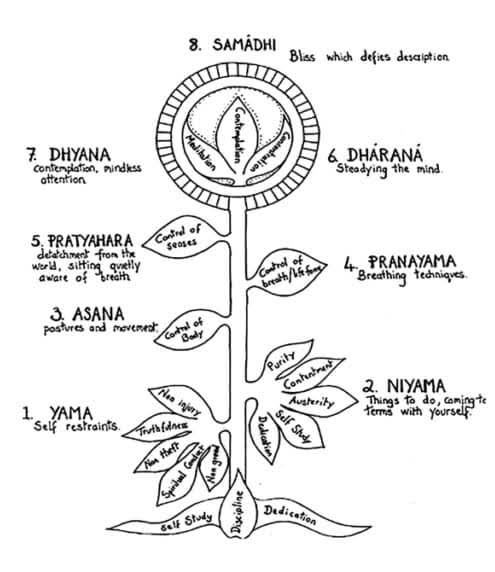
Ashtanga Yoga, as outlined in Sutra 8, serves as a roadmap for the seeker’s journey towards self-realization. The Eight Limbs of Yoga provide a systematic and holistic approach to harmonizing the body, mind, and spirit. Each limb represents a crucial aspect of the yogic path, and together, they form a complete framework for personal transformation.
The Eight Limbs of Yoga:
- Yama (Ethical Principles): Yama refers to the moral and ethical principles that guide our behavior towards ourselves and others. It encompasses concepts such as non-violence (ahimsa), truthfulness (satya), non-stealing (asteya), moderation (brahmacharya), and non-possessiveness (aparigraha). By cultivating these principles, we establish a foundation of integrity and harmonious living.
- Niyama (Personal Observances): Niyama focuses on self-discipline and personal observances. It includes practices such as cleanliness (saucha), contentment (santosha), self-discipline (tapas), self-study (svadhyaya), and surrender to a higher power (ishvara pranidhana). Niyama supports the cultivation of inner strength, self-reflection, and spiritual growth.
- Asana (Physical Postures): Asana refers to the physical postures practiced in yoga. It involves adopting and holding various poses that enhance strength, flexibility, and balance in the body. Asanas prepare the physical body for deeper practices and serve as a means to develop mindfulness, focus, and presence.
- Pranayama (Breath Control): Pranayama involves breath control techniques that harness the life force energy (prana) within us. By regulating the breath through practices such as alternate nostril breathing (nadi shodhana) and breath retention (kumbhaka), we balance and energize the body-mind complex, calming the mind and expanding our vital energy.
- Pratyahara (Withdrawal of the Senses): Pratyahara is the practice of withdrawing the senses from external distractions and turning inward. By detaching from sensory stimuli, we cultivate a state of inner focus, allowing us to navigate our internal landscape with clarity and introspection.
- Dharana (Concentration): Dharana involves developing focused concentration on a single point of focus, such as the breath, a mantra, or an image. It cultivates the ability to hold the mind steady, free from distractions, and prepares the ground for deeper states of meditation.
- Dhyana (Meditation): Dhyana is the state of meditation, characterized by uninterrupted flow of awareness and deep absorption. In Dhyana, the meditator merges with the object of meditation, experiencing a profound sense of oneness and inner stillness. It is a state of expanded consciousness, where the boundaries between the self and the object dissolve.
- Samadhi (Union with the Divine): Samadhi is the ultimate goal of yoga, representing the state of complete union with the divine. It is a state of pure awareness and transcendence, where the meditator experiences the merging of the individual self with the universal consciousness. In Samadhi, the seeker attains a profound realization of their true nature and experiences profound peace, bliss, and liberation.
Ashtanga Yoga, with its Eight Limbs, offers a holistic approach to self-realization and transformation. Each limb builds upon the other, creating a comprehensive system for harmonizing the body, mind, and spirit. By engaging in the practices of Yama and Niyama, we cultivate ethical living and inner discipline, creating a strong foundation for the physical practices of Asana and Pranayama. Pratyahara prepares us for deeper states of concentration (Dharana) and meditation (Dhyana), leading us ultimately to the state of Samadhi, where we experience the unity of all existence.
Benefits:
- Physical Well-being: Ashtanga Yoga enhances physical strength, flexibility, and balance. Regular practice of the asanas improves posture, tones the muscles, and promotes overall health and vitality.
- Emotional Balance: Ashtanga Yoga cultivates emotional stability and resilience. The practices of Pranayama, Dharana, and Dhyana help calm the mind, reduce stress, and foster emotional well-being.
- Mental Clarity: Ashtanga Yoga enhances mental clarity and focus. The practices of Dharana and Dhyana improve concentration, expand awareness, and promote clarity of thought.
- Self-awareness and Self-discovery: Ashtanga Yoga facilitates self-exploration and self-discovery. Through the observance of Yama and Niyama, self-reflection, and meditation, we gain deeper insights into our true nature and develop a greater sense of self-awareness.
- Spiritual Growth: Ashtanga Yoga provides a path for spiritual growth and self-realization. The practices of meditation and Samadhi offer a direct experience of the divine and facilitate the realization of our interconnectedness with all beings.

 Abhishek Fanse