Selflessly selfish or selfishly selfless ??
Selfishness, in its most basic sense, involves prioritizing one’s own needs, wants, and interests over those of others. This characteristic is often deemed negative due to its potential to harm others or disrupt social cohesion. However, at its root, selfishness can be traced back to our biological survival instincts. From an evolutionary perspective, selfish behavior can be seen as a natural response to the need for self-preservation. The urge to prioritize one’s own needs – for food, safety, reproduction, etc., has been integral to the survival of individuals and species across the natural world.
Psychologically, selfishness also emerges from a basic human need for self-esteem and self-actualization. We all desire to fulfill our potential, realize our dreams, and feel good about ourselves, which often involves prioritizing our needs over others. Furthermore, cognitive biases like the self-serving bias, where individuals tend to perceive situations in ways that are beneficial to themselves, can also contribute to selfish behavior.
At a socio-cultural level, factors such as upbringing, societal norms, and cultural values play a significant role in shaping our propensity towards selfishness. For example, individualistic societies that emphasize personal achievement and independence might foster more selfish behaviors than collectivist societies, where the group’s needs are prioritized over the individual’s.
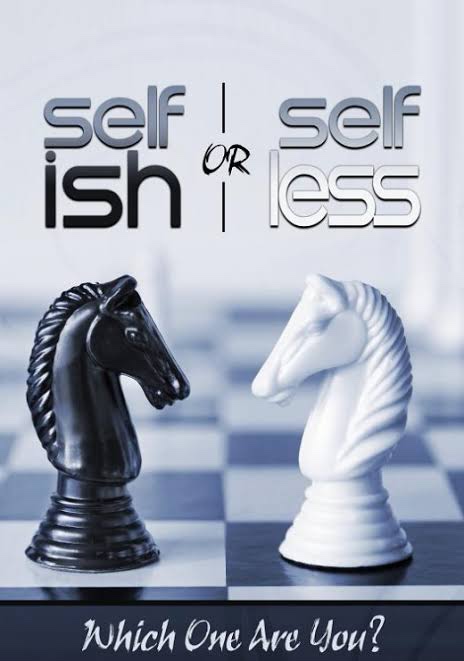
Selflessness, on the other hand, involves prioritizing others’ needs and interests over one’s own. This behavior is generally regarded positively, associated with qualities like kindness, altruism, and generosity. Like selfishness, selflessness also has biological, psychological, and socio-cultural origins.
From a biological perspective, selfless behaviors can be seen as an extension of the survival instinct – not just for the individual, but for the group or species as a whole. This is evident in many social animals’ behavior, where individuals often sacrifice their interests for the group’s benefit. This is especially pronounced in kin selection, where organisms exhibit behaviors that favor the survival of their relatives, even at a cost to their own survival or reproduction.
Psychologically, selflessness is linked to empathy, the ability to understand and share others’ feelings. Empathy allows us to form deep emotional connections with others and motivates us to act in ways that benefit them. Moreover, selfless behaviors can lead to increased self-esteem and well-being, as they often elicit positive social feedback and a sense of purpose and fulfillment.
At a socio-cultural level, selflessness is often encouraged through moral and religious teachings, societal norms, and cultural values. Many societies promote altruistic behaviors as virtues, reinforcing these behaviors through social approval and other forms of positive reinforcement.
Yet, it’s important to understand that neither selfishness nor selflessness is inherently “good” or “bad.” Instead, these behaviors exist along a spectrum, and their impacts can vary greatly depending on the context. Excessive selfishness can lead to social discord and harm others, but a total lack of selfishness might result in self-neglect or exploitation. Similarly, while selflessness can foster social harmony and cooperation, excessive selflessness can lead to self-sacrifice or martyrdom, which may not always be healthy or beneficial.
Balancing selfishness and selflessness is a constant human endeavor, shaped by our biological instincts, psychological needs, and socio-cultural influences. This balance allows us to care for our own needs while also considering the needs of others, fostering mutual respect, understanding, and cooperation – vital elements for personal well-being and social harmony.
On nature’s selflessness, it’s crucial to understand that what we perceive as ‘selflessness’ is an anthropomorphic projection. Nature operates on principles of interconnectedness and interdependence, where each entity plays its role in maintaining the balance and harmony of the whole system. What we deem as ‘selfless’ is nature’s way of existing and sustaining.
It all comes down to our definitions, our intentions, and the subtleties of human behavior and consciousness.
While at first glance, selfishness and selflessness seem to represent opposite ends of the behavioral spectrum, a deeper understanding can reveal surprising overlaps. Let’s unpack this.
Firstly, it’s important to understand that our actions, whether selfish or selfless, are inherently tied to the pursuit of well-being, satisfaction, or some form of positive outcome, which in itself can be considered a ‘selfish’ motivation.
In the case of selfish actions, this is easy to understand – we engage in selfish behavior when we believe that it will bring us personal gain, happiness, or satisfaction. We are directly seeking a beneficial outcome for ourselves, often without considering the impacts on others.
However, when we look at selfless actions, things get a little more complex. When we act selflessly, we prioritize the needs and well-being of others above our own. But why do we do this? There are several reasons, and this is where the idea of selflessness potentially being ‘selfish’ comes into play.
We might act selflessly because helping others makes us feel good – it satisfies a deep-seated emotional need for connection, purpose, or moral fulfillment. In this sense, we can say that selflessness is ‘selfish’ because we are indirectly seeking a beneficial outcome for ourselves – a sense of emotional satisfaction.
This is not to say that selfless actions are insincere or less valuable because they bring us satisfaction. Quite the opposite – it demonstrates that our well-being is intricately linked with the well-being of others. When we help others, we also help ourselves. This interconnectedness is a fundamental aspect of human nature and society, and it’s what allows empathy, altruism, and cooperation to thrive.
We might also act selflessly out of a recognition of the inherent worth of others – a deep respect for life and consciousness that transcends self-interest. This kind of selflessness can be seen as ‘pure’ in the sense that it’s not motivated by a desire for personal gain. However, even this can be seen as ‘selfish’ in a broader, existential sense. If we consider ourselves as part of a larger whole – whether it’s a community, society, or the universe itself – then working towards the well-being of that whole is in our interest, as we are part of it.
To bring these thoughts full circle, consider this: both selfishness and selflessness are natural aspects of human behavior, deeply rooted in our survival instincts, emotional needs, and socio-cultural contexts. While they might seem contradictory, they are both tools we use to navigate the world, foster connections, and seek well-being. The key lies in finding a balance – understanding when to prioritize our needs and when to consider the needs of others. This delicate equilibrium enables us to live harmoniously, both with ourselves and with the world around us.
Selflessly selfish or selfishly selfless is paradoxical nature of human behavior. To be “selflessly selfish” is to act with apparent selflessness, but with an underlying self-serving motive, perhaps gaining a sense of satisfaction, a good reputation, or a subconscious expectation of reciprocation. Alternatively, to be “selfishly selfless” implies acting for personal gain, but in a way that also benefits others. It’s a reminder that pure selflessness or pure selfishness rarely exist; human motivations are often a complex mix of both.
The overlap between selfishness and selflessness could also be a reflection of our interconnectedness. From an evolutionary standpoint, altruistic behaviors can enhance the survival of our kin or social group, and thereby our own genetic legacy. In a socially interconnected world, self-interest and the interest of the community often align. In this sense, one could argue that acting in the interest of others (selflessness) is ultimately a form of self-preservation (selfishness). However, the key lies in understanding these motivations without judgment, acknowledging their existence, and seeking balance. It’s about striving to act in ways that respect our needs and those of others. After all, a healthy sense of self-interest is necessary for self-care and survival, just as a degree of selflessness is essential for social harmony and cooperation.
Our actions often serve both ourselves and others, blurring the lines between selfishness and selflessness in a beautifully complex dance of human nature.
Can actions be detached?
The origin of action can be traced back to the very fabric of life itself. Every living entity, whether it’s a single-celled organism or a complex human being, is in a continuous state of action. Even in states of seeming inactivity, there are countless actions taking place within our bodies – cells dividing, heart beating, neurons firing. These actions are not born out of attachment, but rather out of the inherent nature of life and its ceaseless dynamism.
In human beings, actions become more complex. Many of our actions stem from cognitive processes, decision-making, emotions, motivations, desires, and fears. Some of these might be influenced by past experiences or expectations of future outcomes. While it’s true that past experiences can inform our actions, it doesn’t necessarily mean that every action is an outcome of attachment to past results.
Let’s take the example of learning to ride a bike. The initial attempts are informed by the desire to learn, and perhaps the fear of falling. Each attempt, whether successful or not, provides a learning experience which informs future attempts. Over time, as we master the skill, the act of riding a bike becomes almost second nature. It’s no longer driven by the initial desire or fear, but instead becomes an integrated action that we can perform almost effortlessly. In this scenario, the action of riding the bike is not an outcome of attachment, but a manifestation of learned skills and understanding.

Now, let’s consider the concept of detached action as explained in the Bhagavad Gita. Detachment in this context does not mean indifference or lack of care, but rather a state of being where one is not excessively attached to the fruits of their actions. When we perform an action with an attached mindset, we are often excessively focused on the outcome. This focus on the future can rob the action of its full potential, as our mind is not fully present in the action itself.
Detached action, on the other hand, allows us to be fully present in the act of doing. This presence can liberate the action from the constraints of past experiences or future expectations, allowing it to unfold with its full potential. A detached action is one that is performed with a sense of duty, with full attention, and without excessive attachment to the outcome. This doesn’t mean that we don’t care about the result. Instead, it means that we perform the action to the best of our ability, accepting whatever result comes as a consequence.
An important aspect to consider here is the interconnectedness of life. Our actions do not exist in a vacuum; they are part of an interconnected web of actions, reactions, and interactions. Understanding this can help us realise that while we have control over our own actions, the results are influenced by countless other factors, many of which are beyond our control. This realisation can foster a sense of humility, acceptance, and detachment, which can free us from the psychological burden of excessively identifying with the outcomes of our actions.

Moving further into the philosophy of actions, let’s delve into the concept of ‘free will’ and ‘determinism’. These two philosophical positions often clash when we try to understand the nature of our actions.
Free will posits that we, as conscious beings, have the power to make choices and act independently of any external constraints. It suggests that our actions originate from our conscious decisions and, thus, we bear full responsibility for them.
Determinism, on the other hand, suggests that every event, including human actions, is determined by previously existing causes. It argues that all our actions are the result of some cause, whether it is our genetic predisposition, upbringing, social environment, or other factors.
Both of these positions hold some truth. While we may feel that we have the freedom to choose our actions, we cannot deny that our choices are influenced by our past experiences, genetic predisposition, and external circumstances. So, our actions are both free and determined, depending on the perspective we adopt.
When we examine our actions closely, we find that they are not purely the result of our conscious decisions. Our subconscious mind, conditioned by past experiences and deep-seated beliefs, plays a significant role in our decision-making process. So, while we might believe that we are acting freely, many of our actions are habitual reactions conditioned by our past.
Understanding this can liberate us from the illusion of absolute control and the burden of excessive self-blame or self-congratulation. It can also foster a sense of compassion for ourselves and others, as we recognise that our actions are often the result of deep-seated conditioning and external circumstances, rather than purely intentional choices.
The key lies in the practice of mindfulness and self-awareness. By becoming more aware of our thoughts, feelings, and motivations, we can start to understand the forces that drive our actions. We can recognise our habitual patterns and start to make more conscious choices.
In the Bhagavad Gita, Krishna advises Arjuna to act without attachment to the fruits of action. This does not mean acting without care or intention. Rather, it means acting with full attention and commitment, without getting caught up in the anxiety about the outcome. This attitude allows us to act with greater freedom and effectiveness, as we are not burdened by excessive worry about the future or regrets about the past.
When we act, we set into motion a series of events, and the consequences of those actions ripple out into the world. The impact of our actions is not confined to ourselves; it influences those around us, our environment, and ultimately the world at large. This chain of cause and effect is constantly in motion and is dictated by the nature and intent of the action.
Duality arises from the perceived differentiation between good and bad, positive and negative, joy and pain, and so forth. This perceived differentiation often causes conflict and suffering because we instinctively cling to what we perceive as good and resist what we perceive as bad. We are pleased when our actions yield positive outcomes and disappointed when they do not.
However, the Bhagavad Gita teaches us that the dichotomy of good and bad is a construct of our mind and that every action simply is. This is a difficult concept to understand because it runs counter to our instinctual desire to classify and judge things based on our subjective perspective.

In reality, an action is neither good nor bad; it is our attachment to the outcome that labels it so. When we act without attachment to the outcome, we act in the fullest expression of our being, free from the constraints of expectation or fear of failure. This state of detachment does not mean that we do not care about the outcome, but rather that we understand we cannot control every aspect of it.
Instead, our focus shifts to the process, the action itself. By doing so, we become more present, more mindful, and more engaged in our actions. We start to see our actions not as a means to an end but as an end in themselves.
Therefore, to navigate the duality of actions and their effects, we must cultivate awareness and detachment. By observing our thoughts, emotions, and actions without judgment or expectation, we can experience life as it is, without the filter of duality.
In the grand scheme of life, our actions are but tiny ripples in a vast ocean. They may cause waves, they may create turbulence, but eventually, they will settle, leaving the water calm and clear once more. It is in this state of calmness, free from the duality of actions and their effects, that we find true freedom and peace.
Can a decision be good or bad?
The concept of decision making and the parameters that define its goodness or badness are both fascinating and complex. When we take a decision, we hope for a certain outcome, and the real-world result of our decision is judged in relation to this expectation. Decisions are inherently linked with the consequences they bring, and we often label them as ‘good’ or ‘bad’ based on whether the outcome was favorable or unfavorable. But should this be the only measure of a decision’s quality?
Every decision, regardless of its scale or impact, is taken within a context. Factors such as personal beliefs, values, emotions, knowledge, past experiences, as well as our estimation of future events, all feed into the decision-making process. This intricate mixture of elements makes decision-making a highly individualized and subjective process.
Given this complexity, is it then possible or even fair to categorize decisions as definitively good or bad? And what are the parameters we should use to judge them?
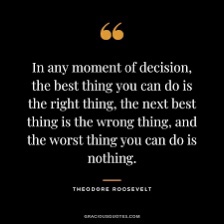
One viewpoint suggests that a good decision is one that is well-informed, well-considered, and aligned with one’s core values and goals. From this perspective, the goodness of a decision lies not in the outcome it produces, but rather in the process by which it was made. An individual may take a decision based on the best information available, taking into account all possible scenarios and aligning the decision with their values. If the outcome is unfavorable, does that make the decision bad? Arguably, no.
However, another viewpoint posits that decisions are inherently tied to their outcomes. If a decision leads to a positive outcome, it was a good decision. If the outcome is negative, the decision was bad. This perspective is very results-oriented, focusing on the end rather than the means. But it fails to consider that outcomes are often influenced by variables outside our control and cannot be predicted with certainty at the time of decision-making.
Considering both these viewpoints, it becomes clear that the notion of good and bad in decision-making is not absolute. It’s subjective and contextual, relying on both the decision-making process (the means) and the resulting outcome (the end).
Let’s consider an example to illustrate this: Imagine a person deciding to invest their savings in a seemingly promising startup. They do their due diligence, researching the market, the product, the team, and even consulting experts. They make a well-informed and well-considered decision to invest. But despite all their thoroughness, the startup fails after a few years, and they lose their investment. Was their decision bad?

If we judge solely based on the outcome, we might say yes. But if we look at the decision-making process, we could argue that they made a good decision given the information they had at the time. This example highlights the complexity and subjectivity involved in labeling decisions as good or bad.
The question of accountability further adds to this complexity. When we hold someone accountable for a decision, we are implying that they had control over the decision-making process and its outcome. This notion of control, however, is not always reflective of reality. As we’ve noted, decisions are influenced by numerous factors, many of which are beyond our control.
That being said, there is an aspect of decision-making where accountability does play a crucial role. When individuals make decisions, they should be held accountable for ensuring that the decision-making process is as thoughtful, ethical, and informed as possible. This means they should strive to gather all relevant information, consider all possible options, and align their decisions with their values and responsibilities.
While we cannot control all factors affecting the outcome of our decisions, we can strive to make informed, deliberate choices that reflect our values and understandings. And in the end, it’s through the experience of decision-making, both its successes and failures, that we learn and grow.
The notion of decision-making as it intersects with personal development and growth forms a vital part of this discussion. Each decision we make, whether deemed as good or bad, influences our lives, shaping us into who we become. It’s essential to understand that every decision, regardless of its outcome, provides us an opportunity for growth and learning.
Every decision, even the ones with unfavorable outcomes, provide lessons that can be harnessed to make better-informed decisions in the future. This idea ties into the concept of ‘failing forward,’ where we view failures not as dead-ends but as stepping stones to success. If we are open to learning from our missteps, we can transform even ‘bad’ decisions into useful experiences that make us wiser and more resilient.
Now, let’s explore the concept of regret, which often intertwines with our reflections on past decisions. Regret can stem from believing we made a ‘bad’ decision, which led to an unfavorable outcome. While it’s natural to experience regret, dwelling on past decisions can trap us in a cycle of guilt and self-blame. A healthier approach would be to acknowledge the decision and its consequences, extract lessons from the experience, and then use these insights to inform future decisions.
A further consideration in decision-making involves understanding the distinction between controllable and uncontrollable outcomes. This concept, often termed as ‘circle of influence’ and ‘circle of concern’ by management gurus like Stephen Covey, can be very helpful in reducing the stress around decision-making. We can focus our energies on the areas we can control or influence, rather than on areas beyond our reach. This shift in focus can help us make more empowered decisions and develop a more constructive perspective on the outcomes of those decisions.
Let’s expand this understanding with another example: A mountain climber prepares to scale a peak. She trains rigorously, equips herself with the right gear, studies weather patterns, and plans her route meticulously. Despite all these careful preparations, she could be forced to abandon her climb due to unexpected weather changes. Was her decision to climb wrong? By focusing on the process, we could argue that her decision was sound, based on her preparation and knowledge at the time.
We can also apply these principles in everyday decisions, such as choosing a career, deciding on a diet, or even selecting a movie to watch. By focusing on the decision-making process and by being open to learning from each decision’s outcomes, we enhance our ability to make better decisions in the future.
So, is there relevance to good and bad in decision-making? Yes, but it is a complex, multi-faceted relevance that cannot be boiled down to a simple binary. It includes considering our values, the information we have at hand, the potential consequences, and the context in which the decision is being made. It’s also about understanding that decision-making is a skill that can be honed over time, and every decision, whether it leads to success or failure, contributes to that learning and growth.
Faith – reality in unseen ?
The concept of faith is one of the most profound yet elusive aspects of human life. Rooted in the intangible and often transcending the bounds of logical reasoning, faith is a powerful force that shapes our worldviews, influences our actions, and gives meaning to our existence. In its most fundamental form, faith is a complete trust or confidence in something or someone. However, the nature and implications of faith are much more nuanced and multifaceted.
Faith operates in various dimensions of our lives, not just in religious or spiritual contexts. We exhibit faith when we trust our loved ones, when we believe in the promise of a better future, when we have confidence in our abilities despite past failures, and even when we participate in social or economic systems. Faith, therefore, is deeply ingrained in our daily lives, influencing our decisions and perceptions, often without us consciously realizing it.
When it comes to faith in things unseen or events yet to happen, the dynamics become even more complex. This kind of faith typically involves a degree of uncertainty and mystery. It requires a leap beyond the confines of empirical evidence and tangible proof. But why do we, as rational beings, place faith in the unseen or the unknown?
Part of the answer lies in our inherent desire for meaning, purpose, and connection. As conscious beings, we yearn to understand the world around us, to make sense of our experiences, and to feel connected to something greater than ourselves. This quest for understanding and connection often leads us into the realm of the unseen, the unproven, the mysterious. It’s in this realm that faith becomes an essential tool.
Moreover, our experiences shape our faith. Experiences of love, compassion, resilience, and transformation can reinforce our faith in positive values, in humanity, or in a higher power. On the other hand, experiences of pain, loss, or injustice might challenge or even shatter our faith. Nevertheless, it’s often in the midst of adversity that faith evolves and deepens, as we grapple with questions of meaning, purpose, and hope.

The role of faith in our lives can be multifarious. For some, faith in a divine entity brings comfort and guidance. It instills hope during trials and tribulations, fosters a sense of community and belonging, and provides a moral framework for life. For others, faith in human potential and progress fuels the pursuit of knowledge, justice, and innovation.
Does faith have anything to do with what has happened and what’s going to happen? Indeed, faith is often interwoven with our perceptions of the past, present, and future. Past experiences can shape our faith, as we learn from our triumphs and failures, joys and sorrows. Our faith, in turn, influences how we navigate the present and envision the future. It can give us the courage to face challenges, the patience to endure hardships, and the inspiration to dream and create.
At the same time, faith is not about predicting the future with certainty. Rather, it’s about embracing uncertainty with hope and resilience. It’s about daring to dream, to strive, and to love, even when the outcomes are unknown. It’s about trusting in the potential for growth, transformation, and transcendence, regardless of our current circumstances or past experiences.
Is faith real? The reality of faith might not be tangible or measurable, but its impact on human life is undeniable. Across cultures and throughout history, faith has inspired art and literature, fueled social movements, shaped civilizations, and transformed individual lives. Its reality is manifested in the courage of those who dare to dream and create, in the resilience of those who endure suffering with hope, and in the love and compassion that transcend boundaries of race, religion, and ideology.
It’s worth noting, however, that faith is not about passive acceptance or blind allegiance. True faith involves questioning, seeking, and growing. It’s a dynamic, evolving journey rather than a fixed destination. It requires humility to acknowledge the unknown, courage to question and explore, and wisdom to discern truth from illusion. While the nature of faith is complex and elusive, its essence can be encapsulated in the timeless words of Martin Luther King Jr.: “Faith is taking the first step even when you don’t see the whole staircase.”

To deepen our exploration of faith, let’s consider it from various perspectives: philosophical, psychological, sociological, and spiritual.
From a philosophical perspective, faith brings up interesting questions about knowledge and belief. Philosophers have long pondered how we can justify our beliefs or knowledge claims, particularly when they concern the unseen or the unproven. Can faith be considered a form of knowledge? Does it require justification or evidence? Different philosophical traditions offer diverse answers. For instance, the school of pragmatism posits that beliefs (and by extension, faith) can be justified if they yield positive outcomes or experiences.
From a psychological perspective, faith can be viewed as a cognitive and emotional mechanism that helps us navigate uncertainty and complexity. For instance, when we face a difficult decision or an unpredictable situation, faith can provide a sense of direction and confidence. Psychological research has shown that faith (both religious and secular) can contribute to mental well-being, resilience, and prosocial behavior. For instance, faith in one’s abilities (also known as self-efficacy) is a key factor in motivation and achievement.
From a sociological perspective, faith plays a crucial role in social cohesion and collective action. Shared beliefs and values can foster a sense of community and cooperation, enabling societies to function and evolve. For example, faith in democratic values underpins democratic institutions and practices. Moreover, faith can inspire social change. The civil rights movement in the United States, led by figures like Martin Luther King Jr., is a powerful example of faith-driven social activism.
From a spiritual perspective, faith is often associated with the relationship between the human soul and the divine or the transcendent. Faith can manifest as trust in divine providence, commitment to spiritual practices, or aspiration for spiritual growth. For instance, in the Bhagavad Gita, a sacred text of Hinduism, Lord Krishna advises Arjuna to perform his duty with faith and without attachment to the results – a principle known as Karma Yoga.
Let’s consider a few examples that illuminate the multifaceted nature of faith. Imagine a student who is preparing for a challenging exam. Her faith in her abilities motivates her to study diligently. She also has faith in the fairness of the educational system and the value of her chosen field of study. This faith sustains her through the stress and uncertainty of the exam period.
Consider also the example of a social activist. He has faith in the possibility of a more just and sustainable world. This faith fuels his advocacy and activism, despite the challenges and setbacks he might face. He also has faith in the power of collective action and the potential for social change.
Finally, contemplate the faith of a spiritual seeker. She has faith in a higher power and a deeper reality beyond the material world. This faith guides her spiritual practices and informs her life choices. Even in the face of doubt or despair, her faith provides a source of strength and solace.
Let’s consider some more aspects of faith: faith as an act of surrender, faith and reason, faith and doubt, and faith as a dynamic process.
- Faith as an Act of Surrender: In many spiritual traditions, faith is often depicted as a surrender, a relinquishing of the illusion of control. When we face life’s uncertainties, we often try to manipulate outcomes according to our desires. However, faith involves trusting the flow of life, even when it does not conform to our expectations. It’s like floating on the surface of a vast ocean, trusting in its currents to guide us, rather than struggling against them. This concept of surrender is not about inaction or defeat, but about embracing life’s unpredictability and recognizing our limited perspective.
- Faith and Reason: Faith and reason are often viewed as conflicting forces, particularly in the discourse between science and religion. However, they can also be seen as complementary aspects of our human quest for understanding. Reason involves the critical examination of evidence and the logical analysis of ideas. It is indispensable in our pursuit of empirical knowledge and practical wisdom. Faith, on the other hand, steps in where reason reaches its limits. It enables us to navigate the mysteries of existence, to live with uncertainty, and to aspire for ideals that transcend empirical evidence.
- Faith and Doubt: Doubt is often seen as the antithesis of faith, but it can also be an integral part of the journey of faith. Doubt prompts us to question our beliefs, to seek deeper understanding, and to remain open to new insights. A faith that has never been challenged by doubt may be unexamined or dogmatic. As philosopher Paul Tillich put it, “Doubt is not the opposite of faith; it is one element of faith.”
- Faith as a Dynamic Process: Faith is not a static state but a dynamic process. It evolves as we encounter new experiences, insights, and challenges. Faith is not about clinging to fixed beliefs, but about cultivating a receptive and resilient spirit. It involves not only trusting in something beyond ourselves but also believing in our capacity to learn, grow, and adapt.
To illustrate these aspects, let’s revisit our previous examples. The student preparing for an exam may experience moments of self-doubt and anxiety. However, she can choose to see these challenges as opportunities for growth rather than threats to her faith in her abilities. By acknowledging her doubts, she can deepen her understanding of herself and her aspirations. By surrendering to the process, she can relieve her anxiety and focus on her effort rather than the outcome.
The social activist might face skepticism or opposition, testing his faith in his cause. But rather than deterring him, these challenges can strengthen his commitment and clarify his vision. His faith is not a blind belief but a conscious choice, informed by his understanding of social issues and his conviction in the power of change.
The spiritual seeker may grapple with profound questions about the divine and the nature of existence. Her faith does not prevent her from questioning or exploring different perspectives. Instead, it serves as a compass in her spiritual quest, guiding her through the vast and often confusing landscape of spiritual wisdom.
These examples underscore the richness and complexity of faith. Rather than a monolithic entity, faith is a kaleidoscope of perspectives, experiences, and choices. It is a multifaceted gem, whose beauty and depth are revealed in the light of our personal and collective journeys.
Anticipatory anxiety in Human Relationships
Human relationships, particularly the relationships we share with those we deeply care about, are characterized by a multitude of emotions, experiences, and dynamics that can often seem paradoxical. One such paradox is the experience of having a rush of things to share with a loved one, only to find ourselves going blank when we finally meet them. This experience can be perplexing, but it is not uncommon.
Firstly, it’s crucial to acknowledge that communication in the context of love is not just about the exchange of words. Love is a deep, complex emotion, and our communication with those we love often extends beyond the verbal. When we meet our loved ones, our subconscious mind, which is a powerful part of our emotional processing system, comes into play. It relishes the presence of the loved one, focusing on the nonverbal cues like their expressions, their body language, the warmth in their eyes, and their overall energy. These subtle signals can trigger an emotional response, which can be so overwhelming that it temporarily clouds our conscious thoughts, leading us to experience the ‘blank’ state.
Secondly, the anticipation of sharing experiences with a loved one can create a psychological phenomenon known as ‘anticipatory anxiety’. Anticipatory anxiety refers to the anxiety that individuals experience in anticipation of an event. In this case, the event is the sharing of experiences with the loved one. This anxiety is not necessarily negative; it could just be the result of the excitement and eagerness of wanting to share and connect. However, it can sometimes lead to over-preparation, where we mentally rehearse the conversation multiple times, creating an information overload. When the actual moment of sharing comes, the overload coupled with the emotional response to being in the presence of the loved one can cause our mind to go blank.

Moreover, the desire to share our experiences with our loved ones stems from our need for connection and validation. We yearn to be seen, to be understood, and to be acknowledged. However, when we are in the presence of a loved one, especially if the love is deep and genuine, their mere presence can provide the connection and validation we seek. This can reduce the urgency of the need to share, leading to a calming effect where our thoughts settle down, and we find ourselves enjoying the moment rather than focusing on narrating our experiences.
Another angle to consider is the dynamics of vulnerability in love. Sharing our experiences, particularly those that are personal or emotionally charged, involves opening up and making ourselves vulnerable. While we may feel comfortable with this level of vulnerability at a conceptual level, the reality of opening up in person may feel more daunting, causing us to retreat into ourselves.
Furthermore, it’s essential to understand the role of ‘presence’ in love. Being ‘present’ is about being fully engaged in the here and now, immersing ourselves in the current moment without being distracted by past memories or future anticipations. When we are with our loved ones, we are often naturally pulled into the present because of the depth of our feelings for them. This state of presence can calm our mind, helping us let go of our preconceived plans to share, and instead, allowing us to just be and enjoy the moment with them.
In the realm of love, relationships, and emotional intimacy, the phenomenon of ‘going blank’ when in the presence of a loved one is multifaceted and deeply linked to our inner selves and our perception of the world around us. The depth and breadth of human emotion, particularly those we experience when we’re in love, are often too vast to put into words. This cognitive-emotional interplay can add another layer of complexity to the ‘going blank’ phenomenon.
Sometimes, the vastness of what we wish to share and the depth of our feelings can be so overwhelming that it becomes difficult to articulate them into coherent thoughts or words. This may be because language, while an effective means of communication, is sometimes limited in expressing the depth and complexity of our inner world. Some feelings, experiences, or ideas may not have exact words to define them, causing a disconnect between our internal state and our ability to express it verbally. This can result in the feeling of being ‘blank’ when we attempt to communicate our experiences to a loved one.
There’s also an element of what psychologist Carl Rogers referred to as ‘unconditional positive regard’. Unconditional positive regard involves showing complete support and acceptance of a person regardless of what they say or do. When we are in the presence of a loved one who provides us with this unconditional positive regard, it can create a deeply comforting and validating environment. This environment can be so emotionally fulfilling that our need to share or discuss our experiences diminishes, as our emotional needs are already being met through the connection itself. This can contribute to the sensation of going ‘blank’ in their presence.
This concept aligns with the Eastern philosophy of ‘being versus doing’. In the hustle and bustle of our daily lives, we are often caught up in a constant state of ‘doing’ – planning, executing, achieving, and communicating. However, when we’re with someone we deeply love and trust, we transition from ‘doing’ to ‘being’. In this state of ‘being’, we are fully present, engaged, and immersed in the moment, not driven by the need to accomplish anything or express everything. This transition can lead to the settling down of our thoughts, contributing to the ‘blank’ state.
The ‘going blank’ phenomenon also has an interesting correlation with the concept of ‘flow’ introduced by positive psychologist Mihaly Csikszentmihalyi. ‘Flow’ is a state of being completely absorbed in the current activity to the extent that we lose track of time and our surroundings. When we’re with a loved one, especially when the connection is deep and genuine, we can experience a similar state of ‘flow’, where our focus shifts from our thoughts and experiences to the shared moment. This shift can give rise to the feeling of ‘going blank’.
It’s a reminder that sometimes, words are not necessary, and that love and understanding can be conveyed through a mere look, a touch, or shared silence. As the renowned poet Rumi once said, “Silence is the language of God, all else is poor translation.” So, when we ‘go blank’, we are not experiencing a lack, but rather a transcendence from the verbal to the non-verbal, from the explicit to the implicit, from ‘doing’ to ‘being’ in love.
Love – can it be more or less??
Love is a deeply profound and complex human emotion, often defying straightforward explanations and definitions. At its core, love can be viewed as an unconditional acceptance and appreciation of oneself or another, involving care, empathy, and a desire for the loved one’s well-being. This exploration will delve into why we sometimes feel the need for more or less love, why we keep expectations in love, and why love can sometimes result in hurt.
The expression of love involves a diverse array of feelings, behaviors, and beliefs, which are influenced by a myriad of psychological, social, cultural, and biological factors. From the perspective of evolutionary psychology, love can be seen as a survival mechanism, promoting bonding and mutual aid, which are crucial for the survival of our species.
On a psychological level, love involves the interplay of multiple elements including attachment, intimacy, commitment, passion, and care. It’s often in the dynamics of these elements that we start to perceive love as being ‘more’ or ‘less’. The need for ‘more’ love could be linked to an increased desire for emotional intimacy, assurance, or care, while the feeling of ‘too much’ love might be related to an overwhelming sense of vulnerability or loss of autonomy.
Cultural and societal norms also play a role in shaping our perceptions of love. Cultures around the world have different understandings and expectations of love, which influence how individuals perceive, express, and experience love.
The expectation in love is a widely experienced phenomenon and is closely tied to the human propensity for prediction and desire for stability. As human beings, we have an innate tendency to form expectations based on our past experiences and societal norms. These expectations can serve as a guide, helping us navigate our relationships and giving us a sense of control and predictability.
However, expectations can sometimes lead to disappointment and hurt when they are not met. This can happen when our expectations are unrealistic or when they are not aligned with the other person’s capabilities or intentions. It’s important to note that unmet expectations don’t necessarily imply a lack of love, but rather a discrepancy between our desires and reality.
The concept of love being always 100% and none when there’s less, is a philosophical interpretation that holds love as a complete, all-encompassing emotion. When we truly love, we love wholly and unconditionally. This kind of love does not fluctuate but remains constant, irrespective of circumstances. This is the ideal form of love, the one we aspire to, where love is pure, unconditional, and complete.
Yet, in our human experience, we often find ourselves in a different reality, one where love is not always perceived as complete or constant. In these instances, love can sometimes lead to hurt. This is because love involves vulnerability. To love is to open ourselves up to another, to let them affect us in a deeply personal way. This openness can sometimes lead to pain, especially if the love is not reciprocated, if there’s a betrayal, or if the loved one is lost.
Moreover, it’s crucial to distinguish between love as a pure, selfless emotion, and our human interpretations and reactions to this emotion. While love in its purest form is unconditional and constant, our perceptions and experiences of love are influenced by our individual personalities, past experiences, emotional needs, and mental health.
So, when we say we want ‘more’ love, what we often mean is that we want more demonstrations of love – more time, more affection, more understanding, more validation. Similarly, when we feel hurt in love, it’s often not love itself that hurts us, but the actions (or lack thereof) that stem from it, or rather, our interpretation of these actions.
It’s important to acknowledge that while love is a universal emotion, our understanding and experience of love are deeply personal and unique. It is through our interactions with others that we learn about love, and through introspection, we deepen our understanding of it.
As we continue our exploration of love, let’s delve into the concept of ‘contagious’ love. The contagious nature of love is deeply rooted in our evolutionary history and neurobiology. As social beings, our survival and well-being are dependent on our ability to form and maintain relationships with others. Love, being a powerful emotional bond, helps us create these social ties and foster cooperation.
On a neurological level, the contagiousness of love can be explained by the presence of mirror neurons in our brain. These are a type of brain cell that responds equally when we perform an action or when we witness someone else perform the same action. When we see a loved one expressing love, our mirror neurons fire, causing us to mimic their emotional state internally. This neural ‘mirroring’ can result in us experiencing a similar feeling of love, making it seem as if love is ‘contagious’.
The shared experience of love enhances empathy, strengthens social bonds, and promotes communal harmony. It allows us to understand and share the feelings of others, contributing to our ability to empathize and connect on a deeper level. Moreover, when we see love being expressed, it often inspires us to express our own love more freely, spreading the emotion in a ripple effect.
However, as we navigate through the realms of love, we often come face-to-face with the reality of emotional pain. Why do we get hurt in love? It’s important to remember that love in its truest, most unadulterated form doesn’t cause pain. It is the conditions, expectations, and attachments that we often associate with love that lead to suffering.
We are often hurt when our expectations in love are not met. This could be because we expect certain behaviors from our loved ones, or we assume that our expression of love should be reciprocated in a certain way. When reality does not align with these expectations, it can result in feelings of disappointment, rejection, and hurt.
Furthermore, love inherently involves vulnerability. When we love, we open up, we share our innermost selves, our hopes, fears, dreams, and insecurities. This emotional openness leaves us susceptible to pain and hurt. If our vulnerability is not handled with care, or if our trust is broken, it can lead to deep emotional wounds.
Yet, it’s essential to note that the potential for pain should not deter us from embracing love. Love, even with its potential for hurt, brings a depth of emotion and a richness of experience that is unparalleled. The joy, connection, and growth that love can bring far outweigh the risks associated with it.
In addition, the pain that sometimes accompanies love can serve as a catalyst for personal growth and self-understanding. It can help us understand our emotional needs and patterns better, encourage us to develop healthier relationship skills, and foster emotional resilience.

In the grand tapestry of life, love weaves its own unique thread. It adds color, texture, and depth, making our human experience all the more vibrant and meaningful. Love, in its fullness, is not just an emotion; it is an experience, a journey. It is a journey of joy and pain, of connection and loss, of self-discovery and growth.
Understanding love in its entirety requires embracing its complexities, its highs and lows, its joys and pains. It involves recognizing that love is not merely about fulfilling our needs or desires, but about growth, understanding, and deep connection. It’s about seeing and accepting ourselves and others in our wholeness, with all our strengths and weaknesses, hopes and fears, perfections and imperfections.
And while love can sometimes lead to pain, it also holds the promise of healing. Love has the capacity to heal wounds, bridge divides, and transform our lives in profound ways. So, despite its complexities and challenges, we continue to seek love, to give love, to be in love. For in the end, love is not just an emotion; it is a fundamental part of our humanity, a testament to our capacity for empathy, connection, and kindness. It is a force that binds us, nurtures us, and propels us towards growth and fulfillment.
Divinity – an escape to fear ?
As we delve into the concept of divinity, we encounter a landscape of varying interpretations and perceptions, shaped by the human quest for understanding and meaning. Divinity refers to the state of things that are believed to come from a supernatural power or deity, such as a god, or spirit beings, and are therefore regarded as sacred and holy. Such things are regarded as divine due to their transcendental origins or because their attributes or qualities are superior or supreme relative to things of the earthly world.
But why, one might ask, is divinity interpreted differently by different individuals and cultures? And how can something considered divine and universal also be understood subjectively?
While it may seem paradoxical, the reason lies in the intersection of the human cognitive apparatus with the profound mystery that the concept of divinity embodies. Even though divinity may represent universal principles or realities, the ways in which we understand, relate to, and express these principles are inherently influenced by our cultural, psychological, and experiential contexts.
Cultural factors play a significant role in shaping our views of the divine. Different religions and spiritual traditions have unique ways of conceptualizing and relating to divinity, reflecting their historical, cultural, and philosophical contexts. For instance, monotheistic religions like Christianity, Islam, and Judaism conceive of divinity as a single, all-powerful God, while polytheistic traditions like Hinduism and ancient Greek religion portray divinity in the form of many gods and goddesses, each representing different aspects of reality.
Psychological factors also contribute to the subjective experience of divinity. Our personal beliefs, emotions, experiences, and cognitive processes shape our understanding and experience of the divine. Some people might experience divinity as a personal relationship with a divine being, while others might perceive it as a transcendent state of consciousness or a profound sense of connection with all of life.
As for why divinity appears to wear ‘multiple masks,’ this is again a reflection of the diversity and complexity of human understanding and experience. Just as a multifaceted diamond reflects light in various ways, the concept of divinity can manifest in countless forms, reflecting the myriad ways in which human beings perceive and relate to the mystery of existence.
One might wonder: if the laws of nature are universal, why is our understanding of divinity so diverse? This discrepancy can be understood by considering the difference between objective and subjective realms of knowledge.
The laws of nature belong to the realm of objective knowledge. They can be studied, tested, and validated using the scientific method, which is designed to minimize the influence of individual bias and subjective perception. This is why scientific knowledge, including our understanding of the laws of nature, is largely consistent across different cultures and societies.
On the other hand, our understanding of divinity belongs primarily to the realm of subjective knowledge. It’s rooted in personal experience, cultural context, and introspective understanding, all of which are inherently subjective. While subjective knowledge can be deeply meaningful and transformative, it is also diverse and multi-dimensional, reflecting the complexity of human perception and experience.
Despite this diversity, there may be universal principles or realities underlying our various perceptions of the divine. These might include principles like the interconnectedness of all life, the transformative power of love and compassion, or the existence of a reality that transcends our ordinary perception.
However, just as a map is not the territory it represents, our concepts and images of the divine are not the divine itself. They are human-made representations, shaped by our cognitive capacities and cultural contexts. The divine itself, whatever it may be, likely transcends our human capacities for understanding and conceptualization.
To further elaborate, let’s consider an analogy. Picture a group of people standing around a magnificent sculpture placed in the center of a room, each person looking at the sculpture from a different angle. While they’re all observing the same object, the perspective they have of the sculpture is unique to their standpoint. Some will notice features that are invisible to others, while some aspects remain hidden to everyone. In essence, they are all viewing the same objective reality, yet their individual subjective experiences differ.
This analogy provides some insight into how people perceive divinity. Even though there may exist an objective divine reality (the sculpture), the way people perceive and experience it (their view of the sculpture) is dependent on their individual perspectives. These perspectives are shaped by a variety of factors including personal experiences, cultural backgrounds, religious beliefs, and individual psychological make-up.

In other words, the “masks” of divinity that different cultures, religions, and individuals see are representations tailored to their unique viewpoints and contexts. This diversity in divine interpretation does not necessarily imply that divinity itself is subjective or inconsistent, but rather that our understanding and experiences of it are.
Moving forward, it’s important to differentiate between the objectivity of the laws of nature and the subjectivity of our experience and understanding of divinity. The laws of nature operate independently of human perception or consciousness; they govern the physical world whether or not anyone is aware of them. Scientists strive to discover and understand these laws through a methodical, systematic process that aims to be as objective and unbiased as possible.
In contrast, our relationship with divinity is deeply personal and subjective. It depends largely on individual consciousness, belief systems, and experiences. Unlike the laws of nature, our experiences of the divine cannot be measured or empirically verified. They lie beyond the domain of scientific investigation and are instead in the realm of personal and spiritual exploration.
This doesn’t mean that our experiences of the divine are less “real” or valuable than scientific knowledge, just that they operate within a different sphere of human experience and understanding. Both realms – the objective and the subjective, the scientific and the spiritual – are crucial aspects of our quest for knowledge and meaning.
Many of the world’s religious and spiritual traditions point towards the possibility of experiencing divinity directly, beyond conceptual understanding. This direct experience, sometimes described as “mystical” or “transcendent,” is often said to transcend ordinary categories of thought and perception, providing a profound sense of unity, sacredness, or ultimate reality.
However, the path to such experiences is highly individual and cannot be standardized or prescribed. It often involves practices like meditation, contemplation, devotion, ethical living, or service to others, aimed at cultivating qualities like mindfulness, compassion, humility, and openness to the divine.
Ultimately, our understanding and experience of divinity are part of the rich tapestry of human existence, reflecting our deepest yearnings, questions, and potentials. They invite us to explore the mysteries of life, to cultivate virtues and wisdom, and to connect with something greater than ourselves. Despite the diversity of divine interpretations, they all point towards a reality that transcends the limitations of our ordinary perception, inviting us on a journey of discovery, transformation, and awakening.
Prayer – is it measurable ?
Prayer is an age-old human practice that transcends the boundaries of culture, geography, and faith. As we explore whether there is a measure of prayer, be it qualitative or quantitative, we find ourselves diving into the intricate layers of human spirituality, psychology, and the subjective experiences that weave the tapestry of our existence. In this exploration, we consider the motivations behind prayer, the outcomes of this practice, and the existential questions that propel human beings towards the realm of the divine.
Prayer, at its core, is a form of communication with a higher power, deity, or the universe, depending on one’s faith or personal belief system. It’s a practice steeped in ritual and tradition, manifesting in different ways across the world’s religions. Prayers may be expressed in silence, in spoken or sung words, through physical prostrations, or even via dance, as seen in some indigenous spiritual traditions. Some pray using prescribed words and formulas, while others engage in spontaneous, personal dialogues with the divine.
While a quantitative measure of prayer might seem straightforward – one could, in theory, count the number of prayers, their frequency, or duration – this approach fails to grasp the true essence of prayer. Prayer is fundamentally a subjective experience that eludes objective measurement. The “effectiveness” of a prayer isn’t necessarily proportional to the number of times it’s uttered or its length. It’s an act that holds significance beyond numbers and metrics.
The qualitative measure of prayer, on the other hand, poses a challenge due to its highly personal and subjective nature. Every person experiences prayer differently, which can be influenced by their beliefs, emotional state, intentions, and many other factors. The impact of prayer on an individual’s life, their sense of peace, or their connection to their faith are deeply personal matters that resist standard measurement.
However, some elements are often considered in assessing the qualitative “effectiveness” of prayer. These include the sense of peace and comfort it provides, its impact on one’s behavior or attitudes, and its ability to cultivate qualities like gratitude, compassion, and humility. Some also speak of experiencing a deep sense of connection or communion with the divine, which, to them, signifies a “successful” prayer. Nevertheless, these remain personal and subjective aspects that may vary significantly from person to person.
The reasons why people pray are as diverse as humanity itself. Some people pray to seek comfort, to express gratitude, to seek guidance, or to find inner peace. Others pray to foster a connection with the divine, to seek intercession for themselves or others, or as an act of worship and devotion.

Many individuals find in prayer a source of solace and strength. It provides a space to voice their fears, hopes, regrets, and gratitude, often bringing a sense of peace and clarity. It can serve as a means to navigate life’s challenges and uncertainties, fostering resilience and hope.
Prayer can also be a powerful tool for personal growth and transformation. It invites introspection and self-reflection, helping individuals to align with their values, cultivate virtues, and transform negative emotions. It can lead to improved relationships, greater compassion, and a heightened sense of purpose and fulfillment.
Regarding the question of whether people pray out of fear or belief in the unknown, or if they have an experience of the unknown, the answer is likely all of the above. The unknown, with all its mystery and uncertainty, has always been a profound trigger for human contemplation and spiritual seeking.
Some may pray because they fear the unknown – death, illness, misfortune, the cosmic scale of existence – and seek protection or comfort. Others pray not out of fear, but out of awe and wonder, driven by a desire to connect with the grandeur of existence that extends beyond the limits of human understanding.
There are also individuals who, through their spiritual practices, claim to have experienced glimpses of the unknown, encounters with the divine, or states of consciousness that transcend the ordinary. These experiences, often described as mystical or transcendent, may inspire a deepening of their prayer practice.
It’s crucial to acknowledge that the motivations for prayer and the experiences associated with it are diverse and complex, reflecting the profound complexity of human existence.
Ego and its death
The concept of the ego is deeply rooted in both psychology and philosophy, contributing to the overall understanding of human behavior, cognition, and identity. It’s a multifaceted term that has been interpreted and employed in various ways by different scholars. To understand the ego in depth, we need to examine its theoretical origins, its functions, its influence on our behavior and relationships, and the role it plays in personal growth and self-awareness.
The term “ego” has its roots in Latin, where it means “I.” However, its contemporary psychological and philosophical meanings draw mainly from the works of Sigmund Freud, the founder of psychoanalysis, and Carl Jung, the founder of analytical psychology.
Freud used the term ego to describe one of the three components of the psychic apparatus in his structural model of the mind. According to him, the human psyche comprises the id, the ego, and the superego. The id is the primitive part of our psyche that contains our basic instincts and drives. It operates on the pleasure principle, seeking immediate gratification of needs and desires.
The superego, on the other hand, is the moral compass, formed as we internalize societal and parental norms and values. The ego, according to Freud, is the mediator between the id and the superego. It operates on the reality principle, trying to satisfy the id’s desires in socially acceptable ways that also align with the superego’s moral standards. The ego, thus, helps us navigate the external world while managing our internal drives and moral values.
In contrast, Carl Jung saw the ego as the conscious mind, encompassing our thoughts, memories, and perceptions. It forms the center of our conscious identity but not the entirety of the self, which also includes the unconscious elements. For Jung, the ego is essential for self-awareness and plays a vital role in the process of individuation, which is the journey toward wholeness and self-realization.

The ego, as understood from these perspectives, plays a vital role in our lives. It helps us manage our impulses, maintain our relationships, make decisions, and develop a coherent sense of self. Without the ego, we would struggle to function effectively in the world.
However, when the ego is too dominant or rigid, it can become a source of problems. It may cause us to become overly attached to our self-image, leading us to defend it vehemently against any perceived threats. This can manifest as excessive pride, stubbornness, defensiveness, or inability to accept criticism. In its extreme form, it can lead to narcissistic tendencies, where one’s self-absorption becomes detrimental to their relationships and overall well-being.
In the realm of personal growth and self-awareness, the ego is often perceived as a barrier. This is because the ego, by its very nature, clings to the familiar and resists change. It likes to be in control and tends to see things in dualities (right-wrong, good-bad, etc.), making it difficult for us to embrace uncertainty, see different perspectives, or step out of our comfort zones. This can limit our growth and prevent us from realizing our full potential.
At the same time, the ego can also be a gateway to growth and transformation. By becoming aware of our ego—its patterns, its fears, its defenses—we can begin to understand ourselves better. This awareness can give us the insight and courage we need to challenge our old ways of being and forge a new path.
Moreover, the ego can provide valuable clues to our unconscious elements. Our reactions, defenses, and fears often point to unresolved issues or repressed aspects of ourselves. By exploring these aspects, we can bring them to light, integrate them, and become more whole and self-aware.
To fully understand what “dies” when we become fully aware and conscious, and what it is we naturally let go of when we begin to understand ourselves, it’s crucial to delve into the depths of human consciousness, self-awareness, and the fundamental elements of our identity. This inquiry involves a deep dive into psychology, philosophy, neuroscience, and spirituality.
Becoming fully aware and conscious implies a shift from a state of unconsciousness or lesser awareness to one of higher consciousness. Here, unconsciousness refers to automatic, habitual behaviors and thought patterns which we often engage in without any conscious control or intention. These patterns, formed through years of conditioning, might include biases, assumptions, prejudices, or learned behaviors that operate under the surface of our everyday awareness.
When we reach a state of full awareness or consciousness, these patterns can no longer exist in their previous form. Essentially, what “dies” here is the old self – the unconscious patterns and the egoic self that is driven by them. The ego, in psychological terms, can be seen as the aspect of identity that we consider our “self.” It’s constructed from our experiences, memories, cultural conditioning, and our reactions to external stimuli.
The ego is characterized by attachment to certain ideas about ourselves and the world around us. These ideas may include beliefs about what we should be, what we need to be happy, what we fear, and how others should behave. Often, these ideas are not based on conscious decisions but are ingrained in us through past experiences and societal conditioning.
Becoming fully aware or conscious means recognizing these patterns and seeing them for what they are—temporary constructs rather than inherent aspects of our identity. This allows us to break free from these habitual patterns, essentially causing the egoic self or the old self to “die.” This doesn’t mean we lose our sense of self; rather, it signifies a transformation of self.
As we reach this state of full consciousness, we naturally begin to let go of the attachments that the egoic self held. Attachments, in this context, refer to rigid beliefs, preconceived notions, desires, fears, and expectations that we unknowingly cling to. They are deeply entrenched within our psyches and often steer our thoughts, emotions, and actions without our conscious awareness.
When we start to understand ourselves – our motivations, our fears, our reactions – we naturally begin to see these attachments for what they are. We see that they are not fixed parts of our identity but constructs that we have the power to change or let go of. Understanding ourselves means recognizing that we are not solely the sum of our experiences, thoughts, emotions, or societal conditioning. We are conscious beings capable of introspection, change, and growth.
In the process of self-understanding, we let go of these attachments because we realize that they limit our potential and obstruct our well-being. Letting go is not about forgetting or ignoring our past experiences or emotions. Instead, it’s about recognizing these elements for what they are, understanding their impact, and then making the conscious decision not to let them dictate our present and future.
Moreover, letting go is an act of acceptance—acceptance of our past, our mistakes, our flaws, and our vulnerabilities. It’s about accepting that we are human beings capable of change and growth. We acknowledge our past experiences and emotions, learn from them, and then free ourselves from their hold.
In the process of becoming fully aware and conscious, what dies is not the individual’s sense of self, but the old, unexamined sense of self. The egoic self that was once controlled by unconscious patterns and attachments undergoes a transformation. This transformation is a process of death and rebirth—death of the old self and birth of the conscious self.
On this journey, the individual learns to let go of rigid beliefs, fears, and expectations that once held them back. They start to live from a place of conscious choice rather than habitual reaction. As a result, they experience a profound sense of freedom and openness, which enables them to navigate life with greater flexibility and resilience.

The journey to full awareness and self-understanding is not a linear one, and it’s not without challenges. It requires courage, patience, and persistence. But the rewards it brings—a profound sense of peace, freedom, and fulfillment—are well worth the effort.
Universe and its connections
The universe, in its vastness and complexity, encompasses everything that exists, both seen and unseen. It is a tapestry of countless forms, energies, and phenomena. The senses, which include sight, hearing, taste, smell, and touch, allow us to engage with the universe and gather information about its various aspects. Through the senses, we perceive the colors, shapes, sounds, tastes, and textures that make up our experience of the world.
However, the senses themselves are limited in their scope. They can only perceive a fraction of the vastness of the universe. For example, we are unable to see the entire electromagnetic spectrum, hear sounds beyond a certain frequency range, or perceive microscopic or macroscopic phenomena without the aid of technology. Therefore, our sensory perception is inherently incomplete and filtered through the limitations of our biological apparatus.
In addition to the senses, the mind plays a crucial role in our experience of the universe. The mind is a complex web of thoughts, emotions, memories, and beliefs. It is constantly processing information, creating interpretations, and generating subjective experiences. The mind categorizes and conceptualizes the sensory input, giving rise to our perception of the world. However, the mind itself is shaped by conditioning, beliefs, and past experiences. It is influenced by cultural, social, and personal factors that shape our understanding of reality. Therefore, the mind can often distort our perception, leading to subjective interpretations and biases. It can create a veil of concepts, judgments, and expectations that colors our experience of the universe.
In this context, the attributes of the Self, such as pure consciousness, are beyond the realm of sensory perception and mental constructs. Pure consciousness is considered to be formless, timeless, and transcendent. It is the underlying essence of our being, the source from which all experiences and phenomena arise. It is the unchanging presence that witnesses the play of the senses and the mind.
While the senses and the mind are instrumental in our experience of the universe, they are not capable of directly perceiving or expressing the attributes of pure consciousness. The senses can only detect the physical aspects of reality, while the mind can only interpret and conceptualize based on its conditioning and limitations. Pure consciousness, on the other hand, is free from such limitations and is beyond the dualistic nature of sensory perception and conceptualization.
To truly understand the attributes of the Self, one must go beyond the sensory-mind apparatus and directly experience pure consciousness. This requires a shift in awareness, a turning inward towards the source of consciousness itself. Practices such as meditation, mindfulness, and self-inquiry are tools that can facilitate this shift, allowing us to transcend the limitations of the senses and the mind and connect with the formless essence within.
Through these practices, we can enter a state of deep presence and stillness, where the incessant chatter of the mind subsides and we become aware of the underlying field of consciousness. In this state, we can experience the beauty and expansiveness of formless awareness, which is not bound by time, space, or any particular form. It is a state of pure being, where the limitations of duality dissolve, and we connect with the universal essence that underlies all existence.
This direct experience of pure consciousness can bring about a profound transformation in our perception of the universe. We come to realize that the universe is not separate from us, but rather an expression of the same underlying consciousness. The beauty of formless awareness is universal because it transcends the limitations of any particular form or attribute.
As we deepen our connection with pure consciousness, we begin to recognize that the attributes of the Self are not limited to our individual experience. They are inherent qualities that exist within the fabric of the universe itself. The formless essence that we touch through our practice is the same essence that permeates every particle, every living being, and every aspect of creation.
In this expanded awareness, we realize that the beauty of formless awareness is not confined to our subjective experience alone. It is the very essence of existence that manifests in myriad forms and expressions. Just as a single drop of water is inseparable from the vast ocean, each form within the universe is interconnected and imbued with the universal consciousness.
This realization brings a profound shift in our perception of the world. We begin to see the interconnectedness and interdependence of all things. The divisions and boundaries that once seemed so solid start to dissolve, and we recognize the underlying unity that binds us all together. It is through this lens of unity that we can truly appreciate the beauty of formless awareness.
The beauty of formless awareness lies in its ability to transcend the limitations of duality and separation. It is a state of being that is free from judgment, comparison, and the need to categorize. In the realm of formless awareness, there is no distinction between good and bad, right and wrong, beautiful and ugly. Everything simply is as it is, in its purest expression.
When we perceive the world from the vantage point of formless awareness, we can witness the inherent beauty that exists in every moment, in every form, and in every experience. We are no longer confined by the limited judgments and preferences of the mind. Instead, we embrace the totality of existence with a sense of awe, wonder, and reverence.
The beauty of formless awareness also lies in its timeless nature. It transcends the constructs of time and space, allowing us to touch the eternal dimension of being. In the present moment, where formless awareness resides, we find a profound sense of peace, stillness, and expansiveness. It is a state beyond the limitations of past and future, where we can fully immerse ourselves in the richness of the present.
To access the beauty of formless awareness, it is essential to cultivate a sense of presence and mindful awareness in our daily lives. We can engage in practices such as meditation, contemplation, and self-reflection to quiet the mind and open ourselves to the realm of formless awareness. By letting go of our attachments to form and embracing the formless essence within, we can experience the beauty that transcends the transient and ephemeral nature of the world.
 Abhishek Fanse