Choice “Paralysis“
A choice implies that there is an alternative, and with every alternative comes the weight of consequences, perceived or real.
You speak of a ‘neutral’ stand, but let’s investigate what that really means. In reality, the idea of a neutral stance is a contradiction in terms. The very act of choosing neutrality is in itself a choice, made in opposition to other possible choices. So, the notion of being ‘neutral’ is inherently paradoxical because it cannot exist without the conditions that make it a choice to begin with.
For example, When you agree to a certain dosage of medication, you exercise control by making an informed decision. However, you also surrender control to the effects of that dosage, which may not be entirely predictable. This brings emotional complexity into play: the comfort of taking action (choosing the dosage) juxtaposed against the uncertainty of outcome. When we agree to disagree, we are on the contrary acknowledging that a middle ground is unreachable, yet we’re finding a sort of middle ground in that very acknowledgment. The challenge lies in our psychological need for validation and agreement, which often feels at odds with the more rational understanding that it’s perfectly okay for different viewpoints to coexist. We often fail to agree to disagree because our conditionings, our egos, don’t allow us to let go without a ‘win’ or a ‘loss.’
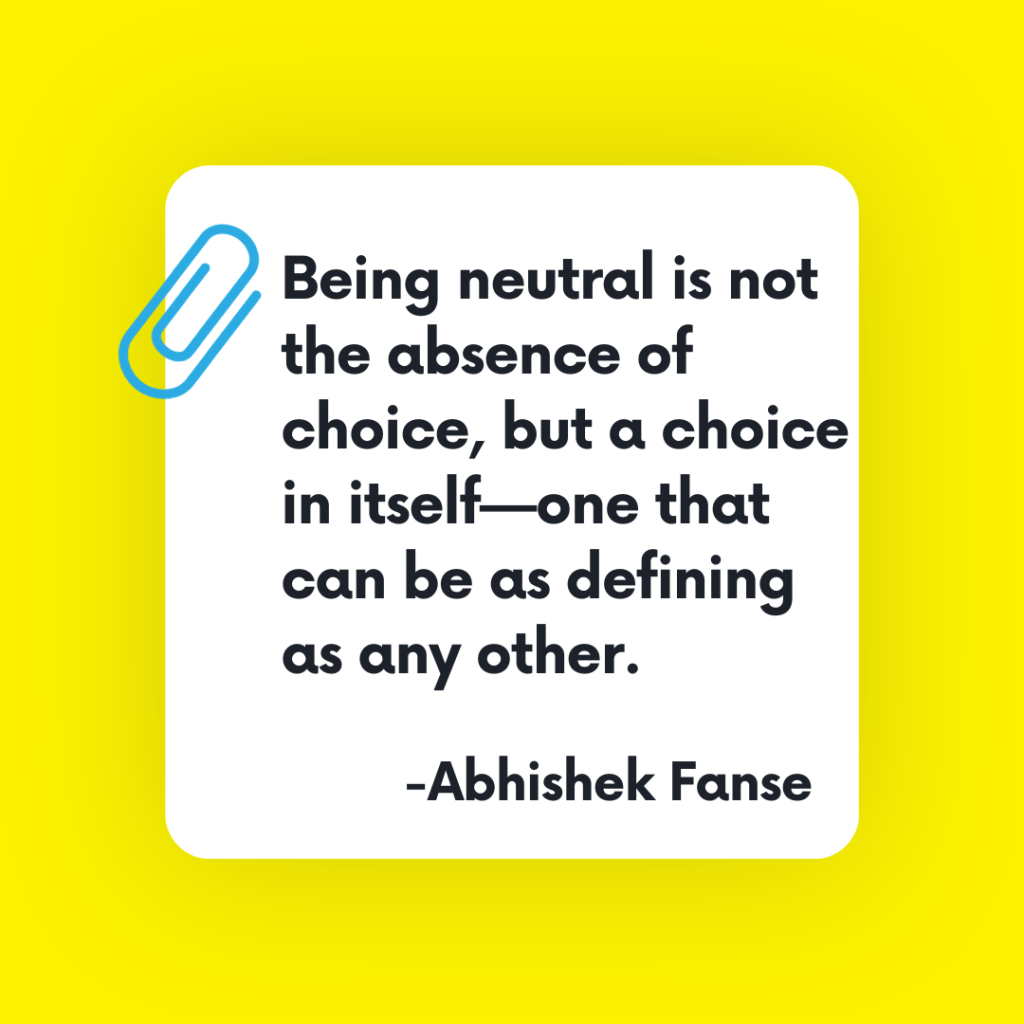
Every choice, by definition, is a rejection of its alternative. Therefore, choices are always relative, biased, and limited by the options that exist. In that sense, a choice cannot be independent because it is defined by the conditions that make it a choice. The idea of a ‘choice’ presupposes the existence of an alternative, of a comparison. In a context where there is only one thing that exists independently, the notion of ‘choice’ would be meaningless because there would be nothing to choose from. Therefore, it wouldn’t be a choice; it would simply be a state of being. The paradox exists because we try to define and understand choice within the limited framework of language and duality. However, once you recognize that the very nature of choice is paradoxical and conditional, and you embrace that paradox rather than trying to resolve it, you arrive at a sort of meta-clarity. This does not mean you’ve resolved the paradox; it simply means you’ve stepped outside of it. You’ve transcended the limitations that come with the dualistic thinking of ‘this or that,’ ‘yes or no,’ ‘neutral or biased.’
Choices are never made in emotional vacuums. They are laden with expectations, fears, and desires that stem from our past experiences, conditionings, and inherent personality traits. Even the seemingly most “logical” choice is often deeply influenced by emotions we may not even be fully aware of. The emotional charge of expectations is often the heaviest. When we make a choice, it is often governed by what we expect the outcome will bring us—pleasure, validation, success, or the avoidance of pain and conflict. The emotion here is one of anticipation, coupled with anxiety about whether our expectations will be met.
Then there’s desire, an emotion that often masquerades as need. The choices we make based on desire are emotionally charged with hopes for fulfillment, achievement, or recognition. But desire is a double-edged sword: while it motivates us, it also sets us up for disappointment if things don’t go as planned.
Even when we think we are making a “neutral” choice, what we are often trying to do is distance ourselves emotionally from the implications of the decision. We might say it’s “purely logical,” but the underlying emotion is often one of self-preservation—we wish to remain unscathed by the emotional weight that comes with making a more obviously partial choice.

One reason choices are emotionally charged is that they give us the illusion of control. Making a decision allows us to feel like we have some say over our fate. However, this control is always somewhat illusory. Life’s unpredictability ensures that our choices, no matter how well-considered, often have unexpected outcomes. The realization that our control is limited can bring up a host of emotions like helplessness or existential dread. Every choice we make, big or small, adds a brick to the edifice of our self-identity. We look for validation through our choices; when they lead to desired outcomes, it reinforces our sense of self-worth. When they don’t, it challenges our self-image and can lead to emotions like self-doubt, shame, or regret.
Our choices also affect how we are viewed by others, adding another layer of emotional complexity. Sometimes we make choices that conform to societal norms or expectations to avoid judgment or gain approval. The emotions at play here are often related to a fear of rejection or a need for social cohesion. At other times, we may make choices that go against the grain, driven by a desire for individuality or authenticity. This can lead to a complicated cocktail of pride, liberation, but also potential loneliness.
When it comes to seemingly paradoxical choices—like choosing wisdom over a loved one or maintaining a “neutral” stance—the emotional texture becomes even more intricate. For instance, choosing wisdom over a loved one might be a defense mechanism to protect oneself from future emotional pain, yet it can also lead to immediate emotional pain due to the distancing from the loved one. Here, both foresight and dread, love and rationality, are locked in an emotional tussle.
In cases where we choose to be “neutral,” what we are really doing is choosing not to engage emotionally in a way that makes us vulnerable. We might convince ourselves that we’re staying above the fray, but deep down, the need to protect ourselves emotionally is dictating that ‘neutral’ choice. The emotion behind neutrality is often a fear of emotional engagement, wrapped up in a protective layer of rationality. Ultimately, emotional maturity plays a large role in how we navigate the sea of choices and their associated feelings. Being aware of our emotional drivers allows us to make more ‘informed’ choices, even if that information is coming from within ourselves. This kind of self-awareness can temper the more reactive emotions like fear and desire and allow room for more nuanced feelings like contentment, acceptance, and genuine love to inform our decisions.
Choice is often seen as liberating, an act of free will that puts us in the driver’s seat of our destiny. However, with every choice we make, we also close off other possibilities, limiting ourselves in certain ways. The emotional paradox here is the simultaneous existence of freedom and constraint within the same action. We may feel exuberant for choosing a particular path, but there can be a latent sadness or anxiety about the paths left unexplored.
While choices often feel monumental in the moment, their impact can wane over time, sometimes even reversing in significance. What seemed like a terrible choice in the past may later appear wise, or vice versa. This fluidity can generate complex emotions, such as regret for past choices or anxiety about the unpredictability of future choices and their unforeseeable emotional implications.
Ultimately, where every action presents us with a choice and counter choices, we sometimes find ourselves paralyzed, suspended in a moment of indecision. Yet, this paralysis isn’t a dead end; it’s a pause, a sacred space that invites us to reflect, to feel, and to become keenly aware of our humanity.
What if we reframe this so-called “choice paralysis” not as a dilemma but as a moment of pause in the great narrative of our lives? It becomes not a prison, but a platform; not a quagmire, but a quest. In this paused state, we are philosophers, artists, and explorers of the inner cosmos. We grapple not just with options but with identities, not merely with pros and cons but with hopes and fears, love and loss.
In this pause, we are not frozen; we are fervently alive. We are composing in our minds the symphony of our future, writing the next act of our life’s drama, sculpting the clay of our becoming.
And when the pause lifts—as it always does—we make a choice, yes, but we also do something more profound: we embrace our capacity to choose, even when the choices are hard, even when the path is foggy. For it’s in the wrestling with choices that we come to know who we truly are.
So, the next time you find yourself in the clutches of choice paralysis, remember: you are standing at the confluence of many rivers, each leading to a different ocean but all part of the same Earth. And it’s okay to stand there for a while, to feel the currents, to listen to their distinct murmurs, before stepping into the stream that will carry you to your next adventure.
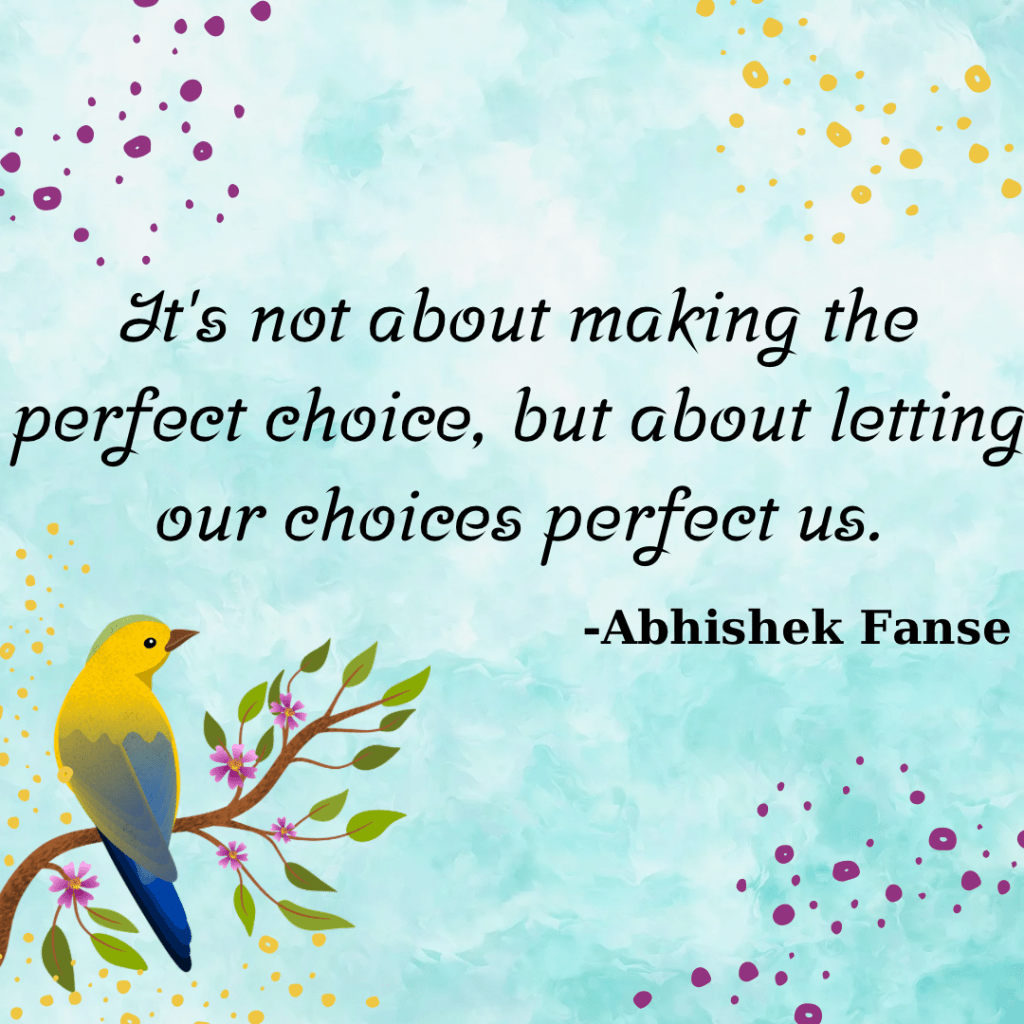
And so, we are forever navigating, forever choosing. Not in search of resolution, but in pursuit of growth. In the end, it’s not about making the perfect choice, but about making our choices perfect us.
Perceptions – Consensus Subjectivity vs. Objective Truth
Perception is the process by which sensory information is interpreted, organized, and consciously experienced. This involves not just the mechanical aspects of sensation, but also the psychological elements that interpret and prioritize this data, often filtered through individual beliefs, experiences, and cultural norms. Perception is an interface between an individual’s interior world and the objective reality surrounding them.
In a perfect, objective world, there would be a single, indisputable truth about everything. But humans aren’t perfectly objective beings; our cognitive and sensory apparatus has its limitations. A snake perceives heat differently than a human; a dog perceives scent differently than a human. While the world itself might possess a “universal truth,” our ability to perceive it is shaped by our limitations. If you act with “100% completeness,” it would mean that you have acted in full alignment with your capabilities and intentions. But people perceive your actions based on their own sets of experiences, expectations, and biases, not necessarily based on your intentions. Hence, perceptions can vary even for a universally “complete” action. While the act itself might be independent, its interpretation is not. That’s where perception comes in. Perceptions may be “limited” and “formed by other or for other,” but they play a critical role in social dynamics, ethical considerations, and interpersonal relations.
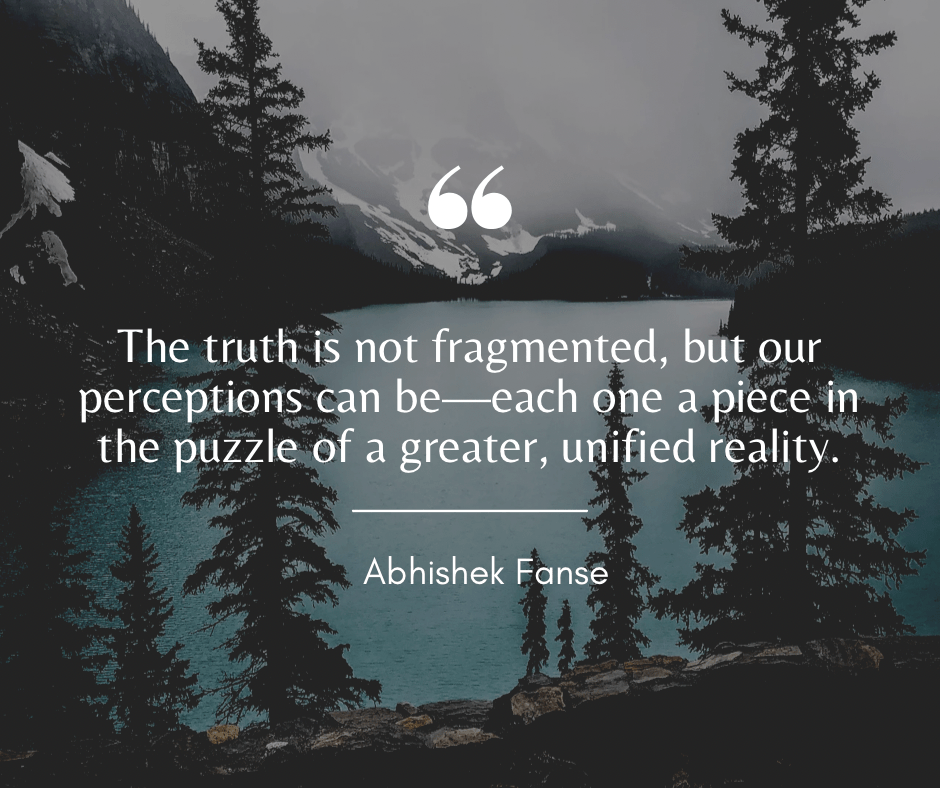
People rely on perceptions because it’s an accessible way to interpret and navigate the complex world. But it is essential to differentiate between individual perceptions and collective or societal ones. The latter often serves as a “consensus reality,” providing a common framework for communication and understanding. So, while perceptions are limited by their very nature, they are a necessary component of human interaction and society. The real issue arises when perceptions are mistaken for objective truth, ignoring their inherently subjective and conditional nature. We can indeed question the “reality” of different perceptions and argue that they’re all illusory in some way, but as long as humans have subjective experiences, perceptions will continue to differ. And in that diversity of perception lies the complexity, and beauty, of human experience.
Question: can we have any objective experience?
The notion of “objective experience” is a bit of an oxymoron. Experiences are inherently subjective because they are mediated by individual sensory apparatus, psychological states, and sociocultural backgrounds. However, certain frameworks try to minimize subjectivity to get as close to “objectivity” as possible. In the scientific method, for example, experiments are designed to be replicable regardless of who performs them. The idea is to eliminate as much human subjectivity as possible so that the results point to some “objective” truth about the world.
There can be cracks in achieving objectivity in scoring or mathematical experiments as Measurement tools are designed and interpreted by humans, who bring their own sets of assumptions and limitations to the table.
When a majority of individuals agree on a particular experience or observation, this doesn’t necessarily make it “objective” in the sense of an unchanging truth that exists independent of human perception. Rather, it forms a “consensus reality”—a shared framework of understanding that facilitates communal living and communication. While this consensus reality may be treated as “objective” within a specific cultural or social context, it’s not the same as a universal truth that holds across all times and places.
For example, money is a societal consensus. We agree to give paper and metal tokens a certain value. Within the context of a particular economy, the value of a dollar or euro is an “objective” fact, but this objectivity is contingent on shared belief and participation in economic systems. The material paper has no intrinsic value; its worth is entirely constructed and agreed upon.
However, Truth, in its purest form, shouldn’t have different meanings or interpretations. In philosophy, something that is “objectively true” would be true regardless of individual or cultural beliefs—a universal fact. However, accessing or understanding such truths is a challenging endeavor precisely because we are subjective beings.
Can actions be detached?
The origin of action can be traced back to the very fabric of life itself. Every living entity, whether it’s a single-celled organism or a complex human being, is in a continuous state of action. Even in states of seeming inactivity, there are countless actions taking place within our bodies – cells dividing, heart beating, neurons firing. These actions are not born out of attachment, but rather out of the inherent nature of life and its ceaseless dynamism.
In human beings, actions become more complex. Many of our actions stem from cognitive processes, decision-making, emotions, motivations, desires, and fears. Some of these might be influenced by past experiences or expectations of future outcomes. While it’s true that past experiences can inform our actions, it doesn’t necessarily mean that every action is an outcome of attachment to past results.
Let’s take the example of learning to ride a bike. The initial attempts are informed by the desire to learn, and perhaps the fear of falling. Each attempt, whether successful or not, provides a learning experience which informs future attempts. Over time, as we master the skill, the act of riding a bike becomes almost second nature. It’s no longer driven by the initial desire or fear, but instead becomes an integrated action that we can perform almost effortlessly. In this scenario, the action of riding the bike is not an outcome of attachment, but a manifestation of learned skills and understanding.
Now, let’s consider the concept of detached action as explained in the Bhagavad Gita. Detachment in this context does not mean indifference or lack of care, but rather a state of being where one is not excessively attached to the fruits of their actions. When we perform an action with an attached mindset, we are often excessively focused on the outcome. This focus on the future can rob the action of its full potential, as our mind is not fully present in the action itself.
Detached action, on the other hand, allows us to be fully present in the act of doing. This presence can liberate the action from the constraints of past experiences or future expectations, allowing it to unfold with its full potential. A detached action is one that is performed with a sense of duty, with full attention, and without excessive attachment to the outcome. This doesn’t mean that we don’t care about the result. Instead, it means that we perform the action to the best of our ability, accepting whatever result comes as a consequence.
An important aspect to consider here is the interconnectedness of life. Our actions do not exist in a vacuum; they are part of an interconnected web of actions, reactions, and interactions. Understanding this can help us realise that while we have control over our own actions, the results are influenced by countless other factors, many of which are beyond our control. This realisation can foster a sense of humility, acceptance, and detachment, which can free us from the psychological burden of excessively identifying with the outcomes of our actions.
Moving further into the philosophy of actions, let’s delve into the concept of ‘free will’ and ‘determinism’. These two philosophical positions often clash when we try to understand the nature of our actions.
Free will posits that we, as conscious beings, have the power to make choices and act independently of any external constraints. It suggests that our actions originate from our conscious decisions and, thus, we bear full responsibility for them.
Determinism, on the other hand, suggests that every event, including human actions, is determined by previously existing causes. It argues that all our actions are the result of some cause, whether it is our genetic predisposition, upbringing, social environment, or other factors.
Both of these positions hold some truth. While we may feel that we have the freedom to choose our actions, we cannot deny that our choices are influenced by our past experiences, genetic predisposition, and external circumstances. So, our actions are both free and determined, depending on the perspective we adopt.
When we examine our actions closely, we find that they are not purely the result of our conscious decisions. Our subconscious mind, conditioned by past experiences and deep-seated beliefs, plays a significant role in our decision-making process. So, while we might believe that we are acting freely, many of our actions are habitual reactions conditioned by our past.
Understanding this can liberate us from the illusion of absolute control and the burden of excessive self-blame or self-congratulation. It can also foster a sense of compassion for ourselves and others, as we recognise that our actions are often the result of deep-seated conditioning and external circumstances, rather than purely intentional choices.
The key lies in the practice of mindfulness and self-awareness. By becoming more aware of our thoughts, feelings, and motivations, we can start to understand the forces that drive our actions. We can recognise our habitual patterns and start to make more conscious choices.
In the Bhagavad Gita, Krishna advises Arjuna to act without attachment to the fruits of action. This does not mean acting without care or intention. Rather, it means acting with full attention and commitment, without getting caught up in the anxiety about the outcome. This attitude allows us to act with greater freedom and effectiveness, as we are not burdened by excessive worry about the future or regrets about the past.
When we act, we set into motion a series of events, and the consequences of those actions ripple out into the world. The impact of our actions is not confined to ourselves; it influences those around us, our environment, and ultimately the world at large. This chain of cause and effect is constantly in motion and is dictated by the nature and intent of the action.
Duality arises from the perceived differentiation between good and bad, positive and negative, joy and pain, and so forth. This perceived differentiation often causes conflict and suffering because we instinctively cling to what we perceive as good and resist what we perceive as bad. We are pleased when our actions yield positive outcomes and disappointed when they do not.
However, the Bhagavad Gita teaches us that the dichotomy of good and bad is a construct of our mind and that every action simply is. This is a difficult concept to understand because it runs counter to our instinctual desire to classify and judge things based on our subjective perspective.
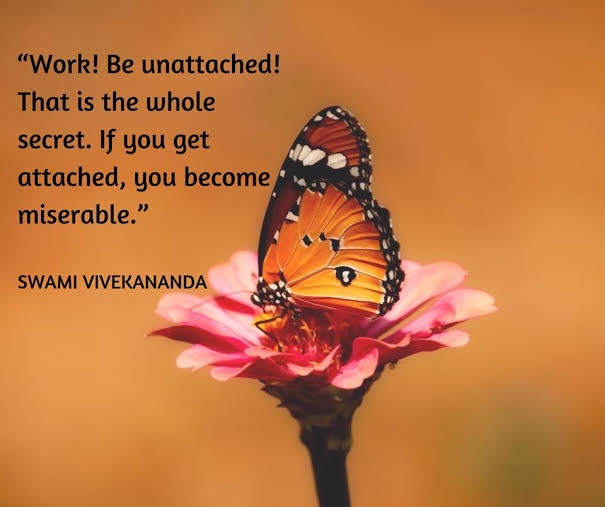
In reality, an action is neither good nor bad; it is our attachment to the outcome that labels it so. When we act without attachment to the outcome, we act in the fullest expression of our being, free from the constraints of expectation or fear of failure. This state of detachment does not mean that we do not care about the outcome, but rather that we understand we cannot control every aspect of it.
Instead, our focus shifts to the process, the action itself. By doing so, we become more present, more mindful, and more engaged in our actions. We start to see our actions not as a means to an end but as an end in themselves.
Therefore, to navigate the duality of actions and their effects, we must cultivate awareness and detachment. By observing our thoughts, emotions, and actions without judgment or expectation, we can experience life as it is, without the filter of duality.
In the grand scheme of life, our actions are but tiny ripples in a vast ocean. They may cause waves, they may create turbulence, but eventually, they will settle, leaving the water calm and clear once more. It is in this state of calmness, free from the duality of actions and their effects, that we find true freedom and peace.
 Abhishek Fanse