Needs – Fulfilment or imaginary?
At its core, ‘need’ represents a perceived lack within our lives. Whether it’s a need for something material like food or shelter, or something psychological such as love or acceptance, every need suggests that something essential is missing. Desire, according to Buddhist philosophy, leads to suffering because it perpetuates a state of lacking and grasping. When needs arise, they disturb our peace by suggesting that our current state is insufficient.
When a need is fulfilled, it confirms its existence as something genuine. For example, the need for nourishment is affirmed as real when eating relieves the pangs of hunger. Here, the need aligns with a fundamental requirement for survival. Conversely, if a need fades away without being fulfilled, one might argue it was never a true need but rather a transient desire. This observation is particularly relevant in the context of emotional or psychological needs, where distinguishing between deep-seated necessities and superficial wants becomes complex.

The paradox lies in the dual nature of needs as both real and illusory. On one hand, certain needs are indisputably real, as their fulfillment directly pertains to survival and well-being. On the other, many needs, when scrutinized, reveal themselves as constructs of the mind, shaped by societal, cultural, and personal expectations and conditioning. Stoic philosophy, for instance, teaches the value of distinguishing between what we can control and what we cannot, urging a detachment from external desires and an acceptance of what is. This detachment is not about suppression of need but rather a profound understanding of the ephemerality of external conditions.
Existentially, needs can be viewed as anchors that give meaning to our lives. Yet, this meaning is often predicated on the continual pursuit of fulfillment, which can lead to an endless cycle of desire and disappointment. Spiritually, transcending needs can be seen as a path to enlightenment, where one achieves a state of contentment and unity with all existence, free from the dualities of lack and fulfillment. Exploring the concept of need across both living and non-living entities broadens our understanding of the fundamental nature of existence. In living beings, needs are typically biologically or psychologically driven, manifesting as impulses towards survival, reproduction, and social bonding. In contrast, the ‘needs’ of non-living entities—such as the need for maintenance or preservation—are attributed by human perspectives, often reflecting our own values or necessities imposed upon objects or systems.

When a need vanishes without fulfillment, it raises profound questions about its existence. Was it a real need, or merely a temporary desire? This question aligns with the philosophical inquiry into the nature of being and non-being. In metaphysical terms, the disappearance of a need without fulfillment suggests that it may have been a contingent, not a necessary state. Contingent needs are dependent on specific conditions and perceptions, which can change over time and context, leading to the dissolution of the perceived need. The journey towards fulfilling a need is often fraught with turmoil and dissatisfaction. This chaos, particularly evident in the human experience, stems from the tension between current states of lack and the anticipated states of fulfillment. Psychologically, this turmoil can be seen in the frustration, anxiety, and even despair that arise in the pursuit of unmet needs. The existential tension here is the human confrontation with limitation and imperfection.
Philosophically, the condition of being ‘in need’ can be seen as a fundamental aspect of the human condition. Existential philosophers have long grappled with the notion of lack as a core component of existence. Jean-Paul Sartre, for instance, discussed how human consciousness is defined by a lack—being “for-itself” implies a constant striving towards an elusive “in-itself,” a state of being that remains perpetually out of reach, creating a perpetual state of desire and resultant existential void.
From another perspective, the chaos and discomfort experienced in the face of unmet needs can also be transformative. This aligns with the concept of “creative destruction” in economic theory, where old structures must be destroyed to make way for new, potentially more adaptive arrangements. Psychologically, enduring the discomfort of unfulfilled needs can lead to personal growth, resilience, and a deeper understanding of oneself and one’s true priorities. In spiritual traditions, particularly those influenced by non-dualistic philosophies, the ultimate aim is often described as transcending need altogether. This transcendence is not about achieving a state where no physical or psychological needs exist, but rather reaching a state of consciousness where one is no longer enslaved by those needs. This state is characterized by a profound inner peace and contentment, where external conditions no longer dictate one’s inner state. Thus, the existence of need, its fulfillment, or its vanishing without impact each carry significant implications. These phenomena invite us to reflect on the ephemeral and often illusory nature of needs. They challenge us to consider whether true fulfillment comes from satisfying every need or from cultivating a state of being that is free from the tyranny of need.

As we delve further into the dynamics of need and its fulfillment, it becomes crucial to distinguish between short-term satisfaction and long-term fulfillment. Immediate resolution of needs often brings temporary relief, but the underlying drivers—whether emotional, psychological, or spiritual—may still persist. This introduces a cyclical pattern where fulfilled needs may resurface or evolve into new desires, suggesting that the root of need is not merely in the external lack but in a deeper, internal void. Existentially, the concept of need pushes individuals to confront their freedom and responsibility. Jean-Paul Sartre’s idea of existential freedom suggests that while we are free to pursue our needs, we are also responsible for the choices we make in response to these needs. This freedom is double-edged; it empowers but also burdens us with the responsibility of discernment and decision-making, highlighting the existential challenge of navigating needs without clear, predefined paths. The pursuit of fulfilling all needs can create an illusion that perpetual satisfaction is attainable. This illusion can lead to constant striving and dissatisfaction, as each fulfilled need often gives rise to new desires. Philosophically, this reflects the Buddhist teaching on the nature of desire and suffering. Recognizing this cycle can lead to a profound existential and spiritual inquiry: Is there an end to need, or is the human condition inherently defined by endless desire?
In spiritual traditions, particularly those advocating non-attachment and detachment, the ultimate freedom is described as a state of needlessness. This does not imply a lack of engagement with the world but rather an engagement that is free from the compulsion of needs. Achieving such a state is often described as enlightenment, where one exists in complete harmony with the universe, undisturbed by individual desires and aversions. One of the central paradoxes in the realm of need is the tension between dependence and independence. On one hand, fulfilling basic needs often requires interdependence—relying on others and the environment, which seemingly contradicts the ideal of self-sufficiency. On the other hand, the more we fulfill certain needs, the more autonomous we may become, capable of pursuing higher, more abstract needs such as self-actualization. Yet, this pursuit can lead back to new dependencies, such as the need for validation or intellectual stimulation, illustrating a cyclical return to interdependence.
Needs emerge from a sense of lack or emptiness, driving us to seek fulfillment to feel complete. Paradoxically, this quest for completion through fulfilling needs can deepen the sense of emptiness, as each fulfillment often reveals new voids. This reflects the Buddhist notion that desire (and its fulfillment) inherently leads to suffering due to the impermanent nature of all conditioned phenomena. Thus, the very act of seeking wholeness through external fulfillment paradoxically perpetuates emptiness. Another paradox lies in the relationship between desire and liberation. In many spiritual traditions, liberation is attained through the cessation of desire. However, the initial movement towards liberation itself arises from a desire—the desire to be free from suffering. This presents a fundamental paradox: one must harness desire to ultimately transcend all desires. The path to liberation, therefore, involves navigating through desires in a way that gradually diminishes their power over one’s state of being. The pursuit of self-improvement is often driven by the recognition of one’s needs and deficiencies. This pursuit, intended to overcome limitations, paradoxically reaffirms those limitations by constantly highlighting areas of lack. The more one engages in self-improvement, the more one might become aware of further imperfections, potentially leading to a never-ending cycle of self-enhancement and the persistent sense of being ‘not enough.’
The ultimate understanding is that distinctions between need and fulfillment are illusory—both are manifestations of the same underlying reality, perceived differently due to mental conditioning and dualistic thinking. Here, the paradox is that need and its resolution are not truly separate; they are two sides of the same coin. Recognizing this non-duality can lead to a profound shift in how one experiences need and fulfillment, seeing them not as opposing forces but as interconnected aspects of life’s unfolding.
Depths of Hurt: An Intriguing Emotion
At its core, hurt is an emotional response to a perceived loss or violation. This loss can be tangible, such as the loss of a loved one, or intangible, like the loss of respect or love. The perception of this loss is crucial; it’s not the objective situation that determines hurt, but how one interprets and internalizes it. The origins of hurt can be traced back to our earliest human experiences. As infants, we are utterly dependent on others for our survival, leading to a deep-rooted need for attachment and acceptance. This need, while essential for survival, also becomes the breeding ground for hurt. When our expectations of support, love, or acknowledgment are unmet, we experience hurt.
Hurt often manifests differently in personal and professional contexts, yet the underlying mechanics are surprisingly similar. In personal relationships, hurt is often more directly linked to emotional bonds and expectations of love, loyalty, and understanding. In professional settings, while the emotional stakes may seem lower, the hurt can still be profound. It often stems from unmet expectations regarding respect, recognition, or the outcome of our efforts. The statement “don’t take it personally” in professional environments is an acknowledgment of this complexity. It attempts to draw a boundary between the personal self and the professional role. Yet, this separation is often not as clear-cut as it seems. Our professional lives are an extension of our personal selves; the values, aspirations, and efforts we put into our work are deeply personal. Thus, when we face criticism, rejection, or failure at work, it can still impact our personal self-esteem and sense of worth.

The hurt one experiences is often a reflection of internal expectations and self-perception. When others do not meet our expectations, or when we fail to meet our own, we experience a sense of loss. This loss is not just about the external situation but also about our internal narrative. We construct stories about who we are and how the world should respond to us. When reality diverges from these stories, we feel hurt. Understanding hurt requires dissecting the dichotomy between external causes and internal reactions. Is hurt caused by others, or is it self-inflicted? The answer is nuanced. Others can act as triggers, but the actual experience of hurt is an internal process. It is our interpretation of events, filtered through our personal beliefs and past experiences, that generates hurt. human experience. We are beings of desire and expectation, living in a world that is constantly changing and often unpredictable. This disconnect between our desires and reality is a fertile ground for hurt. However, this inevitability doesn’t imply helplessness. It requires a shift from external validation to internal self-acceptance, and from rigid expectations to flexible aspirations. This journey towards resilience is not about becoming indifferent or uncaring, but about cultivating a grounded sense of self that can navigate the ups and downs of life with equanimity.
Developmental psychology, for instance, sheds light on how early experiences shape our vulnerability to hurt. Childhood, where the foundation of our self-esteem and worldviews are formed, significantly influences how we perceive and react to potential hurts in later life. Attachment suggests that our early bonding experiences with caregivers form templates for future relationships. Secure attachments lead to resilience, while insecure attachments can heighten our sensitivity to rejection and loss, predisposing us to deeper hurt.
Hurt also stems from conflicts of human existence – our search for meaning in an indifferent universe, the realization of our freedoms and limitations, and the ultimate confrontation with our mortality. Our self-perception plays a critical role in this process. If we perceive ourselves as capable and deserving, failing to meet expectations can lead to self-criticism and hurt. Conversely, if we see ourselves as unworthy, we may internalize external negative outcomes as confirmations of this belief, perpetuating cycles of hurt and low self-esteem.
Let us take a simple example where you feel hurt due to a longing for more time and attention from a loved one, even though you recognize they are doing their best. At the heart of your experience lies a paradox: you have an expectation (desiring more time and attention) and simultaneously an understanding (knowing your loved one is doing their best). This dichotomy is not just a matter of conflicting thoughts, but a reflection of the complex nature of human needs and empathy. On one hand, your need for time and attention is genuine – a fundamental aspect of human relationships where such connections and affirmations are essential for emotional bonding and fulfillment. On the other hand, your empathetic understanding of your loved one’s circumstances shows a depth of maturity and compassion. Feeling hurt in this context may arise from an unmet need, which is central to your emotional wellbeing. It’s important to recognize that such needs are not just whimsical desires; they are integral to our sense of connection and belonging. When these needs are not fully met, even in the presence of understanding and rationalization, it creates an emotional void, often experienced as hurt. The consequences of this paradox can be profound. When the fear of burdening outweighs the need for communication, individuals might choose to suppress or hide their feelings. This suppression, while it might seem to maintain harmony in the short term, can lead to several negative outcomes like emotional distance, resentment or misunderstanding. However, this need for emotional expression often collides with an equally powerful force – the fear of overburdening others. This fear stems from a place of empathy and concern, where we become acutely aware of the other person’s potential struggles and challenges. It also arises from our own vulnerabilities; the fear of being seen as needy, weak, or burdensome. Moreover, there’s an underlying concern about the dynamics of the relationship itself – the worry that being too open about our troubles or desires might alter the equilibrium of the relationship, potentially leading to conflict, distance, or discomfort.
At the heart of this paradox is our self-concept, the multifaceted perception we hold of ourselves. This self-concept is not static; it is shaped by our experiences, beliefs, and the feedback we receive from our environment. When we consider communicating our innermost thoughts and feelings, we are also negotiating with our self-concept. Are we someone who burdens others? Are we worthy of being heard and understood? These questions reflect deeper insecurities and beliefs about our worthiness and role in our relationships. The fear of being a burden often stems from a vulnerable place in our self-concept, where we doubt our value in the eyes of others. The complexity of this paradox also lies in the dynamic nature of human relationships. Each relationship we form is a unique intersection of personalities, histories, and expectations. In some relationships, there may be an established pattern of one person being the caregiver and the other the receiver. Attempting to reverse or alter these roles by expressing one’s own vulnerabilities can feel disruptive and fraught with uncertainty. There’s also the aspect of reciprocity – the balance of give and take. In healthy relationships, this balance is fluid and flexible, but the fear of disturbing this balance can make the act of communication seem daunting.
Psychologically, this paradox is intersecting with our deepest fears and vulnerabilities. It often triggers core issues related to self-worth, rejection, and abandonment. When we contemplate sharing our burdens, we are not just sharing a specific problem or feeling; we are also, on a deeper level, testing our acceptability and worthiness in the eyes of others. The fear that our vulnerabilities might make us less worthy of love or respect can be a powerful deterrent to open communication…
The Fluidity of Stillness: Understanding Stagnation Amidst Movement
“Movement in Stagnation” captures the tension between seemingly opposite states—feeling spiritually stuck or stagnant while simultaneously experiencing inner changes or shifts. This suggests that even within periods of seeming inertia, movement is happening, whether you recognize it or not.
The experience of feeling both movement and stagnation simultaneously—or alternately—can be influenced by various factors, including your emotional state, external circumstances, and perspective. On a day-to-day basis, there are changes, interactions, and new experiences, which might seem like movement. However, these might not register on the long-term scale, where overarching goals and life trajectories are considered.
ertain philosophies and spiritual perspectives propose that time is not linear but cyclical. Thus, the repetition or perceived stagnation may actually be a part of natural cycles. However, Emotions are incredibly transient; they can change from moment to moment. This emotional flux might be what you’re identifying as “movement” within the stagnation. Emotional highs feel even higher when coming out of a low and vice versa. This contrast might contribute to the sensation of significant movement even when your situation hasn’t drastically changed.
Humans are wired to identify patterns. When you start noticing recurring themes or experiences, your brain flags these as patterns, which can feel like you’re stuck in a loop. Once you recognize a pattern or feel stuck, you’re more likely to notice information that confirms this belief, thereby reinforcing the feeling of being stuck.
Some spiritual teachings suggest that life inherently consists of repetitive cycles—birth, growth, decay, death, and rebirth—and that recognizing this can free you from the illusion of stagnation. Certain philosophies like Buddhism focus on the present moment as the only “real” moment, suggesting that both the past (stagnation) and the future (movement) are constructs of the mind.
When you look at your life on a daily basis, you can see a lot of activities, interactions, and events that unfold. The sun rises and sets, you go to work, eat, sleep, talk to people, perhaps engage in some hobbies. This flurry of activity can give you the impression that things are constantly moving and changing. However, if you were to zoom out and look at a larger slice of your life, say a year or a decade, the feeling is often quite different. Major life circumstances—your job, where you live, your relationship status—may not change as frequently. Even if they do, the underlying patterns of behavior, the kinds of relationships you engage in, and your day-to-day experiences might not undergo a significant transformation. This is where the feeling of “stagnation” often comes in. Despite the constant activity and interactions, there may be an underlying sense that nothing much has really changed—or is going to change.
Emotions, by their very nature, are transient and fluid. Even within a single day, you might experience a range of emotions—joy, frustration, excitement, boredom, love, irritation—and these emotions have a way of coloring your perception. When you’re joyful, the world seems vibrant, full of possibilities; you feel like you’re “moving.” When you’re frustrated or bored, the world can seem dull, repetitive; hence the feeling of “stagnation.”
The mind has certain tendencies that influence this dual experience of movement and stillness. One of these is the brain’s knack for pattern recognition. We make sense of the world by recognizing patterns; it’s how we learn and navigate complex realities. However, this strength can turn into a trap when the patterns you recognize lead to a sense of helplessness or stagnation. For instance, if you’ve had several failed relationships, you may start to believe that all relationships are doomed to fail, leading to a feeling of being “stuck.”
Finally from a more spiritual or existential standpoint, the very idea of movement and stagnation can be questioned. Certain spiritual teachings suggest that the material world is an illusion, and that true “movement” is a journey inward, toward understanding one’s own nature and the nature of reality. In this context, both the feeling of “moving” and “being stuck” can be seen as distractions from the true journey, which is neither about moving nor staying but about understanding and being.
Love and Longing – A paradox ??
The experience of longing for love is universal and deeply rooted in our humanity. This longing, often described as an unquenchable thirst, is both a blessing and a burden, driving us to form connections, seek fulfillment, and explore the depths of our own emotions.
Delving into the realm of quantum physics, there’s an intriguing principle known as quantum entanglement. It suggests that two particles, once entwined, will remain connected irrespective of distance. A change in the state of one will instantly affect the state of the other, no matter how far apart they are.

Drawing a parallel to human emotions, particularly longing, one could argue that individuals form ’emotional entanglements.’ The sense of connection might not be physical but is as intense, enduring, and mystifying as quantum entanglements. This could be the reason why, even in separation, our emotions remain tethered to another person, place, or memory. Longing is a complex emotion that can arise from various sources. At its core, it’s a yearning for something that seems to be just out of reach. We might long for a loved one, for a sense of belonging, for an idealized version of the world, or for a deeper connection with ourselves.
Our longing for love can be seen as a biological imperative. Our ancestors who formed strong social bonds and felt a deep connection to their kin were more likely to survive and reproduce. As a result, the longing for love and connection is deeply ingrained in our genetic makeup. Our experiences shape our emotional responses. For instance, early attachment experiences with caregivers can influence our future relationships and how we perceive love. Similarly, our psychological makeup, shaped by both nature and nurture, affects how we experience longing.
The relationship between love and longing is paradoxical. On the one hand, love can make us feel whole, bringing joy and fulfillment. On the other hand, it can also create a sense of longing, especially when faced with separation or unfulfilled desires. This tension is often evident in poetry and art, where love and longing are intertwined in complex ways. When we are in love, we often feel a sense of completeness. The world seems brighter, and we may experience a deep sense of contentment. This feeling arises from the connection and emotional intimacy that love brings. In these moments, longing may fade into the background. Despite the fulfillment that love offers, it can also create a sense of longing. When separated from a loved one, the intensity of our love can manifest as a deep yearning for their presence. This longing can also arise from unmet emotional needs, unfulfilled desires, or the idealization of love.
Love and longing are not mutually exclusive; they often coexist. The very act of loving someone can make us more aware of their absence when they are not around. Similarly, longing can intensify our love, making us cherish our moments of connection even more. This dynamic interplay adds depth to our emotional experiences.
Longing is not a singular emotion; it encompasses a range of feelings, including hope, desire, melancholy, and even pain. Longing often involves a strong desire for something or someone. This desire can create a sense of anticipation, making us look forward to future possibilities. The act of longing can be both exciting and agonizing, as we await the fulfillment of our desires. Longing can also be rooted in the past. We may long for a time when we felt loved, accepted, or understood. This sense of nostalgia can be accompanied by melancholy, as we realize that the past cannot be recaptured. Sometimes, longing arises from idealization. We may create a mental image of the perfect partner, the ideal life, or a utopian world. These idealized visions can make us feel discontented with our current reality, fueling a sense of longing. Longing can be painful, especially when it feels unending or unrequited. The intensity of our yearning can create a sense of suffering, as we grapple with the gap between our desires and reality.
Wrestling with the feelings associated with longing can lead to deeper emotional intelligence. Through introspection, we can learn more about ourselves, our needs, and our desires. Understanding the root of our longing can help us address underlying issues or unmet needs in our lives. everyone has felt it at some point. Recognizing this shared experience can foster empathy towards others and deepen our human connections. By understanding our own feelings of longing, we become better equipped to empathize with others.
Life is characterized by dualities: happiness and sorrow, presence and absence, fulfillment and yearning. While these might seem contradictory, they often exist side by side and give depth to our experiences.
Presence in Absence: Even in the absence of what we long for, there’s a certain presence of that object or person in our thoughts and emotions. This phenomenon speaks to the power of our minds and hearts to transcend physical limitations.
Completeness in Incompleteness: The very feeling of longing suggests that there’s something we deem essential for our completeness. However, the journey of life is about realizing that, in many ways, we are already complete in our incompleteness. The gaps and spaces create room for growth, evolution, and understanding.
Stability in Flux: Our feelings, including longing, are in constant flux. They come and go, intensify and wane. But beneath these changing emotions, there’s a stable core of self, a foundational aspect of our being that remains unswayed.
Amidst Peace!!
What brings you peace?

In the vast expanse where desires entwine, Detachment emerges, a beacon so fine.
While many chase starts, and beginnings anew, It’s in the echo of endings where peace rings true.
The tempest of life, in its fervent embrace, Urges us forward, a relentless race. Yet peace isn’t found in the heart of the storm, But in letting go, in a formless form.
In the depth of the night, where visions lie deep, Peace flourishes best where eyes don’t leap. For too often, our sight might lead us awry, But in the unseen’s embrace, our worries will die.
Seek not in the masses, the throngs or the crowd, Turn to the self, silent, not loud. For deep in one’s core, past chaos and spin, Rests the sanctuary of peace, glowing from within.
When we chase after shadows, our energy spent, It’s the introspective journey that’s heaven-sent. So remember these thoughts, when the world feels askew, Peace is an inside journey, forever true.
Can actions be detached?
The origin of action can be traced back to the very fabric of life itself. Every living entity, whether it’s a single-celled organism or a complex human being, is in a continuous state of action. Even in states of seeming inactivity, there are countless actions taking place within our bodies – cells dividing, heart beating, neurons firing. These actions are not born out of attachment, but rather out of the inherent nature of life and its ceaseless dynamism.
In human beings, actions become more complex. Many of our actions stem from cognitive processes, decision-making, emotions, motivations, desires, and fears. Some of these might be influenced by past experiences or expectations of future outcomes. While it’s true that past experiences can inform our actions, it doesn’t necessarily mean that every action is an outcome of attachment to past results.
Let’s take the example of learning to ride a bike. The initial attempts are informed by the desire to learn, and perhaps the fear of falling. Each attempt, whether successful or not, provides a learning experience which informs future attempts. Over time, as we master the skill, the act of riding a bike becomes almost second nature. It’s no longer driven by the initial desire or fear, but instead becomes an integrated action that we can perform almost effortlessly. In this scenario, the action of riding the bike is not an outcome of attachment, but a manifestation of learned skills and understanding.
Now, let’s consider the concept of detached action as explained in the Bhagavad Gita. Detachment in this context does not mean indifference or lack of care, but rather a state of being where one is not excessively attached to the fruits of their actions. When we perform an action with an attached mindset, we are often excessively focused on the outcome. This focus on the future can rob the action of its full potential, as our mind is not fully present in the action itself.
Detached action, on the other hand, allows us to be fully present in the act of doing. This presence can liberate the action from the constraints of past experiences or future expectations, allowing it to unfold with its full potential. A detached action is one that is performed with a sense of duty, with full attention, and without excessive attachment to the outcome. This doesn’t mean that we don’t care about the result. Instead, it means that we perform the action to the best of our ability, accepting whatever result comes as a consequence.
An important aspect to consider here is the interconnectedness of life. Our actions do not exist in a vacuum; they are part of an interconnected web of actions, reactions, and interactions. Understanding this can help us realise that while we have control over our own actions, the results are influenced by countless other factors, many of which are beyond our control. This realisation can foster a sense of humility, acceptance, and detachment, which can free us from the psychological burden of excessively identifying with the outcomes of our actions.
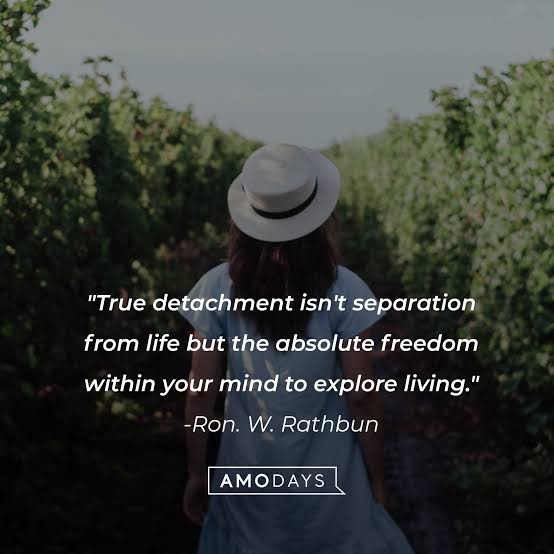
Moving further into the philosophy of actions, let’s delve into the concept of ‘free will’ and ‘determinism’. These two philosophical positions often clash when we try to understand the nature of our actions.
Free will posits that we, as conscious beings, have the power to make choices and act independently of any external constraints. It suggests that our actions originate from our conscious decisions and, thus, we bear full responsibility for them.
Determinism, on the other hand, suggests that every event, including human actions, is determined by previously existing causes. It argues that all our actions are the result of some cause, whether it is our genetic predisposition, upbringing, social environment, or other factors.
Both of these positions hold some truth. While we may feel that we have the freedom to choose our actions, we cannot deny that our choices are influenced by our past experiences, genetic predisposition, and external circumstances. So, our actions are both free and determined, depending on the perspective we adopt.
When we examine our actions closely, we find that they are not purely the result of our conscious decisions. Our subconscious mind, conditioned by past experiences and deep-seated beliefs, plays a significant role in our decision-making process. So, while we might believe that we are acting freely, many of our actions are habitual reactions conditioned by our past.
Understanding this can liberate us from the illusion of absolute control and the burden of excessive self-blame or self-congratulation. It can also foster a sense of compassion for ourselves and others, as we recognise that our actions are often the result of deep-seated conditioning and external circumstances, rather than purely intentional choices.
The key lies in the practice of mindfulness and self-awareness. By becoming more aware of our thoughts, feelings, and motivations, we can start to understand the forces that drive our actions. We can recognise our habitual patterns and start to make more conscious choices.
In the Bhagavad Gita, Krishna advises Arjuna to act without attachment to the fruits of action. This does not mean acting without care or intention. Rather, it means acting with full attention and commitment, without getting caught up in the anxiety about the outcome. This attitude allows us to act with greater freedom and effectiveness, as we are not burdened by excessive worry about the future or regrets about the past.
When we act, we set into motion a series of events, and the consequences of those actions ripple out into the world. The impact of our actions is not confined to ourselves; it influences those around us, our environment, and ultimately the world at large. This chain of cause and effect is constantly in motion and is dictated by the nature and intent of the action.
Duality arises from the perceived differentiation between good and bad, positive and negative, joy and pain, and so forth. This perceived differentiation often causes conflict and suffering because we instinctively cling to what we perceive as good and resist what we perceive as bad. We are pleased when our actions yield positive outcomes and disappointed when they do not.
However, the Bhagavad Gita teaches us that the dichotomy of good and bad is a construct of our mind and that every action simply is. This is a difficult concept to understand because it runs counter to our instinctual desire to classify and judge things based on our subjective perspective.
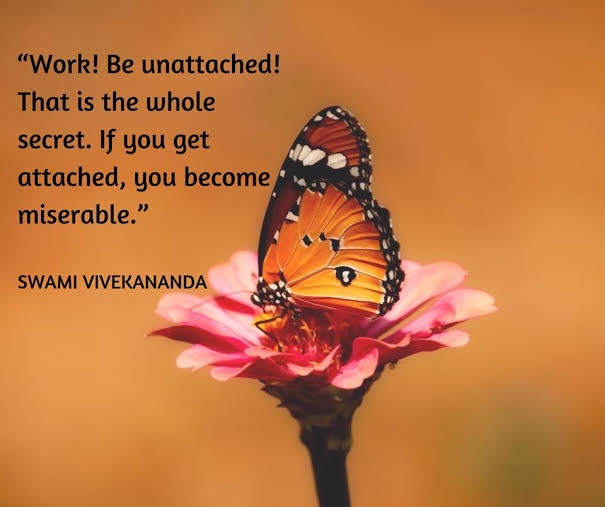
In reality, an action is neither good nor bad; it is our attachment to the outcome that labels it so. When we act without attachment to the outcome, we act in the fullest expression of our being, free from the constraints of expectation or fear of failure. This state of detachment does not mean that we do not care about the outcome, but rather that we understand we cannot control every aspect of it.
Instead, our focus shifts to the process, the action itself. By doing so, we become more present, more mindful, and more engaged in our actions. We start to see our actions not as a means to an end but as an end in themselves.
Therefore, to navigate the duality of actions and their effects, we must cultivate awareness and detachment. By observing our thoughts, emotions, and actions without judgment or expectation, we can experience life as it is, without the filter of duality.
In the grand scheme of life, our actions are but tiny ripples in a vast ocean. They may cause waves, they may create turbulence, but eventually, they will settle, leaving the water calm and clear once more. It is in this state of calmness, free from the duality of actions and their effects, that we find true freedom and peace.
 Abhishek Fanse