Understanding the fleeting nature of “Happiness”
Realising you’re happy and consequently puncturing that happiness—is a manifestation of the self-reflexive quality of human consciousness. It reflects our ability not only to experience emotions but also to have thoughts about those experiences, including the experience of happiness. At the most immediate level, we have sensory experiences and emotional reactions. These are our raw, unfiltered engagements with the world around us. But atop this immediate experience, we have a secondary layer of experience: our thoughts about our experiences. This secondary layer is where we interpret, judge, anticipate, and reflect.
The paradox here is that this second layer of experience can intrude upon and alter the first. By realizing we’re happy, we move the experience of happiness from the immediate realm into the realm of reflection and analysis. This can have a distancing effect, making the happiness less vivid and more abstract. The “self” that is experiencing happiness is no longer fully integrated with the experience; part of it has stepped aside to observe.
The awareness of happiness can also bring about a sense of sadness or melancholy. This is because our reflective consciousness is not only evaluative but also temporal; it exists in time. When we realize we’re happy, we also realize that the moment is fleeting, that it will pass. This injects a sense of loss or nostalgia into the current experience, dampening the happiness with a layer of sadness. There’s also the pressure that once identified, the feeling of happiness must be maintained, which turns it into an object of concern.
In some Eastern philosophies, for example, the ultimate state of happiness or enlightenment is one that transcends both happiness and sadness, existing in a state of pure “beingness” that is beyond dualities. Western philosophies often engage deeply with the notion of existential angst, the idea that human freedom and awareness are both a gift and a curse, capable of both elevating and diminishing our experiences. Humans are narrative creatures. We don’t just experience things; we also construct stories around our experiences, which become a part of the experience itself. Realizing you’re happy can sometimes feel like a narrative high point, a climax. But climaxes are, by their nature, transitional; they mark the point where a story begins to move toward its conclusion. This can create a sense of impending descent, which can tinge even the most joyous moments with a shade of melancholy. There’s a compelling argument to be made for the richness added to our lives by our ability to reflect on our experiences. This meta-experience, the experience of experiencing, adds depth and texture to our lives. It’s the thing that allows us to appreciate art, to fall in love, to engage in complex moral reasoning. But it comes at a cost: the cost of immediacy. The more we reflect on our experiences, the less we’re able to engage with them directly. It’s like being the actor and the audience at the same time. This dual nature of consciousness is both a blessing and a curse. While it allows us the richness of introspection and self-awareness, it also sets up a scenario where the observer can interfere with the experience.
When you realize you’re happy, you’re essentially stepping out of the experience to label it. The moment you do that, you bring in the concept of time. Emotions, when lived, are timeless. They’re states of being. But when you observe them, you also acknowledge their temporality—they become moments that have started and will eventually end. This implicit understanding of the fleeting nature of happiness casts a shadow on the experience, thereby altering its composition and introducing elements of sadness or anxiety.
The awareness of happiness can trigger broader questions about the nature of existence, purpose, and meaning. Happiness is often viewed as an ‘end,’ a goal in life. Once achieved, its realization can create a form of existential vacuum, a questioning of ‘what next?’ This moves you out of the emotional experience and into a cognitive one, involving existential questions that can often be more unsettling than comforting.
Your realization also exemplifies the duality inherent in life experiences. There’s a push and pull between opposing forces: happiness and sadness, awareness and ignorance, temporality and timelessness. Some philosophical traditions, particularly those from Eastern philosophies like Buddhism, suggest that the ultimate state of enlightenment is one that transcends this duality to experience a state of ‘oneness.’ In that state, the act of observing happiness and the experience of happiness itself become one unified experience, without a division that could puncture the emotion. When we experience happiness, it often fits into a story we have about what makes us happy and why. This narrative self can be in constant tension with the experiencing self. The act of realizing you’re happy is a narrative act—it fits this moment of joy into your broader life story. But life stories are complex and filled with ups and downs. Fitting a moment into a narrative can mean subjecting it to all the complexities and contradictions of that narrative, which can dilute the purity of the experience.
On the one hand, mindfulness and self-awareness teach us to observe our feelings, thoughts, and experiences. On the other hand, the very act of observing can sometimes alter or even negate the experience, particularly with transient states like happiness. In quantum physics, the observer effect refers to changes that the act of observation makes on the phenomenon being observed. In psychology, too, observing one’s thoughts and feelings can change them. This is the basis of therapies like Cognitive Behavioral Therapy (CBT), where the act of observing and questioning one’s thoughts can lead to emotional regulation.
When you realize you’re happy and become acutely aware of that happiness, you might also become aware of the fleeting nature of emotions. This could potentially lead to a decrease in the intensity of your happiness, making it a self-limiting state. The joy is punctured by the awareness of its temporary nature or by the anxiety of losing it. It’s crucial to distinguish between mindfulness and hyper-awareness. Mindfulness means accepting each moment as it is, including your happiness, without clinging to it or fearing its loss. Hyper-awareness, on the other hand, involves scrutinizing the experience so closely that you can’t simply be in it. You’re essentially stepping out of the experience to examine it.
Some of the ways to deal with it:
1. The first step in navigating this paradox is to accept the transient nature of all emotional states. Once we make peace with the ebb and flow of life, the realization that our happiness is temporary becomes less threatening.
2. Aim for a detached form of observation. Observe your happiness without clinging to it, just as you would observe your breath during meditation.
3. Shifting the focus from “Being Happy” to “Being”. When your focus is simply on ‘being,’ without labeling the state you are in, you eliminate the self-imposed pressure to sustain any emotional state, be it happiness or otherwise.
4. Often the anxiety of losing happiness arises from either past experiences or future uncertainties. Dwelling in the present can alleviate that concern.
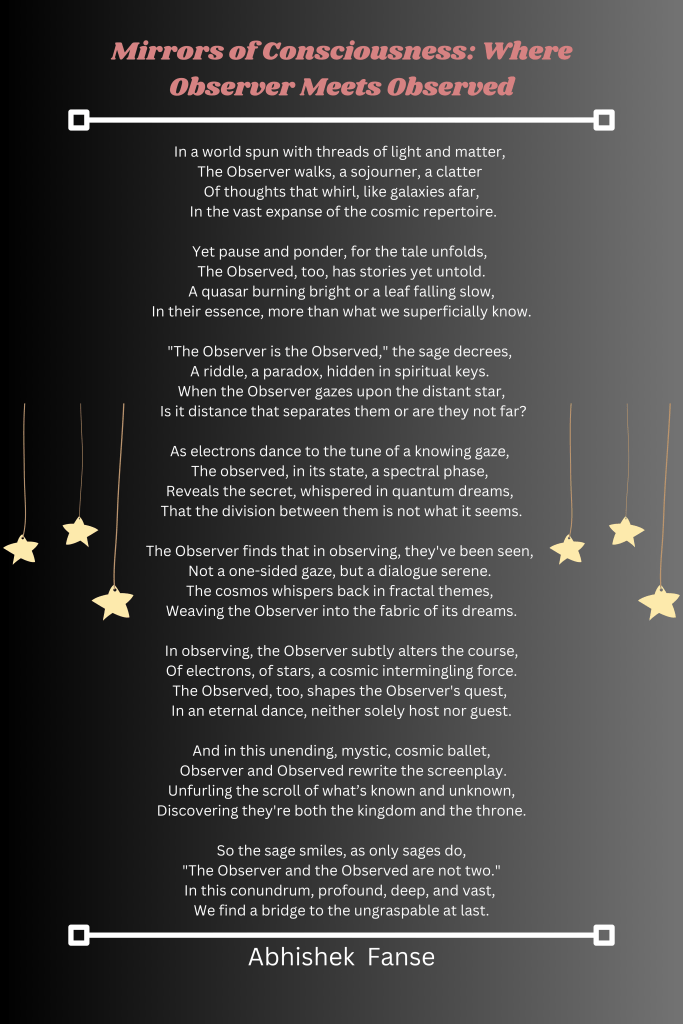
Is harmony defined by us is really harmonious ?
The universe operates on a balance. Dualities like light and dark, joy and sorrow, and so on, are not in contention with each other but rather two sides of the same coin. They provide context and meaning. It’s akin to understanding that one cannot truly appreciate light without having known darkness. Our existence is enigmatic, where a myriad of elements interplay in a vast cosmic dance. Every action, no matter how minute, sends ripples across the fabric of the universe. Such is the interconnectedness and oneness that defines the cosmos. But amidst this vastness, we humans grapple with the age-old questions: Why are we here? Why do we feel disconnected when everything is intrinsically connected? And, why is our life, despite being a part of this vast universe, so often defined by duality?
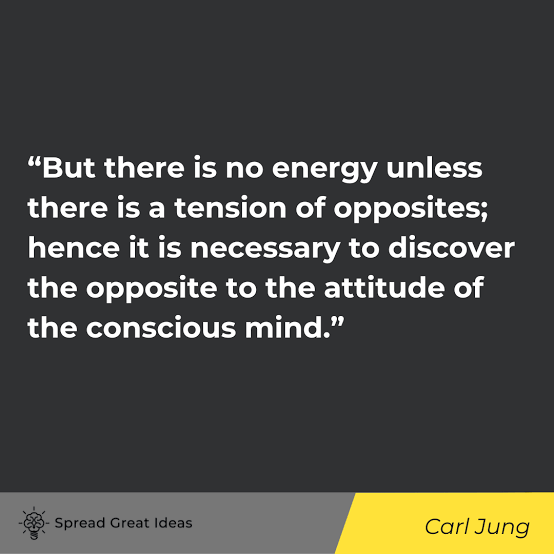
Consider the universe as an immense symphony, where every entity is like a note, contributing to an eternal, harmonious melody. From the most massive stars to the tiniest organisms, everything is in sync, vibrating in tune with the universe. This sense of harmony is a constant, even if it’s not always immediately apparent. However, the human experience often feels at odds with this cosmic harmony. We frequently perceive life through the lens of duality: good vs. evil, happiness vs. sorrow, success vs. failure. Such bifurcations arise primarily from our mental frameworks, shaped by societal norms, personal experiences, and evolutionary predispositions.
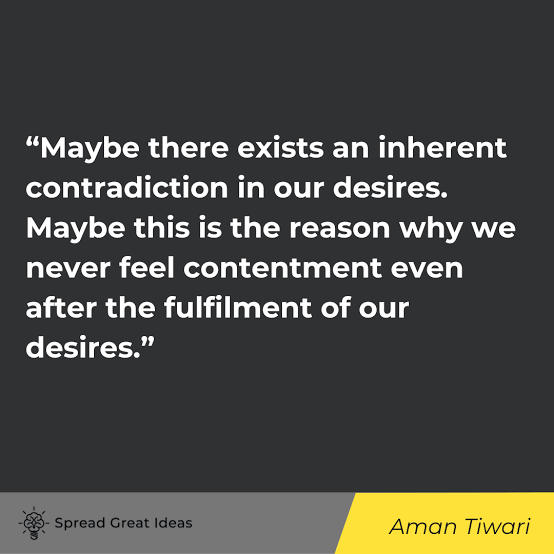
In our evolutionary journey, the human brain developed cognitive systems to categorize, discriminate, and simplify the complex stimuli of the external world, making it digestible and navigable. This cognitive system is a survival tool, enabling us to swiftly identify threats from non-threats, edible food from inedible, and so on. Over time, as societies became more sophisticated, these dualistic mental models began to govern not just our interactions with the environment but also our self-perception, aspirations, and relationships. This dualistic approach further feeds into the illusion of separateness — a feeling that we are distinct from the rest of the universe. Despite being made of stardust and sharing common atomic ancestors with everything around us, we often feel isolated or alienated. Such feelings intensify when we face adversities, leading many to question the harmony and purpose of existence.
Our understanding of freedom is entwined with our perception of duality. True freedom is not just liberation from external constraints but also from internal ones, like prejudices, fears, and limiting beliefs. To break free from the life’s cycle, one needs to reconcile with dualities, recognizing them as constructs rather than inherent truths. As we delve deeper into the framework of existence, we find that duality isn’t inherently detrimental. Instead, it provides contrast, lending depth and dimension to our experiences. Just as the contrasting strokes of a painting give it life and depth, the dualities of our lives add vibrancy and richness to our existence. Without dark, there would be no understanding of light; without sorrow, the true essence of joy would remain unknown.
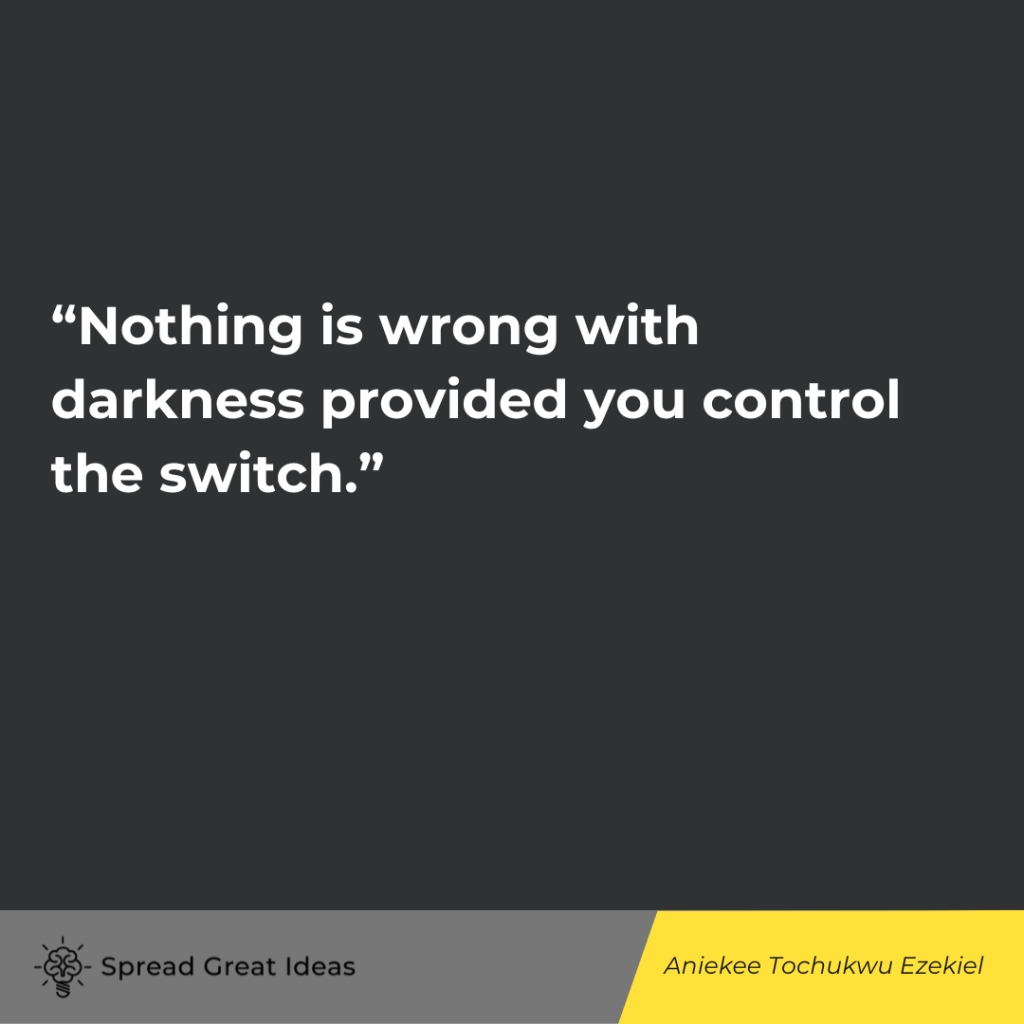
Much of our attachment to duality stems from societal and cultural conditioning. From childhood, we’re taught to label and categorize experiences: winning is good, losing is bad; happiness is desirable, sadness is not. Over time, these labels solidify into beliefs, shaping our perceptions and reactions. For instance, consider the universally accepted notion of success. Societal metrics of success often revolve around material wealth, social status, and professional achievements. However, if we were to strip away these conditioned beliefs and look at life through an unfiltered lens, we might find that true success lies in inner contentment, meaningful relationships, and personal growth.
Our fixation on the ephemeral aspects of life — fleeting emotions, transient experiences, and temporal possessions — further entrenches us in the duality trap. In the rush of life, we often overlook the eternal — the unchanging, omnipresent essence that underlies all existence. This essence, often referred to in spiritual contexts as the ‘Self’ or ‘Consciousness,’ remains unaffected by the dualities that play out on the surface.
By connecting with this eternal aspect of ourselves, we begin to view dualities with a sense of detachment. They appear as passing clouds against the vast sky of our existence, impactful in the moment but not defining our eternal essence. Aligning with the duality doesn’t mean becoming passive or indifferent. It means engaging with life wholeheartedly, experiencing every emotion, every high and low, but without letting them dictate our inner state. With heightened awareness, we can navigate the complexities of life with grace, recognizing the transient nature of our experiences.
This awareness doesn’t diminish our experiences but rather enriches them. When we embrace both the joys and sorrows of life with equanimity, we live more fully, more authentically. We begin to see challenges as opportunities for growth, failures as lessons, and successes as moments of gratitude.
Our perception of disharmony is influenced by our thoughts, emotions, and our attachments to outcomes. When we find ourselves in situations we didn’t desire or anticipate, our immediate response is resistance. This resistance, this non-acceptance, creates friction – a perceived disharmony.

The journey to non-duality is a continuous process of introspection, reflection, and growth. Various spiritual traditions offer paths to transcend duality: the Yogic tradition advocates for meditation and self-inquiry, Buddhism emphasizes mindfulness and compassion, while Taoism teaches the art of flowing with life, embracing both its yin and yang.
The common thread across these traditions is the idea of returning to one’s true nature — a state of pure consciousness, free from the constraints of duality.
Can actions be detached?
The origin of action can be traced back to the very fabric of life itself. Every living entity, whether it’s a single-celled organism or a complex human being, is in a continuous state of action. Even in states of seeming inactivity, there are countless actions taking place within our bodies – cells dividing, heart beating, neurons firing. These actions are not born out of attachment, but rather out of the inherent nature of life and its ceaseless dynamism.
In human beings, actions become more complex. Many of our actions stem from cognitive processes, decision-making, emotions, motivations, desires, and fears. Some of these might be influenced by past experiences or expectations of future outcomes. While it’s true that past experiences can inform our actions, it doesn’t necessarily mean that every action is an outcome of attachment to past results.
Let’s take the example of learning to ride a bike. The initial attempts are informed by the desire to learn, and perhaps the fear of falling. Each attempt, whether successful or not, provides a learning experience which informs future attempts. Over time, as we master the skill, the act of riding a bike becomes almost second nature. It’s no longer driven by the initial desire or fear, but instead becomes an integrated action that we can perform almost effortlessly. In this scenario, the action of riding the bike is not an outcome of attachment, but a manifestation of learned skills and understanding.

Now, let’s consider the concept of detached action as explained in the Bhagavad Gita. Detachment in this context does not mean indifference or lack of care, but rather a state of being where one is not excessively attached to the fruits of their actions. When we perform an action with an attached mindset, we are often excessively focused on the outcome. This focus on the future can rob the action of its full potential, as our mind is not fully present in the action itself.
Detached action, on the other hand, allows us to be fully present in the act of doing. This presence can liberate the action from the constraints of past experiences or future expectations, allowing it to unfold with its full potential. A detached action is one that is performed with a sense of duty, with full attention, and without excessive attachment to the outcome. This doesn’t mean that we don’t care about the result. Instead, it means that we perform the action to the best of our ability, accepting whatever result comes as a consequence.
An important aspect to consider here is the interconnectedness of life. Our actions do not exist in a vacuum; they are part of an interconnected web of actions, reactions, and interactions. Understanding this can help us realise that while we have control over our own actions, the results are influenced by countless other factors, many of which are beyond our control. This realisation can foster a sense of humility, acceptance, and detachment, which can free us from the psychological burden of excessively identifying with the outcomes of our actions.

Moving further into the philosophy of actions, let’s delve into the concept of ‘free will’ and ‘determinism’. These two philosophical positions often clash when we try to understand the nature of our actions.
Free will posits that we, as conscious beings, have the power to make choices and act independently of any external constraints. It suggests that our actions originate from our conscious decisions and, thus, we bear full responsibility for them.
Determinism, on the other hand, suggests that every event, including human actions, is determined by previously existing causes. It argues that all our actions are the result of some cause, whether it is our genetic predisposition, upbringing, social environment, or other factors.
Both of these positions hold some truth. While we may feel that we have the freedom to choose our actions, we cannot deny that our choices are influenced by our past experiences, genetic predisposition, and external circumstances. So, our actions are both free and determined, depending on the perspective we adopt.
When we examine our actions closely, we find that they are not purely the result of our conscious decisions. Our subconscious mind, conditioned by past experiences and deep-seated beliefs, plays a significant role in our decision-making process. So, while we might believe that we are acting freely, many of our actions are habitual reactions conditioned by our past.
Understanding this can liberate us from the illusion of absolute control and the burden of excessive self-blame or self-congratulation. It can also foster a sense of compassion for ourselves and others, as we recognise that our actions are often the result of deep-seated conditioning and external circumstances, rather than purely intentional choices.
The key lies in the practice of mindfulness and self-awareness. By becoming more aware of our thoughts, feelings, and motivations, we can start to understand the forces that drive our actions. We can recognise our habitual patterns and start to make more conscious choices.
In the Bhagavad Gita, Krishna advises Arjuna to act without attachment to the fruits of action. This does not mean acting without care or intention. Rather, it means acting with full attention and commitment, without getting caught up in the anxiety about the outcome. This attitude allows us to act with greater freedom and effectiveness, as we are not burdened by excessive worry about the future or regrets about the past.
When we act, we set into motion a series of events, and the consequences of those actions ripple out into the world. The impact of our actions is not confined to ourselves; it influences those around us, our environment, and ultimately the world at large. This chain of cause and effect is constantly in motion and is dictated by the nature and intent of the action.
Duality arises from the perceived differentiation between good and bad, positive and negative, joy and pain, and so forth. This perceived differentiation often causes conflict and suffering because we instinctively cling to what we perceive as good and resist what we perceive as bad. We are pleased when our actions yield positive outcomes and disappointed when they do not.
However, the Bhagavad Gita teaches us that the dichotomy of good and bad is a construct of our mind and that every action simply is. This is a difficult concept to understand because it runs counter to our instinctual desire to classify and judge things based on our subjective perspective.

In reality, an action is neither good nor bad; it is our attachment to the outcome that labels it so. When we act without attachment to the outcome, we act in the fullest expression of our being, free from the constraints of expectation or fear of failure. This state of detachment does not mean that we do not care about the outcome, but rather that we understand we cannot control every aspect of it.
Instead, our focus shifts to the process, the action itself. By doing so, we become more present, more mindful, and more engaged in our actions. We start to see our actions not as a means to an end but as an end in themselves.
Therefore, to navigate the duality of actions and their effects, we must cultivate awareness and detachment. By observing our thoughts, emotions, and actions without judgment or expectation, we can experience life as it is, without the filter of duality.
In the grand scheme of life, our actions are but tiny ripples in a vast ocean. They may cause waves, they may create turbulence, but eventually, they will settle, leaving the water calm and clear once more. It is in this state of calmness, free from the duality of actions and their effects, that we find true freedom and peace.
Nature of human consciousness and it’s contents
The contents of our consciousness shape our experiences, perceptions, and understanding of the world around us. By delving into these contents, we can gain insight into the workings of our minds and the way we interact with the world.
Our consciousness is composed of several key elements:
- Thoughts: These are the mental constructs that form our beliefs, ideas, opinions, and interpretations of the world around us. Our thoughts arise from past experiences, cultural conditioning, and our unique perspectives on life.
- Emotions: Emotions are the feelings that arise in response to our thoughts, experiences, and interactions with the world. They can be positive or negative, and they often shape our reactions and decisions in various situations.
- Memories: Our memories are the stored impressions of past experiences, including events, conversations, relationships, and sensory experiences. They help us make sense of the present and anticipate the future.
- Sensory perceptions: Sensory perceptions include the information we receive through our five senses: sight, sound, taste, touch, and smell. These perceptions provide us with information about the world around us and influence our thoughts, emotions, and actions.
- Imagination: Our imagination allows us to envision possibilities, create new ideas, and explore alternate realities. It plays a vital role in our creativity, problem-solving, and ability to empathize with others.
- Conditioning: Our conditioning encompasses the beliefs, values, and habits that we have acquired from our family, society, culture, and personal experiences. This conditioning shapes our thoughts, emotions, and behaviors, often unconsciously.
- Self-image: Our self-image is the mental representation of who we believe ourselves to be. This includes our self-esteem, self-worth, and the roles we play in different aspects of our lives. Our self-image influences the way we perceive and interact with the world.
- Ego: The ego is the sense of self that arises from our identification with our thoughts, emotions, memories, and self-image. It is the “I” that we believe ourselves to be, separate from the world around us. The ego is responsible for creating a sense of separation and division, which can lead to conflict and suffering.
By examining the contents of our consciousness, we can begin to understand the way our minds work and the forces that shape our experiences and perceptions. This understanding can lead to greater self-awareness, insight, and the potential for transformation as we recognize the limitations and illusions perpetuated by our conditioned minds.
 Abhishek Fanse