Can actions be detached?
The origin of action can be traced back to the very fabric of life itself. Every living entity, whether it’s a single-celled organism or a complex human being, is in a continuous state of action. Even in states of seeming inactivity, there are countless actions taking place within our bodies – cells dividing, heart beating, neurons firing. These actions are not born out of attachment, but rather out of the inherent nature of life and its ceaseless dynamism.
In human beings, actions become more complex. Many of our actions stem from cognitive processes, decision-making, emotions, motivations, desires, and fears. Some of these might be influenced by past experiences or expectations of future outcomes. While it’s true that past experiences can inform our actions, it doesn’t necessarily mean that every action is an outcome of attachment to past results.
Let’s take the example of learning to ride a bike. The initial attempts are informed by the desire to learn, and perhaps the fear of falling. Each attempt, whether successful or not, provides a learning experience which informs future attempts. Over time, as we master the skill, the act of riding a bike becomes almost second nature. It’s no longer driven by the initial desire or fear, but instead becomes an integrated action that we can perform almost effortlessly. In this scenario, the action of riding the bike is not an outcome of attachment, but a manifestation of learned skills and understanding.
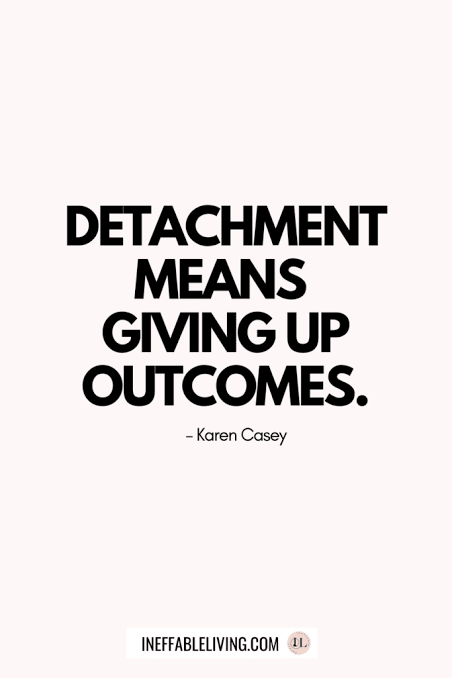
Now, let’s consider the concept of detached action as explained in the Bhagavad Gita. Detachment in this context does not mean indifference or lack of care, but rather a state of being where one is not excessively attached to the fruits of their actions. When we perform an action with an attached mindset, we are often excessively focused on the outcome. This focus on the future can rob the action of its full potential, as our mind is not fully present in the action itself.
Detached action, on the other hand, allows us to be fully present in the act of doing. This presence can liberate the action from the constraints of past experiences or future expectations, allowing it to unfold with its full potential. A detached action is one that is performed with a sense of duty, with full attention, and without excessive attachment to the outcome. This doesn’t mean that we don’t care about the result. Instead, it means that we perform the action to the best of our ability, accepting whatever result comes as a consequence.
An important aspect to consider here is the interconnectedness of life. Our actions do not exist in a vacuum; they are part of an interconnected web of actions, reactions, and interactions. Understanding this can help us realise that while we have control over our own actions, the results are influenced by countless other factors, many of which are beyond our control. This realisation can foster a sense of humility, acceptance, and detachment, which can free us from the psychological burden of excessively identifying with the outcomes of our actions.

Moving further into the philosophy of actions, let’s delve into the concept of ‘free will’ and ‘determinism’. These two philosophical positions often clash when we try to understand the nature of our actions.
Free will posits that we, as conscious beings, have the power to make choices and act independently of any external constraints. It suggests that our actions originate from our conscious decisions and, thus, we bear full responsibility for them.
Determinism, on the other hand, suggests that every event, including human actions, is determined by previously existing causes. It argues that all our actions are the result of some cause, whether it is our genetic predisposition, upbringing, social environment, or other factors.
Both of these positions hold some truth. While we may feel that we have the freedom to choose our actions, we cannot deny that our choices are influenced by our past experiences, genetic predisposition, and external circumstances. So, our actions are both free and determined, depending on the perspective we adopt.
When we examine our actions closely, we find that they are not purely the result of our conscious decisions. Our subconscious mind, conditioned by past experiences and deep-seated beliefs, plays a significant role in our decision-making process. So, while we might believe that we are acting freely, many of our actions are habitual reactions conditioned by our past.
Understanding this can liberate us from the illusion of absolute control and the burden of excessive self-blame or self-congratulation. It can also foster a sense of compassion for ourselves and others, as we recognise that our actions are often the result of deep-seated conditioning and external circumstances, rather than purely intentional choices.
The key lies in the practice of mindfulness and self-awareness. By becoming more aware of our thoughts, feelings, and motivations, we can start to understand the forces that drive our actions. We can recognise our habitual patterns and start to make more conscious choices.
In the Bhagavad Gita, Krishna advises Arjuna to act without attachment to the fruits of action. This does not mean acting without care or intention. Rather, it means acting with full attention and commitment, without getting caught up in the anxiety about the outcome. This attitude allows us to act with greater freedom and effectiveness, as we are not burdened by excessive worry about the future or regrets about the past.
When we act, we set into motion a series of events, and the consequences of those actions ripple out into the world. The impact of our actions is not confined to ourselves; it influences those around us, our environment, and ultimately the world at large. This chain of cause and effect is constantly in motion and is dictated by the nature and intent of the action.
Duality arises from the perceived differentiation between good and bad, positive and negative, joy and pain, and so forth. This perceived differentiation often causes conflict and suffering because we instinctively cling to what we perceive as good and resist what we perceive as bad. We are pleased when our actions yield positive outcomes and disappointed when they do not.
However, the Bhagavad Gita teaches us that the dichotomy of good and bad is a construct of our mind and that every action simply is. This is a difficult concept to understand because it runs counter to our instinctual desire to classify and judge things based on our subjective perspective.
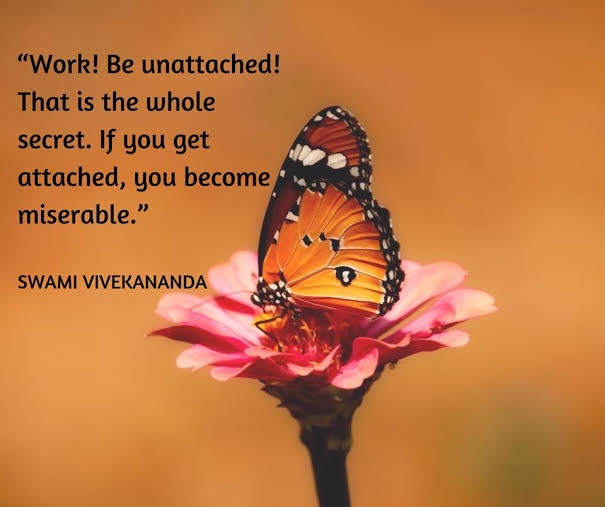
In reality, an action is neither good nor bad; it is our attachment to the outcome that labels it so. When we act without attachment to the outcome, we act in the fullest expression of our being, free from the constraints of expectation or fear of failure. This state of detachment does not mean that we do not care about the outcome, but rather that we understand we cannot control every aspect of it.
Instead, our focus shifts to the process, the action itself. By doing so, we become more present, more mindful, and more engaged in our actions. We start to see our actions not as a means to an end but as an end in themselves.
Therefore, to navigate the duality of actions and their effects, we must cultivate awareness and detachment. By observing our thoughts, emotions, and actions without judgment or expectation, we can experience life as it is, without the filter of duality.
In the grand scheme of life, our actions are but tiny ripples in a vast ocean. They may cause waves, they may create turbulence, but eventually, they will settle, leaving the water calm and clear once more. It is in this state of calmness, free from the duality of actions and their effects, that we find true freedom and peace.
Can a decision be good or bad?
The concept of decision making and the parameters that define its goodness or badness are both fascinating and complex. When we take a decision, we hope for a certain outcome, and the real-world result of our decision is judged in relation to this expectation. Decisions are inherently linked with the consequences they bring, and we often label them as ‘good’ or ‘bad’ based on whether the outcome was favorable or unfavorable. But should this be the only measure of a decision’s quality?
Every decision, regardless of its scale or impact, is taken within a context. Factors such as personal beliefs, values, emotions, knowledge, past experiences, as well as our estimation of future events, all feed into the decision-making process. This intricate mixture of elements makes decision-making a highly individualized and subjective process.
Given this complexity, is it then possible or even fair to categorize decisions as definitively good or bad? And what are the parameters we should use to judge them?
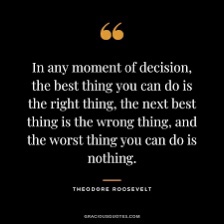
One viewpoint suggests that a good decision is one that is well-informed, well-considered, and aligned with one’s core values and goals. From this perspective, the goodness of a decision lies not in the outcome it produces, but rather in the process by which it was made. An individual may take a decision based on the best information available, taking into account all possible scenarios and aligning the decision with their values. If the outcome is unfavorable, does that make the decision bad? Arguably, no.
However, another viewpoint posits that decisions are inherently tied to their outcomes. If a decision leads to a positive outcome, it was a good decision. If the outcome is negative, the decision was bad. This perspective is very results-oriented, focusing on the end rather than the means. But it fails to consider that outcomes are often influenced by variables outside our control and cannot be predicted with certainty at the time of decision-making.
Considering both these viewpoints, it becomes clear that the notion of good and bad in decision-making is not absolute. It’s subjective and contextual, relying on both the decision-making process (the means) and the resulting outcome (the end).
Let’s consider an example to illustrate this: Imagine a person deciding to invest their savings in a seemingly promising startup. They do their due diligence, researching the market, the product, the team, and even consulting experts. They make a well-informed and well-considered decision to invest. But despite all their thoroughness, the startup fails after a few years, and they lose their investment. Was their decision bad?

If we judge solely based on the outcome, we might say yes. But if we look at the decision-making process, we could argue that they made a good decision given the information they had at the time. This example highlights the complexity and subjectivity involved in labeling decisions as good or bad.
The question of accountability further adds to this complexity. When we hold someone accountable for a decision, we are implying that they had control over the decision-making process and its outcome. This notion of control, however, is not always reflective of reality. As we’ve noted, decisions are influenced by numerous factors, many of which are beyond our control.
That being said, there is an aspect of decision-making where accountability does play a crucial role. When individuals make decisions, they should be held accountable for ensuring that the decision-making process is as thoughtful, ethical, and informed as possible. This means they should strive to gather all relevant information, consider all possible options, and align their decisions with their values and responsibilities.
While we cannot control all factors affecting the outcome of our decisions, we can strive to make informed, deliberate choices that reflect our values and understandings. And in the end, it’s through the experience of decision-making, both its successes and failures, that we learn and grow.
The notion of decision-making as it intersects with personal development and growth forms a vital part of this discussion. Each decision we make, whether deemed as good or bad, influences our lives, shaping us into who we become. It’s essential to understand that every decision, regardless of its outcome, provides us an opportunity for growth and learning.
Every decision, even the ones with unfavorable outcomes, provide lessons that can be harnessed to make better-informed decisions in the future. This idea ties into the concept of ‘failing forward,’ where we view failures not as dead-ends but as stepping stones to success. If we are open to learning from our missteps, we can transform even ‘bad’ decisions into useful experiences that make us wiser and more resilient.
Now, let’s explore the concept of regret, which often intertwines with our reflections on past decisions. Regret can stem from believing we made a ‘bad’ decision, which led to an unfavorable outcome. While it’s natural to experience regret, dwelling on past decisions can trap us in a cycle of guilt and self-blame. A healthier approach would be to acknowledge the decision and its consequences, extract lessons from the experience, and then use these insights to inform future decisions.
A further consideration in decision-making involves understanding the distinction between controllable and uncontrollable outcomes. This concept, often termed as ‘circle of influence’ and ‘circle of concern’ by management gurus like Stephen Covey, can be very helpful in reducing the stress around decision-making. We can focus our energies on the areas we can control or influence, rather than on areas beyond our reach. This shift in focus can help us make more empowered decisions and develop a more constructive perspective on the outcomes of those decisions.
Let’s expand this understanding with another example: A mountain climber prepares to scale a peak. She trains rigorously, equips herself with the right gear, studies weather patterns, and plans her route meticulously. Despite all these careful preparations, she could be forced to abandon her climb due to unexpected weather changes. Was her decision to climb wrong? By focusing on the process, we could argue that her decision was sound, based on her preparation and knowledge at the time.
We can also apply these principles in everyday decisions, such as choosing a career, deciding on a diet, or even selecting a movie to watch. By focusing on the decision-making process and by being open to learning from each decision’s outcomes, we enhance our ability to make better decisions in the future.
So, is there relevance to good and bad in decision-making? Yes, but it is a complex, multi-faceted relevance that cannot be boiled down to a simple binary. It includes considering our values, the information we have at hand, the potential consequences, and the context in which the decision is being made. It’s also about understanding that decision-making is a skill that can be honed over time, and every decision, whether it leads to success or failure, contributes to that learning and growth.
The Illusion of Authority: A Journey Beyond Hierarchy and Control
In a world driven by hierarchies and power structures, authority often acts as a double-edged sword. While it may seem to provide stability, order, and control, authority also carries the potential for destruction, perpetuating cycles of dependency and limiting personal freedom. As we embark on a journey towards greater self-awareness and understanding, it is crucial to examine the concept of authority and its impact on our lives.
The Nature of Authority
Authority manifests in various forms, from political and religious leaders to social norms and cultural expectations. However, beneath these external expressions lies a more profound truth: authority is, at its core, an idea – a mental construct that we collectively agree upon and uphold. When we accept authority without question, we relinquish our personal responsibility and surrender our freedom to external forces.
Dependency and Fear
The desire for authority often stems from a deep-rooted sense of insecurity and fear. As human beings, we long for certainty and stability in a chaotic and unpredictable world. Authority provides the illusion of safety and control, assuaging our anxieties by offering a clear path to follow. However, this dependence on authority comes at a cost – it stifles our ability to think independently, question the status quo, and ultimately, to discover the truth for ourselves.
Freedom and Self-Realization
To move beyond the confines of authority, we must first recognize our innate capacity for self-realization. We are not incomplete beings in need of external guidance; rather, we possess the ability to discover truth and wisdom within ourselves. By embracing our inner authority, we can liberate ourselves from the shackles of dependency and experience true freedom.
The Path of Inquiry
To break free from the destructive nature of authority, we must cultivate an attitude of inquiry and self-exploration. Instead of accepting external ideas and beliefs without question, we must engage in a process of critical thinking and self-reflection. By examining our thoughts, feelings, and actions with a sense of curiosity and openness, we can begin to uncover the conditioned patterns that keep us bound to authority.
Moving Beyond Authority
As we learn to question authority and take responsibility for our own growth and understanding, we embark on a journey towards a new way of being – one that transcends the limitations of hierarchy and control. In this space, we can experience the true beauty of human potential, as we embrace our capacity for love, compassion, and interconnectedness.
 Abhishek Fanse