Into the Heart of Now: “NOW” Unveiled
We are what we are doing right now” taps into the philosophical and psychological realms of existence, perception, and human behaviour. Going further, we begin to see a confluence of various factors, which draw us away from the present moment, and push us into the embrace of either the past or the future. At the very heart of human existence is our incessant need to find meaning. We seek purpose, direction, and a sense of understanding about our lives. This pursuit often becomes a bridge connecting the past, present, and future. Our past experiences, both triumphant and traumatic, linger in our minds, continuously shaping our present perceptions. They become stories we tell ourselves, lessons we’ve learned, and at times, scars that haven’t fully healed. The future, on the other hand, represents our hopes, fears, dreams, and anxieties. It’s a canvas upon which we project our desires and apprehensions.
The expectation of outcomes is an inherent human trait. It is rooted in our evolutionary drive for predictability and control. For our ancestors, predicting potential dangers and outcomes was a matter of survival. Over millennia, this instinct has got inculcated with our complex cognitive structures, resulting in our modern-day anxieties about the future and ruminations on the past. However, the irony lies in the fact that the more we seek to control outcomes, the more we find ourselves entangled in a web of expectations. These expectations often lead to inner conflicts. When the present doesn’t align with our anticipated future, dissatisfaction ensues. And when the weight of past regrets is heavy, it dims the light of the present. Furthermore, the very act of striving to stay in the ‘now’ can itself become a source of distraction. If one is perpetually conscious about remaining anchored in the present, then this very consciousness becomes a barrier. The effort to stay present can sometimes be as distracting as the past memories or future anxieties that pull us away.
In today’s world, there’s also the influence of societal structures and norms. We live in societies that prize outcomes—success is often defined not by the journey, but by the destination. From a young age, we’re conditioned to focus on results, whether it’s grades in school or milestones in personal and professional lives. This societal molding further deepens our attachment to outcomes and amplifies our detachment from the present.
It is also crucial to understand the role of human consciousness in shaping our experience of time. Our consciousness is not just a passive observer; it actively constructs our sense of reality. Every moment we live is filtered through a myriad of cognitive processes, memories, and emotions. This complexity means that we often don’t experience the world “as it is” but rather “as we are.”

Neurologically speaking, our brain’s default mode network, an intricate web of interconnected brain regions, becomes most active when our attention is not occupied by tasks. This network is linked with thinking about others, thinking about oneself, remembering the past, and planning for the future. Thus, even when we aim to be in the present, our brains often naturally drift towards contemplations of the past and future. The challenges in remaining present can also be attributed to our cognitive structures, which include biases, such as the “negativity bias” – our innate human tendency to give more weight to negative experiences than positive ones. This bias can cause past traumas or failures to overshadow current joys, anchoring us in bygone moments of pain or disappointment. On the other hand, the future holds the allure of the unknown. This uncertainty can be both enticing and anxiety-inducing. Our modern societies, with their rapid changes and technological advancements, amplify this by creating an environment where change is the only constant. The evolving landscapes of our personal and professional lives mean that the future is more unpredictable than ever, making it a potent magnet for our attention and energy. Yet, amidst these complexities, lies a simple truth: the only tangible reality is the present. While memories shape and color our past and aspirations carve out our perceived futures, the ‘now’ is the only temporal space where action occurs, where life is truly lived.
Let’s explore this further!
What if “Now” encapsulates everything – past, present, and future ? This perspective challenges traditional temporal distinctions or divisions we create in and between Past, Present and Future. This viewpoint reframes our understanding of time and our place within its continuum. When we speak of living in the now, it’s often portrayed as a juxtaposition against being lost in memories of the past or anxieties about the future. However, what if everything is indeed a part of the “now” ?
Imagine time as a vast river. In this river, every drop of water represents a moment. While some drops are behind us (the past) and others ahead (the future), they all collectively belong to the river, which is the “now”. In this perspective, the entirety of existence – our memories, current experiences, and anticipations – are interconnected and concurrently present in an expansive “now”. From this viewpoint, distractions aren’t diversions from the present moment; they are simply different facets of the ever-expanding “now”. The reminiscences of a childhood memory or the contemplation about a future event are as much a part of our current experience as the sensation of the chair we’re sitting on. Every thought, emotion, and sensation, regardless of the temporal context it references, emerges and is experienced in the present moment.

The division we often make between the past, present, and future might be a result of our cognitive architecture. The human mind, in its quest for order and understanding, categorizes experiences. This compartmentalization aids in processing complex information. For instance, labeling an experience as a “memory” helps us contextualize it, discern lessons from it, or even prevent future mistakes. Similarly, projecting into the future can be a survival mechanism, allowing us to anticipate potential threats or opportunities.
However, by understanding that everything occurs in the “now”, we can achieve a form of holistic consciousness. This realization offers liberation. It frees us from the confines of linear temporality and allows a more integrated experience of existence. Such a perspective is echoed in various spiritual and philosophical traditions. For instance, in Eastern philosophies, there’s an emphasis on the interconnectedness of all things, where dichotomies are more apparent than real. Yet, while this concept is enlightening, it’s also challenging. Our societal structures, languages, and even our neurobiology are geared towards a linear understanding of time. Overcoming this deeply ingrained perspective requires consistent introspection and possibly even a paradigm shift in our consciousness.

Let’s delve deeper into the expansive Present:
Linear time, where events occur in a sequence from past to present to future, might be more of a cognitive construct than an intrinsic property of the universe. Physics, especially in the realm of relativity and quantum mechanics, has already shown us that time doesn’t always behave in the ways our everyday experiences might suggest. The famous physicist John Wheeler once proposed the idea of a “participatory universe,” suggesting that observers play a role in shaping their own realities, which includes the experience of time. Every thought, emotion, or memory we experience happens in the present moment of consciousness. Even when we recall a past event or anticipate a future one, that activity occurs in the current moment of awareness. This raises the idea that consciousness itself might be beyond time. It’s a continuous stream where “past” and “future” are merely parts of the grander “now.”
If we fully embrace the idea that everything is part of the “now,” it alters how we relate to our experiences. Regret, nostalgia, anxiety, and hope, which are emotions anchored in our traditional understanding of time, undergo a transformation. For example, instead of feeling regretful for a past decision, understanding its occurrence in the vastness of “now” might lead to acceptance and integration of that experience. Memory plays a crucial role in our understanding of time. Our memories, though referencing past events, are dynamic and malleable. They’re reconstructed every time we recall them. In essence, every time we remember something, we’re experiencing it anew in the present moment. This blurs the boundaries between past events and current experiences, reinforcing the idea of an all-encompassing “now.” While the concept is philosophically and spiritually enriching, it poses challenges in our day-to-day lives dominated by schedules, deadlines, and plans. How does one reconcile the linear demands of modern life with a non-linear understanding of time? This balance requires us to function efficiently in the world while internally maintaining an awareness of the deeper, interconnected reality.
Let’s delve further into More finer details: what if we kill “Now”?
When we speak of “killing” the now, we’re essentially talking about transcending our typical awareness of time and moving into a state of pure being, a consciousness unfettered by the confines of temporal experience. The idea that time itself might be an illusion is not new. From the ancient Eastern philosophies to cutting-edge quantum mechanics, there are suggestions that what we experience as the flow of time might be a cognitive and perceptual construct. Our brains organize experiences in a linear fashion, from cause to effect, creating the sense of a flowing river of moments, from the past, through the present, and into the future. But if we could step outside this stream, what would consciousness look like? If we “kill” the now, we’re essentially trying to access a state of pure awareness—a consciousness devoid of content, without thoughts, perceptions, or sensations. Many meditative practices aim to reach this state, often described as “thoughtless awareness” or “contentless consciousness.” In this state, the meditator isn’t focused on any particular thing (like the breath, a mantra, or an image), but instead simply exists. It’s a state of being rather than doing.
Attempting to attain a state of pure awareness can be paradoxical. The very effort to reach this state can prevent one from achieving it, as effort and intention are temporal and future-oriented in nature. It’s like trying to smooth turbulent water with one’s hand—the act of trying only creates more turbulence. It requires a letting go rather than a striving, a surrender rather than a pursuit. To “kill” the now is to step beyond dualities—the past and future, cause and effect, self and other. This is a realm often spoken of in mysticism and spirituality, where one transcends the perceived divisions of existence. It’s a state of unity, of oneness, where the individual self melts away into the all-encompassing whole.
While these states of consciousness can be transformative, they can be challenging to maintain in our everyday, pragmatic world. Our society operates on schedules, plans, and routines. However, even fleeting experiences of this transcendent state can profoundly affect our daily lives. It can offer insights, change perspectives, and create a deep-seated sense of peace. From the perspective of many ancient traditions, the universe is in a constant dance of creation and destruction. The “now” that we experience is just one beat of this cosmic dance. To “kill” the now is not to negate or nullify it, but to merge with the dance itself, to become one with the rhythm of existence.

Love and Longing – A paradox ??
The experience of longing for love is universal and deeply rooted in our humanity. This longing, often described as an unquenchable thirst, is both a blessing and a burden, driving us to form connections, seek fulfillment, and explore the depths of our own emotions.
Delving into the realm of quantum physics, there’s an intriguing principle known as quantum entanglement. It suggests that two particles, once entwined, will remain connected irrespective of distance. A change in the state of one will instantly affect the state of the other, no matter how far apart they are.

Drawing a parallel to human emotions, particularly longing, one could argue that individuals form ’emotional entanglements.’ The sense of connection might not be physical but is as intense, enduring, and mystifying as quantum entanglements. This could be the reason why, even in separation, our emotions remain tethered to another person, place, or memory. Longing is a complex emotion that can arise from various sources. At its core, it’s a yearning for something that seems to be just out of reach. We might long for a loved one, for a sense of belonging, for an idealized version of the world, or for a deeper connection with ourselves.
Our longing for love can be seen as a biological imperative. Our ancestors who formed strong social bonds and felt a deep connection to their kin were more likely to survive and reproduce. As a result, the longing for love and connection is deeply ingrained in our genetic makeup. Our experiences shape our emotional responses. For instance, early attachment experiences with caregivers can influence our future relationships and how we perceive love. Similarly, our psychological makeup, shaped by both nature and nurture, affects how we experience longing.
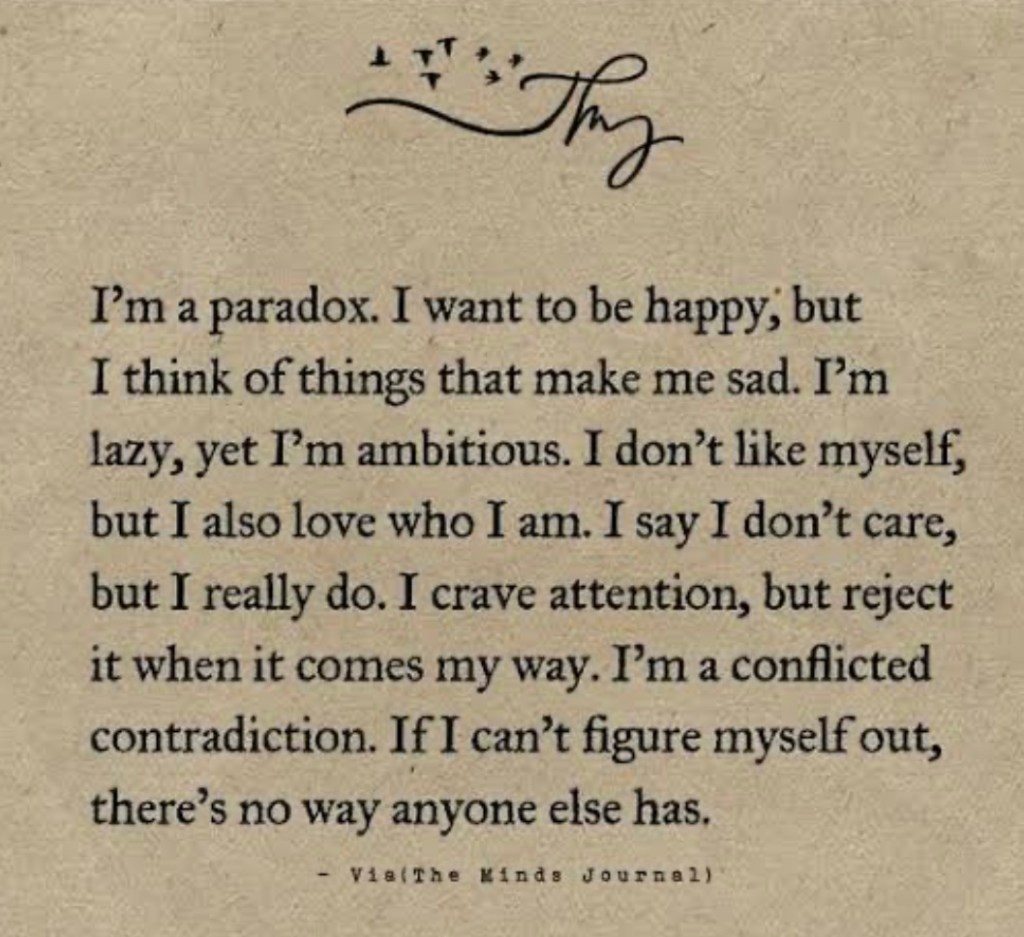
The relationship between love and longing is paradoxical. On the one hand, love can make us feel whole, bringing joy and fulfillment. On the other hand, it can also create a sense of longing, especially when faced with separation or unfulfilled desires. This tension is often evident in poetry and art, where love and longing are intertwined in complex ways. When we are in love, we often feel a sense of completeness. The world seems brighter, and we may experience a deep sense of contentment. This feeling arises from the connection and emotional intimacy that love brings. In these moments, longing may fade into the background. Despite the fulfillment that love offers, it can also create a sense of longing. When separated from a loved one, the intensity of our love can manifest as a deep yearning for their presence. This longing can also arise from unmet emotional needs, unfulfilled desires, or the idealization of love.
Love and longing are not mutually exclusive; they often coexist. The very act of loving someone can make us more aware of their absence when they are not around. Similarly, longing can intensify our love, making us cherish our moments of connection even more. This dynamic interplay adds depth to our emotional experiences.
Longing is not a singular emotion; it encompasses a range of feelings, including hope, desire, melancholy, and even pain. Longing often involves a strong desire for something or someone. This desire can create a sense of anticipation, making us look forward to future possibilities. The act of longing can be both exciting and agonizing, as we await the fulfillment of our desires. Longing can also be rooted in the past. We may long for a time when we felt loved, accepted, or understood. This sense of nostalgia can be accompanied by melancholy, as we realize that the past cannot be recaptured. Sometimes, longing arises from idealization. We may create a mental image of the perfect partner, the ideal life, or a utopian world. These idealized visions can make us feel discontented with our current reality, fueling a sense of longing. Longing can be painful, especially when it feels unending or unrequited. The intensity of our yearning can create a sense of suffering, as we grapple with the gap between our desires and reality.
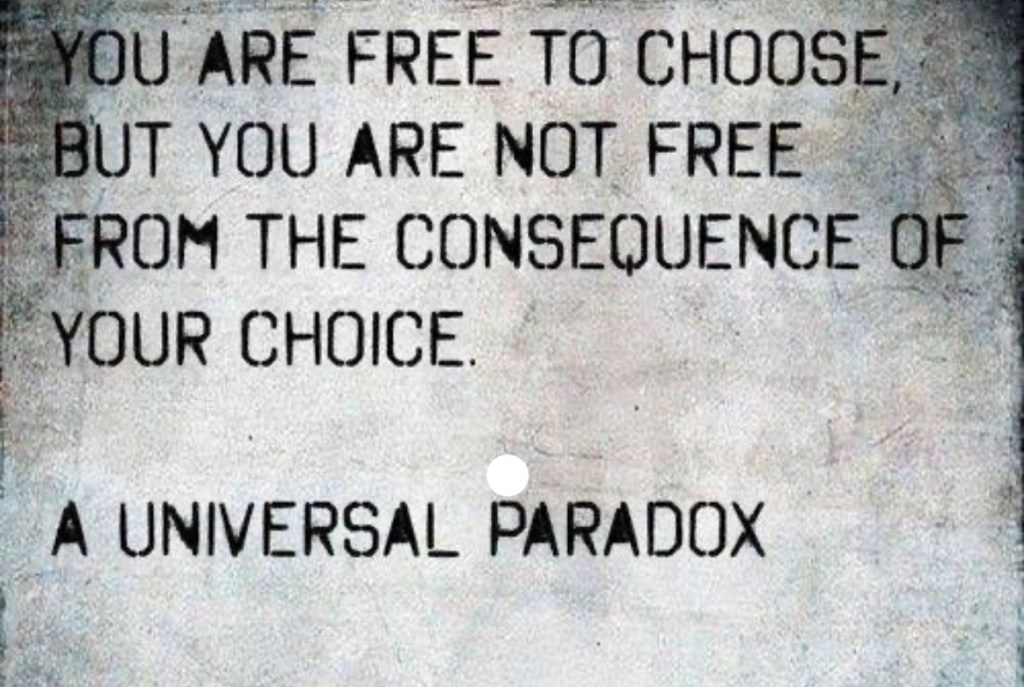
Wrestling with the feelings associated with longing can lead to deeper emotional intelligence. Through introspection, we can learn more about ourselves, our needs, and our desires. Understanding the root of our longing can help us address underlying issues or unmet needs in our lives. everyone has felt it at some point. Recognizing this shared experience can foster empathy towards others and deepen our human connections. By understanding our own feelings of longing, we become better equipped to empathize with others.
Life is characterized by dualities: happiness and sorrow, presence and absence, fulfillment and yearning. While these might seem contradictory, they often exist side by side and give depth to our experiences.
Presence in Absence: Even in the absence of what we long for, there’s a certain presence of that object or person in our thoughts and emotions. This phenomenon speaks to the power of our minds and hearts to transcend physical limitations.
Completeness in Incompleteness: The very feeling of longing suggests that there’s something we deem essential for our completeness. However, the journey of life is about realizing that, in many ways, we are already complete in our incompleteness. The gaps and spaces create room for growth, evolution, and understanding.
Stability in Flux: Our feelings, including longing, are in constant flux. They come and go, intensify and wane. But beneath these changing emotions, there’s a stable core of self, a foundational aspect of our being that remains unswayed.
Is harmony defined by us is really harmonious ?
The universe operates on a balance. Dualities like light and dark, joy and sorrow, and so on, are not in contention with each other but rather two sides of the same coin. They provide context and meaning. It’s akin to understanding that one cannot truly appreciate light without having known darkness. Our existence is enigmatic, where a myriad of elements interplay in a vast cosmic dance. Every action, no matter how minute, sends ripples across the fabric of the universe. Such is the interconnectedness and oneness that defines the cosmos. But amidst this vastness, we humans grapple with the age-old questions: Why are we here? Why do we feel disconnected when everything is intrinsically connected? And, why is our life, despite being a part of this vast universe, so often defined by duality?
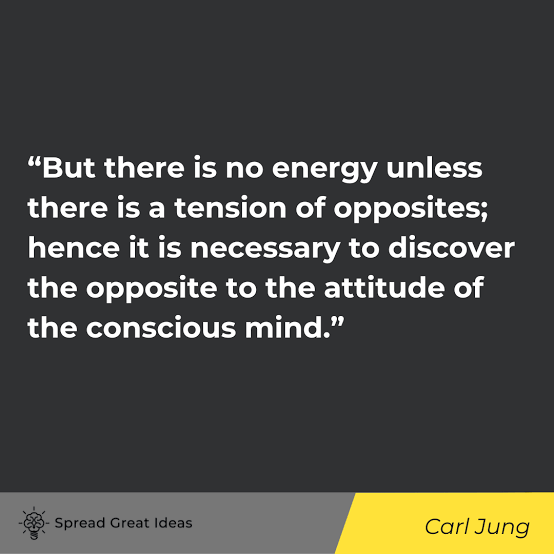
Consider the universe as an immense symphony, where every entity is like a note, contributing to an eternal, harmonious melody. From the most massive stars to the tiniest organisms, everything is in sync, vibrating in tune with the universe. This sense of harmony is a constant, even if it’s not always immediately apparent. However, the human experience often feels at odds with this cosmic harmony. We frequently perceive life through the lens of duality: good vs. evil, happiness vs. sorrow, success vs. failure. Such bifurcations arise primarily from our mental frameworks, shaped by societal norms, personal experiences, and evolutionary predispositions.
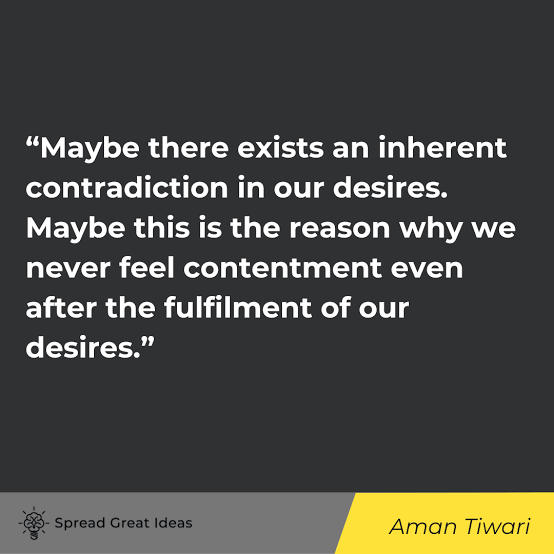
In our evolutionary journey, the human brain developed cognitive systems to categorize, discriminate, and simplify the complex stimuli of the external world, making it digestible and navigable. This cognitive system is a survival tool, enabling us to swiftly identify threats from non-threats, edible food from inedible, and so on. Over time, as societies became more sophisticated, these dualistic mental models began to govern not just our interactions with the environment but also our self-perception, aspirations, and relationships. This dualistic approach further feeds into the illusion of separateness — a feeling that we are distinct from the rest of the universe. Despite being made of stardust and sharing common atomic ancestors with everything around us, we often feel isolated or alienated. Such feelings intensify when we face adversities, leading many to question the harmony and purpose of existence.
Our understanding of freedom is entwined with our perception of duality. True freedom is not just liberation from external constraints but also from internal ones, like prejudices, fears, and limiting beliefs. To break free from the life’s cycle, one needs to reconcile with dualities, recognizing them as constructs rather than inherent truths. As we delve deeper into the framework of existence, we find that duality isn’t inherently detrimental. Instead, it provides contrast, lending depth and dimension to our experiences. Just as the contrasting strokes of a painting give it life and depth, the dualities of our lives add vibrancy and richness to our existence. Without dark, there would be no understanding of light; without sorrow, the true essence of joy would remain unknown.
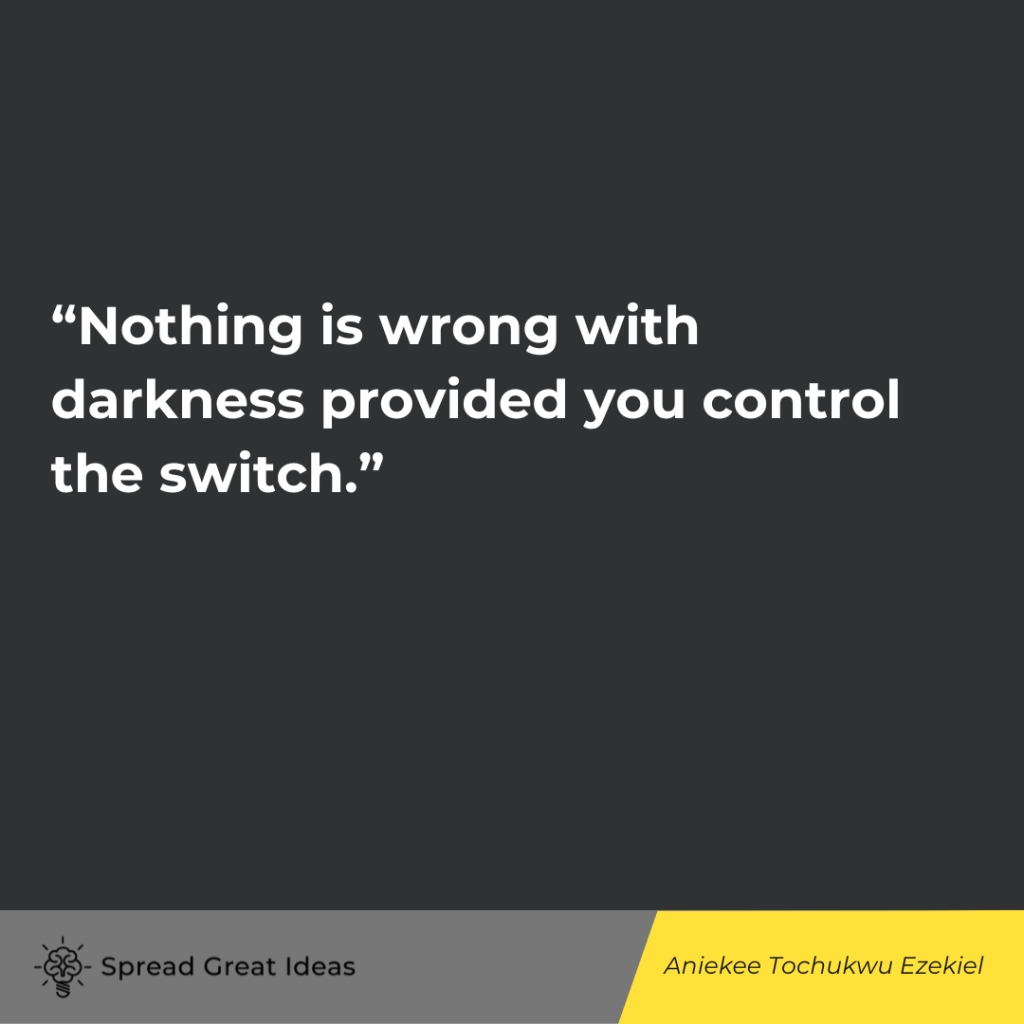
Much of our attachment to duality stems from societal and cultural conditioning. From childhood, we’re taught to label and categorize experiences: winning is good, losing is bad; happiness is desirable, sadness is not. Over time, these labels solidify into beliefs, shaping our perceptions and reactions. For instance, consider the universally accepted notion of success. Societal metrics of success often revolve around material wealth, social status, and professional achievements. However, if we were to strip away these conditioned beliefs and look at life through an unfiltered lens, we might find that true success lies in inner contentment, meaningful relationships, and personal growth.
Our fixation on the ephemeral aspects of life — fleeting emotions, transient experiences, and temporal possessions — further entrenches us in the duality trap. In the rush of life, we often overlook the eternal — the unchanging, omnipresent essence that underlies all existence. This essence, often referred to in spiritual contexts as the ‘Self’ or ‘Consciousness,’ remains unaffected by the dualities that play out on the surface.
By connecting with this eternal aspect of ourselves, we begin to view dualities with a sense of detachment. They appear as passing clouds against the vast sky of our existence, impactful in the moment but not defining our eternal essence. Aligning with the duality doesn’t mean becoming passive or indifferent. It means engaging with life wholeheartedly, experiencing every emotion, every high and low, but without letting them dictate our inner state. With heightened awareness, we can navigate the complexities of life with grace, recognizing the transient nature of our experiences.
This awareness doesn’t diminish our experiences but rather enriches them. When we embrace both the joys and sorrows of life with equanimity, we live more fully, more authentically. We begin to see challenges as opportunities for growth, failures as lessons, and successes as moments of gratitude.
Our perception of disharmony is influenced by our thoughts, emotions, and our attachments to outcomes. When we find ourselves in situations we didn’t desire or anticipate, our immediate response is resistance. This resistance, this non-acceptance, creates friction – a perceived disharmony.
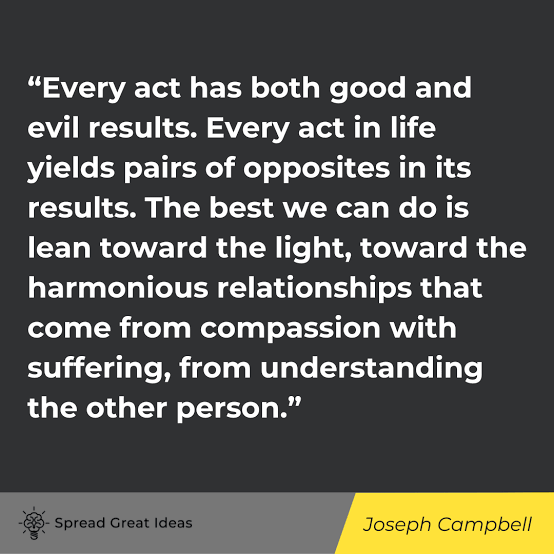
The journey to non-duality is a continuous process of introspection, reflection, and growth. Various spiritual traditions offer paths to transcend duality: the Yogic tradition advocates for meditation and self-inquiry, Buddhism emphasizes mindfulness and compassion, while Taoism teaches the art of flowing with life, embracing both its yin and yang.
The common thread across these traditions is the idea of returning to one’s true nature — a state of pure consciousness, free from the constraints of duality.
The Power of Gaps: Embracing the Space Between Thoughts
In this blog, we will explore the depths of our consciousness by exploring the power of gaps, the space that exists between thoughts. By learning to recognize and dwell in these gaps, we can access a state of inner stillness, clarity, and profound insight, transcending the limitations of the thinking mind.
The Illusion of Continuous Thought
The human mind often appears to be a continuous stream of thoughts, emotions, and sensations, leading us to believe that there is no respite from this constant mental chatter. However, beneath this seemingly unbroken flow lies a hidden realm of silence and stillness, where gaps between thoughts can be found.
These gaps, often overlooked in our daily lives, represent the space of pure awareness, untainted by the conditioning and distractions of the thinking mind. In this space, we can experience a profound sense of peace, tranquility, and oneness with existence.
The Art of Observing the Gaps
To harness the power of gaps, let us try to develop a meditative state of mind, where we become the observer of our thoughts without engaging in them or becoming identified with them. As we watch our thoughts come and go, we can begin to notice the subtle gaps that emerge in between them. Watching the gap between two thoughts, this silent interval becomes more pronounced, more articulate, more expressive. And it is in these silent gaps that you will begin to know who you really are, what your true nature is.
Meditation Techniques for Accessing the Gaps
There are variety of meditation techniques to help us access the power of gaps, including the practice of witnessing the breath. By focusing our attention on the natural flow of our breath, we can become more attuned to the spaces that exist between our inhalations and exhalations, as well as between our thoughts.
Another technique is the practice of “No-Mind,” which involves allowing thoughts to arise without engaging in them or trying to suppress them. By simply observing the thoughts as they come and go, we can become more aware of the gaps that exist between them and gradually expand our experience of these silent intervals.
The Transformative Power of Gaps
By embracing the power of gaps and learning to dwell in the space between thoughts, we can access a state of inner stillness and clarity that transcends the limitations of the thinking mind. This heightened state of awareness can lead to profound insights, a deep sense of inner peace, and a greater connection with our true nature.
 Abhishek Fanse