Honesty and Dishonesty: Beyond the surface
The concepts of honesty and dishonesty, fidelity and infidelity, often evoke strong reactions from people, shaped by moral, cultural, and societal conditioning. These binaries dominate much of human interaction, creating judgments about what is right and wrong, what is ethical and unethical. However, when we delve deeper into these ideas, we begin to see that these distinctions are part of a broader illusion of duality—a construct that humanity has built over millennia to navigate the complexities of life.
The very act of labeling actions as “honest” or “dishonest,” “faithful” or “unfaithful” stems from a worldview that is bound by dualistic thinking. In such a worldview, life is divided into opposites—good and bad, right and wrong, true and false. Yet, as we explore the nature of consciousness and presence, it becomes clear that these dichotomies are not fixed, but rather fluid, shaped by the limited perceptions of the human mind.
At the heart of this inquiry lies the question: what happens when one operates with complete presence, in a state of being where the mind is free from the constructs of past and future, of moral judgments, and of conditioned responses? In such a state, does the very notion of honesty and dishonesty, fidelity and infidelity, dissolve? Can we transcend the dualities that dominate our understanding of reality? And if so, what does that reveal about the nature of the “real world” we think we live in?
In this exploration, we will dive deep into these questions, dissecting the nature of honesty, dishonesty, fidelity, and infidelity, and ultimately aiming to dissolve the myths and illusions that surround them.
From an early age, we are taught that honesty is a virtue, a moral standard by which we should live. To be honest is to tell the truth, to be transparent, and to act in alignment with what is considered ethical. Dishonesty, on the other hand, is seen as a vice—deceiving, hiding the truth, or acting in ways that betray trust. Society has built intricate structures around these concepts, embedding them in legal systems, educational frameworks, and interpersonal relationships.
However, what we often fail to recognize is that both honesty and dishonesty are constructed within the realm of thought. They are ideas that arise from the human mind, shaped by cultural and historical contexts. What may be considered honest in one culture could be viewed as dishonest in another. For instance, in some cultures, withholding certain information is seen as a way to protect others, while in other societies, it may be seen as deceit. Thus, honesty and dishonesty are not objective truths; they are relative concepts that depend on context, perception, and belief systems. This recognition opens the door to questioning the very foundations of these moral judgments.
Honesty and dishonesty, as we commonly understand them, are rooted in dualistic thinking—the division of the world into opposites. Duality, in this sense, is a mental construct that allows us to navigate the complexities of life. It simplifies the world into categories of right and wrong, true and false, and gives us a sense of control over the moral and ethical landscape we inhabit.
But this division is inherently limiting. It creates conflict, both internally and externally, because it forces us to align with one side of the dichotomy and reject the other. When we view honesty and dishonesty as fixed opposites, we become trapped in a cycle of judgment, always measuring ourselves and others against these standards.
In relationships, fidelity is often equated with loyalty, faithfulness, and commitment. To be faithful is to remain true to one’s partner, to honor the bond of trust that has been established. Infidelity, by contrast, is seen as a betrayal—a breaking of that trust, a violation of the commitment made. These concepts are deeply ingrained in societal norms and expectations, particularly in romantic and marital relationships.
However, like honesty and dishonesty, fidelity and infidelity are also socially constructed. The very notion of what it means to be faithful or unfaithful varies across cultures and historical periods. In some societies, monogamy is seen as the ultimate expression of fidelity, while in others, polygamy or open relationships are accepted norms. The rules that govern fidelity are not universal; they are shaped by cultural, religious, and personal beliefs.
At the heart of fidelity and infidelity lies the idea of ownership—ownership of another person’s body, mind, and emotions. When we commit to a relationship, particularly in the context of marriage or long-term partnership, there is often an implicit expectation that we “own” each other in some way. This ownership manifests in the form of expectations about exclusivity, loyalty, and the boundaries of the relationship.
But this notion of ownership is illusory. No one can truly own another person, and attempting to do so creates a sense of possessiveness that is rooted in fear and insecurity. Fidelity, when seen through the lens of ownership, becomes a way of controlling the other person, of ensuring that they remain within the boundaries we have set for them.
True love is not possessive or conditional. When we love someone, we do not seek to control them or to bind them to our expectations. Instead, we allow them the freedom to be who they are, without judgment or restriction. This kind of love transcends the dualities of fidelity and infidelity because it is not based on ownership or attachment.
Infidelity, when it occurs, is often seen as the ultimate betrayal. It brings up feelings of hurt, anger, and rejection. But from a deeper perspective, infidelity can be understood as a mirror—an opportunity to examine the underlying dynamics of the relationship and the expectations that have been placed on it.
When someone is unfaithful, it is not necessarily a reflection of their character or moral standing. Rather, it can be a reflection of the unmet needs and desires that exist within the relationship. These unmet needs may be emotional, physical, or psychological, and they often stem from a lack of true connection or understanding between partners. Infidelity, in this sense, is not the cause of the problem but a symptom of deeper issues that have been ignored or suppressed. It forces us to confront the illusions we have built around relationships—the illusion of ownership, the illusion of permanence, and the illusion of control.
To operate with 100% presence in the moment is to be fully aware, fully engaged, and fully alive in the here and now. It means to live without the interference of past conditioning or future projections, to see reality as it is, without the filters of judgment, expectation, or attachment. Presence is the state of pure awareness, where the mind is not divided into opposites, and the self is not fragmented by thought. When we are truly present, the concepts of honesty and dishonesty, fidelity and infidelity, dissolve. In the state of presence, there is no division between right and wrong, true and false, because these are constructs of the mind. Presence transcends duality and brings us into direct contact with reality as it is—without the distortions of thought or emotion.
In the state of presence, honesty and dishonesty lose their meaning. Honesty is often defined as telling the truth, but what is truth? Truth, in its most profound sense, is not a fixed concept; it is fluid, dynamic, and constantly changing. When we are present, we do not cling to fixed ideas of truth or falsehood; we simply respond to the reality of the moment. Dishonesty, in this sense, is not about lying or deceiving others. It is about being out of alignment with the present moment—about acting from a place of conditioning, fear, or attachment, rather than from a place of awareness. When we are fully present, there is no need for dishonesty because we are in harmony with the flow of life. We do not need to manipulate or control the situation; we simply respond with clarity and integrity.
The concept of fidelity, too, dissolves when one operates in the present moment with full awareness. Fidelity, in its conventional sense, is often tied to promises, contracts, and the expectation of a continuous future. In relationships, it becomes a pledge to behave in certain ways over time, to stay within defined boundaries, and to remain “true” to another person. But these pledges are built upon mental constructs and future projections—on an imagined continuity that is bound by time and expectation.
When one is fully present, these future projections lose their weight, and fidelity is no longer about promises made for tomorrow but about the authenticity of being in relationship here and now. In presence, fidelity is not something forced or negotiated, but an expression of truth in the moment. One cannot be unfaithful in presence because one is not operating from a divided mind that clings to past commitments or fears future betrayals. Instead, there is simply an unfolding of truth as it is, unconditioned by the past and unconcerned with future outcomes.
Infidelity, often seen as the antithesis of fidelity, also loses its traditional meaning when approached from a place of presence. Infidelity typically arises from dissatisfaction, a feeling that something is lacking in the current relationship or situation. This dissatisfaction propels one to seek fulfillment elsewhere, outside the bounds of the established relationship. But what is at the root of this dissatisfaction? Often, it is the mind’s attachment to desires, projections, and unexamined needs that fuel the urge to look beyond the present relationship. In presence, there is no room for such projections. The mind, when it is fully attuned to the present, does not dwell on what is lacking or seek fulfillment outside of what is unfolding in the here and now. When one is present with a partner or in any relationship, the relationship is no longer bound by the rigid labels of fidelity and infidelity. There is simply a connection, a flow of being, that is not controlled by societal norms or personal insecurities. In this way, presence dissolves the very constructs that give rise to infidelity, not by imposing rules or boundaries, but by making them irrelevant.
Illuminating the “Unseen” & “Unspoken”
Thought, in its essence, is an intellectual construct, a tool for navigating the practical aspects of life. It’s essential for planning, learning, and organizing. However, its fundamental limitation lies in its basis in the past – thoughts are a response to accumulated memories, knowledge, and experiences. This retrospective nature means thought is inherently unable to apprehend the present moment in its totality. It’s always a step removed from the direct experience, interpreting rather than experiencing. Thought can be understood as a mental process wherein ideas, images, and cognitive symbols are conjured and manipulated. It is a fundamental aspect of human consciousness leading to the formation of ideas, judgments, memories, and plans.
Biologically, thoughts arise from the neural activity in the brain. Psychologically, they are influenced by our experiences, emotions, culture, and subconscious mind. Philosophically, some argue that thoughts are more than mere brain activity; they might represent an interaction with a broader consciousness or a deeper, more intrinsic aspect of the self. The exploration of the psyche in it’s entirety beyond thoughts involves looking into the depths of consciousness, beyond the surface-level chatter of the mind. It’s an exploration of what remains when thoughts are quieted – the essence of being, the fundamental nature of consciousness.
Thought is inherently limited. It is born from our accumulated knowledge, memories, experiences, and conditioning. Each thought is a fragment, a part of the whole, filtered through our personal lens. The limitation of thought lies in its inability to capture the totality of what is, as it’s always colored by past conditioning and subjective interpretations.
Let’s understand if there’s any thinking without thought ? Exploring this notion of thinking without thought ventures into a paradoxical realm. Traditionally, thinking is seen as the process of using thoughts. However, there are some different perspectives revolving around the same. They speak of a state of ‘pure observation’ or ‘direct perception,’ where one is aware and attentive but not caught in the web of conceptual thinking. This is not thinking in the traditional sense but a state of heightened awareness where one perceives things as they are, unfiltered by thoughts. The inadequacy of language in capturing this entirety of an experience is a well-acknowledged philosophical challenge. Words are symbols, abstractions that represent reality but are not reality themselves. They can point towards the truth but cannot fully encapsulate it. This disconnect between the symbol and the actuality is why descriptions often fall short of conveying the full essence of an experience. Perceiving something without the interference of subjective knowledge or past experiences is a central aim in our exploration. It is akin to seeing with a ‘beginner’s mind’ in Zen Buddhism or practicing ‘choiceless awareness’. In such states, perception is not clouded by previous conditioning; one sees the ‘what is’ without the overlay of the ‘what has been’ or ‘what could be.’ Direct perception/reception or choiceless awareness is a key concept in understanding a state beyond the limitations of thought. This is a state of consciousness where one observes without the duality of the observer and the observed. In this state, the mind does not interpret, compare, or evaluate, but simply perceives what is. This kind of perception is devoid of the biases, filters, and conditioning that usually cloud our understanding.

Consciousness, in its purest form, is often described as a vast, boundless field of awareness that transcends the limitations of thought. In various spiritual traditions, this consciousness is seen as the fundamental essence of our being, uncolored by personal identity, cultural conditioning, or linguistic constructs. It’s an experiential state where the sense of separation between the self and the external world diminishes, leading to a profound sense of unity or oneness. Non-dual awareness refers to a state of consciousness where the artificial distinctions between subject and object, observer and observed, dissolve. In this state, one experiences reality as an undivided whole, where the dichotomies and dualities created by thought no longer hold sway. This non-dual awareness is often described as a direct experience of the true nature of reality, unmediated by the conceptual mind and ego. The ego is often seen as a construct of the mind, a collection of self-identifications, memories, and personality traits that create the illusion of a separate, distinct self. Transcending thought involves recognizing the ego as an illusion, a limited perspective that confines our understanding of ourselves and the universe.
Exploring this further, let’s delve deeper into the aspects where we try to understand if there can be observation without conditioning/ego/judgements/thoughts.
Interpreting an observation that is not shaped or driven by thought presents a unique challenge. By its very nature, this type of observation defies conventional interpretation, as interpretation itself is a function of thought. Therefore, experiences rooted in direct perception/reception or choiceless awareness are often described as ineffable or transcendental. They are understood not through the analytical mind but through a profound sense of knowing or/of being. Thought is inherently a movement of memory, knowledge, and experience. It is a dynamic process, always referencing the past, comparing, and categorizing based on previous data stored in the brain which is actually static. Due to its reliance on past information, thought is inherently limited in apprehending the new, the unknown, or the present moment in its fullness. It is always a step behind, processing and interpreting, rather than directly experiencing. It’s a process that, by its very nature, is retrospective, constantly referring to the past to make sense of the present. This reference to the past is both the strength and limitation of thought. It allows us to learn, plan, and reason, but simultaneously confines us within the boundaries of our previous experiences and conditioning. Every thought, therefore, is a reflection of this accumulated knowledge, a product of our individual histories and the collective history of our species. As we deepen our exploration, we begin to see the interplay between thought and awareness more clearly. We start to understand that thoughts, in themselves, are not the problem. The challenge lies in our identification with them, in our habitual pattern of mistaking the content of our thoughts for the totality of our being. This identification is what keeps us entangled in the web of ego and illusion, preventing us from experiencing the fullness of our true nature. The challenge and the beauty of experiencing the present moment beyond the framework of thought lies in stepping out of the known – the accumulated knowledge, memory, and experience – and entering the realm of direct, immediate experience.
When we delve into the concept of observation beyond thought, we venture into a realm that is often uncharted by our regular conscious experience. This form of observation is not an act of the thinking mind but a state of pure awareness. It is a form of perception that is immediate and direct, unmediated by the processes of cognition, analysis, or linguistic formulation. In this state, the mind is silent yet acutely aware, observing without the interference of preconceived notions, judgments, or interpretations. This is a form of observation where the observer is fully present, yet there is no active process of ‘observing’ in the conventional sense. Interpreting this thought-free observation poses a significant challenge because interpretation itself is a function of thought. To understand or articulate these experiences, we invariably revert to the tools of thought – language, symbols, and concepts. However, these tools are inadequate to fully capture the essence of such experiences. They are like trying to describe the taste of water using only colors; the medium is fundamentally incapable of conveying the actual experience. Hence, experiences rooted in direct perception or choiceless awareness are often described as ineffable or transcendent. They are understood not intellectually but experientially, as a profound sense of knowing or being that transcends the conventional modes of understanding. The movement of thought, being a continuum of memory and knowledge, inherently limits our perception of the present moment. It’s always a step behind, interpreting and processing rather than directly experiencing. This lag, this reliance on the past, is what prevents thought from apprehending the new, the unknown, or the present moment in its full immediacy. To step beyond this limitation requires a different quality of attention – an attention that is not bound by the linear, sequential process of thinking but is open, expansive, and fully present. This disengagement from the thought process allows for moments of clarity and direct perception, where one can experience reality as it is, not as it is interpreted or remembered. In this context, the role of the observer becomes crucial. In deep observation, the distinction between the observer and the observed begins to blur. This blurring is a realization that the separation between the self and the world is largely a construct of thought. When this artificial barrier falls away, what remains is a state of being where the observer is not separate from the observed but is an integral part of a unified field of awareness. This realization can lead to a profound shift in consciousness, a shift from the duality of subject and object to a state of non-dual awareness. To truly understand and integrate this understanding into our lives we must confront the structures of thought that define our perception of reality.
The present moment, ever fleeting and elusive, exists beyond the grasp of our thoughts. Our attempts to understand the present through thought inevitably involve a retrospective analysis, a looking back to what we already know, to what we have already experienced. This backward glance prevents us from experiencing the present moment in its true essence. It’s like trying to capture the beauty of a sunset by looking only at its reflection in a mirror; the experience is always one step removed from reality. When we speak of observation beyond thought, we are referring to a state of pure awareness, an unfiltered engagement with the present moment. This is a form of observation that transcends the cognitive processes of the mind. It is not about thinking more clearly or more deeply; it is about not thinking at all. In this state, the mind is still, yet acutely aware. There are no judgments, no comparisons, no interpretations. There is only the experience of the present moment in its unadulterated form. This state of observation is not easily attainable, nor is it a permanent state of being. It is a fleeting glimpse into a reality that exists beyond the confines of our conditioned mind. It requires a quieting of the mental chatter, a suspension of the habitual thought processes that dominate our waking life. This quieting is not an act of suppression but an act of surrender, a letting go of the need to analyze, categorize, and understand. In this space of thought-free observation, we encounter the world in a way that is fundamentally different from our usual mode of experience. It is a mode of experience that is direct and immediate, unmediated by the filters of our past experiences and conditioning. In this space, we find a connection to the world that is more intimate and more profound than anything thought can provide. It is a connection that speaks to the interconnectedness of all things, to the fundamental unity of existence.

The challenge, however, lies in integrating this understanding into our daily lives. How do we maintain this connection to the present moment in a world that is constantly pulling us back into the realm of thought? The answer lies not in rejecting thought but in understanding its place and its limitations. It involves cultivating a balance between using thought as a tool for practical living and allowing ourselves to experience moments of thought-free awareness. This balance is not easily achieved. It requires practice, patience, and a willingness to explore the depths of our own consciousness. It involves cultivating mindfulness in our daily activities, being fully present in each moment, whether we are eating, walking, talking, or simply sitting. It involves meditation, not just as a formal practice but as a way of being, a constant attunement to the present moment. As we deepen our practice, we begin to notice subtle shifts in our perception. We start to see the world with a freshness and clarity that was previously obscured by the veil of our thoughts. We begin to experience moments of profound peace and connectedness, moments where the boundaries between self and other dissolve, and we are left with a sense of being part of a larger whole. We may find that our moments of thought-free awareness become more frequent and more profound. We may begin to experience flashes of insight and understanding that arise not from the thinking mind but from a deeper, more intuitive level of consciousness. These moments have the potential to be deeply transformative, offering a glimpse into a way of being that is free from the constraints of conditioned thought. This sense of interconnectedness is not merely a philosophical abstraction but a lived experience. It manifests in a deep sense of empathy and compassion, a genuine understanding of the interconnected nature of all life. In this understanding, the well-being of others becomes inseparable from our own. The artificial distinctions that thought creates between ‘us’ and ‘them’ lose their significance, and we begin to act from a place of intrinsic connection and unity.
The journey towards this understanding and experience is both personal and universal. It is personal in the sense that it requires a deep exploration of one’s own mind and consciousness. It involves a process of unlearning, of letting go of the preconceived notions and beliefs that cloud our perception of reality. At the same time, it is a universal journey, one that has been embarked upon by seekers across different cultures and throughout history. It is a journey towards a truth that transcends the particularities of individual perspectives and cultural conditioning. Moreover, this journey brings us into a closer relationship with the mystery of existence. It opens us to the wonder and awe of life, allowing us to experience the world with a freshness and immediacy that is often lost in adulthood. In this space, we find beauty in the mundane, joy in the simple act of being, and a sense of peace that transcends the ups and downs of daily life. Yet, this journey is not about permanently residing in a state beyond thought. Such an expectation would be unrealistic and contrary to the very nature of human existence. Rather, it is about cultivating the ability to move fluidly between different states of consciousness. It is about learning to use thought when it is useful and necessary, while also being able to step beyond it to experience a more direct and unmediated connection with life.
As we continue to explore this deeper dimension of ourselves, we encounter a paradox. On one hand, there is a sense of individuality, the unique perspective and experiences that each of us brings to the world. On the other hand, there is a sense of universality, a recognition that at the core, we are all expressions of the same fundamental consciousness. This duality of individuality and universality is one of the great mysteries of human existence, a mystery that challenges the linear and rational mind but is intimately known to the heart. In this space beyond thought, we also begin to experience time differently. The usual linear progression of past, present, and future gives way to a more fluid and expansive experience of time. Moments of deep presence and awareness can feel timeless, as if we are touching an eternal now that underlies the changing scenes of life. This experience of timelessness is not an escape from the world but a deeper engagement with it, a recognition that each moment is a doorway to the infinite. This deeper exploration also challenges our conventional understanding of not only time but space as well. In the realm of pure awareness, the linear progression of time gives way to a more fluid and expansive experience. We begin to see time not as a series of discrete moments but as a continuous flow, a flow of creation and dissolution in which we are intimately involved. Similarly, our experience of space transforms from a fixed, three-dimensional framework to a more dynamic and interconnected field. We start to perceive space not as something that separates but as something that unites, a medium through which the dance of existence unfolds.
In this deeper realm, we encounter the concept of the Absolute, a term used in various philosophical and spiritual traditions to denote the ultimate, indivisible reality. The Absolute is often described as the source and substance of all that exists, transcending all categories of thought, including being and non-being. This is not an entity or a being in the traditional sense, but the very ground of being itself. In the presence of the Absolute, the distinctions that dominate our usual experience of reality – between subject and object, self and other, observer and observed – dissolve into a state of non-dual awareness. In this state, the individual consciousness recognizes its unity with the Absolute, realizing that the separation it perceives in the ordinary state of consciousness is an illusion. The dualities that govern our ordinary perception – light and dark, good and evil, pleasure and pain – are seen as expressions of a deeper unity. This perception brings with it a sense of profound peace and equanimity, as one realizes that the essential nature of reality is unchanging and eternal, despite the ever-changing play of phenomena.
Mystique of Manifestation: Sculpting Reality
To understand manifestation, we must journey back to ancient philosophies and spiritual teachings. In Eastern philosophies, particularly within Hinduism and Buddhism, the concept of ‘Sankalpa’ or intention is paramount. It suggests that focused intention with a clear vision and a pure heart, has the power to shape one’s reality. This aligns closely with the Buddhist teaching of ‘Pratītyasamutpāda’ or dependent origination, which posits that all phenomena arise in interdependence and not in isolation. In Western thought, traces of manifestation can be found in the works of philosophers like Aristotle, who emphasized the power of potentiality and actuality – the transformation of what ‘could be’ into what ‘is’. This idea was further nuanced in the Hermetic traditions, particularly in the principle of ‘As above, so below’, suggesting a mirror-like relationship between the macrocosm (the universe) and the microcosm (the individual). In psychology, manifestation finds resonance with the theory of self-fulfilling prophecy and the placebo effect. The former, proposed by sociologist Robert K. Merton, argues that believing in a certain outcome can indeed cause it to occur, primarily through the lens of expectation influencing behavior. The placebo effect, a well-documented phenomenon in medical science, further illustrates how belief can result in tangible changes in the physical body.

Is manifestation empirical or imaginary? The answer is nuanced. While certain aspects, like the placebo effect, have empirical evidence, other elements tread into the subjective and personal realms of belief and faith, which evade empirical scrutiny.
When individuals set an intention, their subconscious mind begins aligning thoughts and actions towards the desired outcome. This alignment can often result in heightened awareness of opportunities and a greater propensity to take actions that lead towards the goal. Manifestation often emphasizes the importance of ‘feeling’ the reality of the desired outcome. This emotional resonance might act as a catalyst for more profound engagement with one’s goals, thereby increasing the likelihood of their realization. Manifestation is not a magic wand. The constraints of physical reality, combined with personal limitations (skills, resources, timing), play a significant role. Moreover, a misunderstanding of manifestation as merely ‘wishing’ without corresponding action leads to its ineffectiveness. The universe is not entirely predictable. Random events and external factors beyond one’s control can influence outcomes, irrespective of one’s intentions or actions.
Manifestation often works more effectively at the level of basic needs because these needs are more deeply connected to our survival instincts and thus, may be more intensely focused upon. Desires, especially those that are more whimsical or less aligned with our core values and needs, might not hold the same power in our psyche, leading to lesser focus and energy directed towards them.
Psychologically, when we set an intention to manifest something, it often creates a state of cognitive dissonance – a psychological tension between our current reality and our desired state. Leon Festinger’s theory suggests that we are intrinsically motivated to reduce this dissonance. This motivation can lead to a change in attitude or behavior, aligning more closely with the desired outcome. When we are focused on manifesting a particular outcome, we tend to notice and give importance to events and information that support our beliefs or desires. This selective attention can sometimes make the process of manifestation seem more effective than it might objectively be. A common misconception is that manifestation is solely about attracting what you desire through thought. This overlooks the necessity of action and the multifaceted nature of human experiences where external factors and chance also play significant roles. While the idea of manifesting one’s destiny is empowering, it can oversimplify the complexities of life’s challenges. Issues like systemic inequality, health problems, and other factors often cannot be resolved merely through positive thinking or intention setting.
The subconscious mind is a powerful aspect of our psyche, operating below the level of conscious awareness. It plays a critical role in manifestation. Our deep-seated beliefs, often formed in childhood and shaped by our experiences, reside here. These beliefs can either propel us towards our goals or hold us back. The process of manifestation often involves reprogramming the subconscious to align with our conscious desires. Visualization, a key technique in manifestation practices, leverages the brain’s neuroplasticity. By repeatedly visualizing a desired outcome, we can potentially rewire our brain to be more attuned to opportunities and actions that can make the visualization a reality. This practice can create mental and emotional readiness, aligning our internal state with our external actions. The power of manifestation comes with responsibility. It raises questions about ethics and intentions. For instance, manifesting at the expense of others or for purely selfish gains goes against many spiritual teachings’ emphasis on compassion and interconnectedness.
Carl Jung’s concept of the Shadow Self is pivotal in understanding manifestation. The Shadow encompasses the parts of ourselves we reject or ignore. When these aspects are unacknowledged, they can sabotage our manifesting efforts. For instance, if someone desires success but subconsciously harbors a fear of failure or unworthiness, these shadow elements can hinder manifestation. The nature of desire itself is complex. Desires are not always straightforward or conscious. They can be influenced by societal expectations, past traumas, or unmet childhood needs. Understanding and untangling these desires is crucial in manifestation, as conflicting or unconscious desires can lead to mixed results or unfulfilled outcomes.
Many spiritual traditions, such as Buddhism, advocate for non-attachment to outcomes. This presents a paradox in manifestation: How does one intensely desire and visualize an outcome while simultaneously practicing detachment from it? Balancing intense desire with a state of inner peace and acceptance is a nuanced aspect of manifestation. At the heart of this complexity is the human psyche itself, an intricate and layered entity. The conscious mind, where intentions and desires are actively formed, is just the tip of the iceberg. Beneath this lies the vast expanse of the subconscious, a realm filled with deeply ingrained beliefs, past experiences, and emotional patterns. Often, these subconscious elements are not in complete harmony with our conscious desires. This discord can subtly undermine our efforts at manifestation, creating an internal resistance that might not be immediately apparent. This inner landscape is often a repository of contradictory desires, fears, and conditioning from past experiences. For instance, a person might consciously desire success but subconsciously fear it due to past experiences of failure or a deep-seated belief that they are unworthy of success. These subconscious elements create a complex inner dialogue, often leading to a manifestation process that is less straightforward and more convoluted than initially assumed.
A central paradox in the art of manifestation is the balance between control and surrender. On one hand, manifestation requires a clear vision and proactive effort towards achieving our goals. On the other hand, there is a need for surrender – an acceptance of the unknown and an acknowledgment that not everything is within our control.
This balance is not a static state but a dynamic equilibrium, constantly shifting as we navigate through life. It involves recognizing our co-creative role in the universe while also understanding that the universe has its own wisdom and timing. In many spiritual traditions, this surrender is not seen as a weakness but as a strength – a deep trust in the larger cosmic order.

Manifestation is also intimately tied to the concepts of timing and synchronicity. The universe operates on its own rhythms and cycles, which do not always align with our personal timelines. Sometimes, what we wish for does not manifest not because the intention is flawed, but because the timing is not right. Synchronicity, a term coined by Carl Jung, refers to meaningful coincidences that seem to defy conventional explanations. In the context of manifestation, synchronicity can be seen as the universe’s way of aligning our intentions with the right opportunities and connections. These synchronicities are often markers that we are in harmony with the larger flow of life, guiding us towards our goals in ways that our rational minds may not immediately comprehend.
If we’re not tired of reading, let’s delve deeper into it to understand the finer nuances of “Manifesting in the Now”!
When we manifest in the now, our focus is not on a future goal but on the quality and richness of our present experience. This form of manifestation is about aligning with the current moment, fully engaging with it, and allowing it to unfold naturally. It’s a state of being deeply rooted in the present, where every action and thought is an expression of our intention to be fully alive and aware in the here and now. In this state, the power of manifestation is not directed toward changing or obtaining something in the future, but in transforming the present moment. It’s about bringing a quality of awareness, gratitude, and intentionality to whatever we are experiencing. This approach often involves a heightened sense of awareness and mindfulness, where each action and thought is infused with a conscious presence.
Manifesting in the now aligns closely with the concept of non-attachment found in various spiritual traditions. Non-attachment doesn’t mean not caring about outcomes; rather, it’s about not being controlled by the desire for specific outcomes. This approach allows for a more fluid interaction with life, where one is open to the myriad possibilities that each moment presents, free from the constraints of rigid expectations. The ‘now’ is often viewed as the only true reality. Past and future are seen as constructs of the mind, illusions that distract from the full experience of life. In this context, manifesting in the now becomes a practice of deep spiritual significance. It’s about aligning with the eternal present, where all of life’s potentialities exist in a state of pure possibility.
Here Time is realised as an illusion, a linear construct that confines the boundless nature of consciousness. By focusing on manifesting in the now, one steps out of the confines of chronological time and into a more fluid, timeless state of being. This state is often described as experiencing the eternal ‘now’, where every moment holds infinite potential and is complete in itself. The concept of desire is paradoxical. While desires are seen as natural, there’s an emphasis on non-attachment to them. Manifesting in the now, therefore, involves a balance between honoring one’s desires and simultaneously releasing attachment to their outcomes. It’s about fully engaging with life as it is, without being ensnared by the relentless pursuit of specific goals.
Intention is more than just a goal or a desire. It’s a powerful force that shapes the energy and direction of our lives. By focusing on the present, intentions are set not for future outcomes but for the quality and experience of the present moment. Manifesting in the now is seen as a tool for the transformation of consciousness. It shifts the focus from external achievements to internal growth and understanding, fostering a deeper connection with the self and the universe. This practice aligns with the belief that the universe operates in a state of perfect harmony and balance. By focusing on the now, one aligns with this cosmic rhythm, experiencing life as a seamless flow rather than a series of disjointed events.
Let’s touch little bit on the illusion of separation as well – the false belief that we are distinct and isolated from the rest of existence. This illusion is perpetuated by our adherence to linear time. In the practice of manifesting in the now, this illusion begins to fade. The present moment is understood not as a fleeting point between past and future, but as the eternal ‘now’ – a timeless space where all of existence converges.
Consciousness is not static but fluid and ever-changing. It’s like a river flowing through the landscape of reality, constantly reshaped by its interactions with the external world and internal states. Manifesting in the now becomes an act of navigating this fluidity, understanding the transient nature of thoughts and emotions, and aligning with the deeper currents of consciousness.
The deepest aspect of manifesting in the now is self-realization – the understanding of one’s true nature beyond the ego and individual identity. In this state, manifestation is not about bringing desires into reality but realizing that one’s essential nature is already whole and complete. In this space, manifestation is experienced as an alignment with the cosmic dance of creation, where the distinction between the manifestor and the manifested blurs with the ultimate realisation “Manifestor is manifested”.
Into the Heart of Now: “NOW” Unveiled
We are what we are doing right now” taps into the philosophical and psychological realms of existence, perception, and human behaviour. Going further, we begin to see a confluence of various factors, which draw us away from the present moment, and push us into the embrace of either the past or the future. At the very heart of human existence is our incessant need to find meaning. We seek purpose, direction, and a sense of understanding about our lives. This pursuit often becomes a bridge connecting the past, present, and future. Our past experiences, both triumphant and traumatic, linger in our minds, continuously shaping our present perceptions. They become stories we tell ourselves, lessons we’ve learned, and at times, scars that haven’t fully healed. The future, on the other hand, represents our hopes, fears, dreams, and anxieties. It’s a canvas upon which we project our desires and apprehensions.
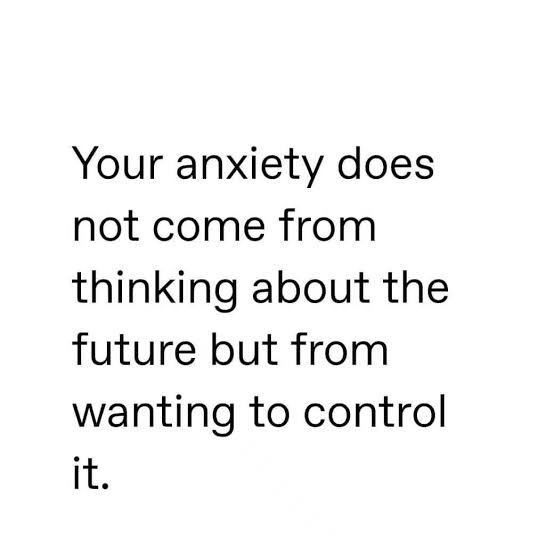
The expectation of outcomes is an inherent human trait. It is rooted in our evolutionary drive for predictability and control. For our ancestors, predicting potential dangers and outcomes was a matter of survival. Over millennia, this instinct has got inculcated with our complex cognitive structures, resulting in our modern-day anxieties about the future and ruminations on the past. However, the irony lies in the fact that the more we seek to control outcomes, the more we find ourselves entangled in a web of expectations. These expectations often lead to inner conflicts. When the present doesn’t align with our anticipated future, dissatisfaction ensues. And when the weight of past regrets is heavy, it dims the light of the present. Furthermore, the very act of striving to stay in the ‘now’ can itself become a source of distraction. If one is perpetually conscious about remaining anchored in the present, then this very consciousness becomes a barrier. The effort to stay present can sometimes be as distracting as the past memories or future anxieties that pull us away.
In today’s world, there’s also the influence of societal structures and norms. We live in societies that prize outcomes—success is often defined not by the journey, but by the destination. From a young age, we’re conditioned to focus on results, whether it’s grades in school or milestones in personal and professional lives. This societal molding further deepens our attachment to outcomes and amplifies our detachment from the present.
It is also crucial to understand the role of human consciousness in shaping our experience of time. Our consciousness is not just a passive observer; it actively constructs our sense of reality. Every moment we live is filtered through a myriad of cognitive processes, memories, and emotions. This complexity means that we often don’t experience the world “as it is” but rather “as we are.”

Neurologically speaking, our brain’s default mode network, an intricate web of interconnected brain regions, becomes most active when our attention is not occupied by tasks. This network is linked with thinking about others, thinking about oneself, remembering the past, and planning for the future. Thus, even when we aim to be in the present, our brains often naturally drift towards contemplations of the past and future. The challenges in remaining present can also be attributed to our cognitive structures, which include biases, such as the “negativity bias” – our innate human tendency to give more weight to negative experiences than positive ones. This bias can cause past traumas or failures to overshadow current joys, anchoring us in bygone moments of pain or disappointment. On the other hand, the future holds the allure of the unknown. This uncertainty can be both enticing and anxiety-inducing. Our modern societies, with their rapid changes and technological advancements, amplify this by creating an environment where change is the only constant. The evolving landscapes of our personal and professional lives mean that the future is more unpredictable than ever, making it a potent magnet for our attention and energy. Yet, amidst these complexities, lies a simple truth: the only tangible reality is the present. While memories shape and color our past and aspirations carve out our perceived futures, the ‘now’ is the only temporal space where action occurs, where life is truly lived.
Let’s explore this further!
What if “Now” encapsulates everything – past, present, and future ? This perspective challenges traditional temporal distinctions or divisions we create in and between Past, Present and Future. This viewpoint reframes our understanding of time and our place within its continuum. When we speak of living in the now, it’s often portrayed as a juxtaposition against being lost in memories of the past or anxieties about the future. However, what if everything is indeed a part of the “now” ?
Imagine time as a vast river. In this river, every drop of water represents a moment. While some drops are behind us (the past) and others ahead (the future), they all collectively belong to the river, which is the “now”. In this perspective, the entirety of existence – our memories, current experiences, and anticipations – are interconnected and concurrently present in an expansive “now”. From this viewpoint, distractions aren’t diversions from the present moment; they are simply different facets of the ever-expanding “now”. The reminiscences of a childhood memory or the contemplation about a future event are as much a part of our current experience as the sensation of the chair we’re sitting on. Every thought, emotion, and sensation, regardless of the temporal context it references, emerges and is experienced in the present moment.

The division we often make between the past, present, and future might be a result of our cognitive architecture. The human mind, in its quest for order and understanding, categorizes experiences. This compartmentalization aids in processing complex information. For instance, labeling an experience as a “memory” helps us contextualize it, discern lessons from it, or even prevent future mistakes. Similarly, projecting into the future can be a survival mechanism, allowing us to anticipate potential threats or opportunities.
However, by understanding that everything occurs in the “now”, we can achieve a form of holistic consciousness. This realization offers liberation. It frees us from the confines of linear temporality and allows a more integrated experience of existence. Such a perspective is echoed in various spiritual and philosophical traditions. For instance, in Eastern philosophies, there’s an emphasis on the interconnectedness of all things, where dichotomies are more apparent than real. Yet, while this concept is enlightening, it’s also challenging. Our societal structures, languages, and even our neurobiology are geared towards a linear understanding of time. Overcoming this deeply ingrained perspective requires consistent introspection and possibly even a paradigm shift in our consciousness.

Let’s delve deeper into the expansive Present:
Linear time, where events occur in a sequence from past to present to future, might be more of a cognitive construct than an intrinsic property of the universe. Physics, especially in the realm of relativity and quantum mechanics, has already shown us that time doesn’t always behave in the ways our everyday experiences might suggest. The famous physicist John Wheeler once proposed the idea of a “participatory universe,” suggesting that observers play a role in shaping their own realities, which includes the experience of time. Every thought, emotion, or memory we experience happens in the present moment of consciousness. Even when we recall a past event or anticipate a future one, that activity occurs in the current moment of awareness. This raises the idea that consciousness itself might be beyond time. It’s a continuous stream where “past” and “future” are merely parts of the grander “now.”
If we fully embrace the idea that everything is part of the “now,” it alters how we relate to our experiences. Regret, nostalgia, anxiety, and hope, which are emotions anchored in our traditional understanding of time, undergo a transformation. For example, instead of feeling regretful for a past decision, understanding its occurrence in the vastness of “now” might lead to acceptance and integration of that experience. Memory plays a crucial role in our understanding of time. Our memories, though referencing past events, are dynamic and malleable. They’re reconstructed every time we recall them. In essence, every time we remember something, we’re experiencing it anew in the present moment. This blurs the boundaries between past events and current experiences, reinforcing the idea of an all-encompassing “now.” While the concept is philosophically and spiritually enriching, it poses challenges in our day-to-day lives dominated by schedules, deadlines, and plans. How does one reconcile the linear demands of modern life with a non-linear understanding of time? This balance requires us to function efficiently in the world while internally maintaining an awareness of the deeper, interconnected reality.
Let’s delve further into More finer details: what if we kill “Now”?
When we speak of “killing” the now, we’re essentially talking about transcending our typical awareness of time and moving into a state of pure being, a consciousness unfettered by the confines of temporal experience. The idea that time itself might be an illusion is not new. From the ancient Eastern philosophies to cutting-edge quantum mechanics, there are suggestions that what we experience as the flow of time might be a cognitive and perceptual construct. Our brains organize experiences in a linear fashion, from cause to effect, creating the sense of a flowing river of moments, from the past, through the present, and into the future. But if we could step outside this stream, what would consciousness look like? If we “kill” the now, we’re essentially trying to access a state of pure awareness—a consciousness devoid of content, without thoughts, perceptions, or sensations. Many meditative practices aim to reach this state, often described as “thoughtless awareness” or “contentless consciousness.” In this state, the meditator isn’t focused on any particular thing (like the breath, a mantra, or an image), but instead simply exists. It’s a state of being rather than doing.
Attempting to attain a state of pure awareness can be paradoxical. The very effort to reach this state can prevent one from achieving it, as effort and intention are temporal and future-oriented in nature. It’s like trying to smooth turbulent water with one’s hand—the act of trying only creates more turbulence. It requires a letting go rather than a striving, a surrender rather than a pursuit. To “kill” the now is to step beyond dualities—the past and future, cause and effect, self and other. This is a realm often spoken of in mysticism and spirituality, where one transcends the perceived divisions of existence. It’s a state of unity, of oneness, where the individual self melts away into the all-encompassing whole.
While these states of consciousness can be transformative, they can be challenging to maintain in our everyday, pragmatic world. Our society operates on schedules, plans, and routines. However, even fleeting experiences of this transcendent state can profoundly affect our daily lives. It can offer insights, change perspectives, and create a deep-seated sense of peace. From the perspective of many ancient traditions, the universe is in a constant dance of creation and destruction. The “now” that we experience is just one beat of this cosmic dance. To “kill” the now is not to negate or nullify it, but to merge with the dance itself, to become one with the rhythm of existence.
Dissecting Risk: Risk Reevaluated
To understand risk, one must first examine its intertwined relationship with fear and uncertainty. Fear, in many respects, is a primal instinct, a protective mechanism that has evolved over millennia to ensure our survival. When faced with uncertainty, fear is our brain’s way of signaling possible danger. This fear then transmutes into the perception of risk. If we dissect the concept further, risk is not merely the chance of a negative outcome; it is the variability of all possible outcomes, both positive and negative.
Historically, our ancestors perceived risk in terms of immediate threats to survival. A rustling in the bushes could be a predator; consuming an unknown fruit could be poisonous. The decision to confront or flee from such situations was binary and rooted in the immediate need for survival. Over time, as societies became more complex and the nature of threats more multifaceted, our understanding of risk evolved. It began encompassing not just immediate physical threats but also social, emotional, and existential ones. The risk of rejection, the risk of failure, the risk of lost opportunities – these became the new “predators” lurking in the modern-day bushes. When we probe deeper into the origin of risk, we see that it arises from our innate desire to predict, control, and secure our futures. As sentient beings, we’re acutely aware of the passage of time and the transient nature of life. This awareness engenders a need to anticipate and influence future outcomes. When the outcome of an action or decision is uncertain, the mind perceives a risk.
However, it’s essential to note that risk, in itself, is neutral. It’s our emotional and cognitive responses to it that assign value – labeling it as ‘good’ or ‘bad’. For instance, an entrepreneur might view starting a business in a saturated market as a worthy risk, driven by the thrill of competition and the lure of potential success. Conversely, someone more security-oriented might see the same situation as fraught with unnecessary peril. If one doesn’t fear loss, failure, or the unknown, does risk even exist for them? At a philosophical level, without fear, the concept of risk is indeed defanged. However, even in the absence of fear, the uncertainty of outcomes remains. The fearless individual might not perceive this uncertainty as threatening, but it exists nonetheless. In this context, risk transforms from an emotionally charged concept into a mere statistical or probabilistic one.
Our personal experiences significantly color our perception of risk. Someone who has experienced the turbulent waters of bankruptcy might view financial risks differently than someone who has always experienced financial stability. Similarly, someone who has been burnt in love might perceive emotional risks in relationships more acutely than someone who hasn’t. Our past becomes the lens through which we evaluate future uncertainties. Beyond these factors, there’s also the intriguing interplay between risk and reward. Often, the potential rewards are what entices individuals to take risks in the first place. The entrepreneur might be motivated by the potential success, recognition, and financial gain, while the mountaineer is driven by the allure of conquering a challenging peak and the accompanying sense of accomplishment. This dynamic relationship often acts as the fulcrum on which decisions are balanced, with individuals constantly gauging whether the potential rewards justify the inherent risks.
Our linear experience of time – past, present, and future – makes us unique in the animal kingdom. We’re not just reactive to the present but are perpetually planning, anticipating, and sometimes dreading the future. Risk becomes a manifestation of this temporal consciousness. It embodies our anxieties about the future, our memories of the past, and our actions in the present.
Risk also touches upon the core tenets of freedom and responsibility. The very act of making a choice, knowing that the outcomes are uncertain, underlines the essence of human freedom. Each choice, enveloped in risk, becomes an assertion of our existence. Jean-Paul Sartre, a prominent existential philosopher, believed that we are “condemned to be free.” This freedom carries the weight of responsibility. Every risk we take, every decision we make, anchors us more deeply into the world, creating ripples that affect not only our own lives but also those around us. In this context, risk becomes an embodiment of our existential freedom and the accompanying burdens of our choices.
Risk also invites us to confront the inherent unpredictability and chaos of the universe. Despite our best efforts, life remains fundamentally uncertain. This reality poses profound questions about determinism and free will. If everything is preordained, is there truly any ‘risk’? Yet, the very experience of uncertainty, the palpable tension before a decision’s outcome, seems to argue for the existence of free will, or at least the perception of it. This brings us to the concept of ‘absurdity’, as introduced by Albert Camus. For Camus, life is inherently absurd because humans constantly seek meaning in an indifferent universe. Risk, in many ways, mirrors this absurdity. We seek to calculate, manage, and control risks, attempting to impose order on the inherent chaos of existence. Yet, no matter how meticulous our calculations, the unpredictable can and often does occur.
The human mind is a complex apparatus that thrives on patterns, structures, and predictions. It’s this very nature of our mind that gives birth to the notion of “risk.” Risk, in essence, can be seen as a cognitive construct – a product of our mind’s incessant need to anticipate the future based on past experiences, knowledge, and the limited information at our disposal. Risk as we perceive it, might indeed be an illusion.
Imagine for a moment a world without memory and without the capability to anticipate the future. In such a world, every moment would be lived in its pure immediacy, with no concept of potential loss or gain in future endeavors. In this hypothetical scenario, the concept of “risk” would be non-existent.

Consider the stock market: A trader might perceive a significant risk in buying a particular stock. This perception is rooted in market analysis, past performance of the stock, global economic indicators, and a myriad of other variables. But strip all that away, and the “risk” is essentially a story, a narrative constructed from myriad data points and emotions like fear and greed.
Similarly, the fear of rejection or judgment in social situations, often seen as a social risk, is built upon personal experiences, societal norms, and cultural expectations. But at its core, it’s a self-created narrative – a story we tell ourselves about potential outcomes and their implications for our self-worth. Does this mean risk is entirely subjective? In many ways, yes. While there are objective measurements of risk in certain fields (like insurance or finance), the emotional and psychological experience of risk is deeply subjective.
Yet, this subjectivity doesn’t render the concept of risk meaningless. Even if risk is a construct, it holds tangible power over our actions, decisions, and emotions. The very fact that we can feel fear, anxiety, excitement, or anticipation when faced with uncertainty testifies to the real-world impact of this illusion.
Faith – reality in unseen ?
The concept of faith is one of the most profound yet elusive aspects of human life. Rooted in the intangible and often transcending the bounds of logical reasoning, faith is a powerful force that shapes our worldviews, influences our actions, and gives meaning to our existence. In its most fundamental form, faith is a complete trust or confidence in something or someone. However, the nature and implications of faith are much more nuanced and multifaceted.
Faith operates in various dimensions of our lives, not just in religious or spiritual contexts. We exhibit faith when we trust our loved ones, when we believe in the promise of a better future, when we have confidence in our abilities despite past failures, and even when we participate in social or economic systems. Faith, therefore, is deeply ingrained in our daily lives, influencing our decisions and perceptions, often without us consciously realizing it.
When it comes to faith in things unseen or events yet to happen, the dynamics become even more complex. This kind of faith typically involves a degree of uncertainty and mystery. It requires a leap beyond the confines of empirical evidence and tangible proof. But why do we, as rational beings, place faith in the unseen or the unknown?
Part of the answer lies in our inherent desire for meaning, purpose, and connection. As conscious beings, we yearn to understand the world around us, to make sense of our experiences, and to feel connected to something greater than ourselves. This quest for understanding and connection often leads us into the realm of the unseen, the unproven, the mysterious. It’s in this realm that faith becomes an essential tool.
Moreover, our experiences shape our faith. Experiences of love, compassion, resilience, and transformation can reinforce our faith in positive values, in humanity, or in a higher power. On the other hand, experiences of pain, loss, or injustice might challenge or even shatter our faith. Nevertheless, it’s often in the midst of adversity that faith evolves and deepens, as we grapple with questions of meaning, purpose, and hope.

The role of faith in our lives can be multifarious. For some, faith in a divine entity brings comfort and guidance. It instills hope during trials and tribulations, fosters a sense of community and belonging, and provides a moral framework for life. For others, faith in human potential and progress fuels the pursuit of knowledge, justice, and innovation.
Does faith have anything to do with what has happened and what’s going to happen? Indeed, faith is often interwoven with our perceptions of the past, present, and future. Past experiences can shape our faith, as we learn from our triumphs and failures, joys and sorrows. Our faith, in turn, influences how we navigate the present and envision the future. It can give us the courage to face challenges, the patience to endure hardships, and the inspiration to dream and create.
At the same time, faith is not about predicting the future with certainty. Rather, it’s about embracing uncertainty with hope and resilience. It’s about daring to dream, to strive, and to love, even when the outcomes are unknown. It’s about trusting in the potential for growth, transformation, and transcendence, regardless of our current circumstances or past experiences.
Is faith real? The reality of faith might not be tangible or measurable, but its impact on human life is undeniable. Across cultures and throughout history, faith has inspired art and literature, fueled social movements, shaped civilizations, and transformed individual lives. Its reality is manifested in the courage of those who dare to dream and create, in the resilience of those who endure suffering with hope, and in the love and compassion that transcend boundaries of race, religion, and ideology.
It’s worth noting, however, that faith is not about passive acceptance or blind allegiance. True faith involves questioning, seeking, and growing. It’s a dynamic, evolving journey rather than a fixed destination. It requires humility to acknowledge the unknown, courage to question and explore, and wisdom to discern truth from illusion. While the nature of faith is complex and elusive, its essence can be encapsulated in the timeless words of Martin Luther King Jr.: “Faith is taking the first step even when you don’t see the whole staircase.”

To deepen our exploration of faith, let’s consider it from various perspectives: philosophical, psychological, sociological, and spiritual.
From a philosophical perspective, faith brings up interesting questions about knowledge and belief. Philosophers have long pondered how we can justify our beliefs or knowledge claims, particularly when they concern the unseen or the unproven. Can faith be considered a form of knowledge? Does it require justification or evidence? Different philosophical traditions offer diverse answers. For instance, the school of pragmatism posits that beliefs (and by extension, faith) can be justified if they yield positive outcomes or experiences.
From a psychological perspective, faith can be viewed as a cognitive and emotional mechanism that helps us navigate uncertainty and complexity. For instance, when we face a difficult decision or an unpredictable situation, faith can provide a sense of direction and confidence. Psychological research has shown that faith (both religious and secular) can contribute to mental well-being, resilience, and prosocial behavior. For instance, faith in one’s abilities (also known as self-efficacy) is a key factor in motivation and achievement.
From a sociological perspective, faith plays a crucial role in social cohesion and collective action. Shared beliefs and values can foster a sense of community and cooperation, enabling societies to function and evolve. For example, faith in democratic values underpins democratic institutions and practices. Moreover, faith can inspire social change. The civil rights movement in the United States, led by figures like Martin Luther King Jr., is a powerful example of faith-driven social activism.
From a spiritual perspective, faith is often associated with the relationship between the human soul and the divine or the transcendent. Faith can manifest as trust in divine providence, commitment to spiritual practices, or aspiration for spiritual growth. For instance, in the Bhagavad Gita, a sacred text of Hinduism, Lord Krishna advises Arjuna to perform his duty with faith and without attachment to the results – a principle known as Karma Yoga.
Let’s consider a few examples that illuminate the multifaceted nature of faith. Imagine a student who is preparing for a challenging exam. Her faith in her abilities motivates her to study diligently. She also has faith in the fairness of the educational system and the value of her chosen field of study. This faith sustains her through the stress and uncertainty of the exam period.
Consider also the example of a social activist. He has faith in the possibility of a more just and sustainable world. This faith fuels his advocacy and activism, despite the challenges and setbacks he might face. He also has faith in the power of collective action and the potential for social change.
Finally, contemplate the faith of a spiritual seeker. She has faith in a higher power and a deeper reality beyond the material world. This faith guides her spiritual practices and informs her life choices. Even in the face of doubt or despair, her faith provides a source of strength and solace.
Let’s consider some more aspects of faith: faith as an act of surrender, faith and reason, faith and doubt, and faith as a dynamic process.
- Faith as an Act of Surrender: In many spiritual traditions, faith is often depicted as a surrender, a relinquishing of the illusion of control. When we face life’s uncertainties, we often try to manipulate outcomes according to our desires. However, faith involves trusting the flow of life, even when it does not conform to our expectations. It’s like floating on the surface of a vast ocean, trusting in its currents to guide us, rather than struggling against them. This concept of surrender is not about inaction or defeat, but about embracing life’s unpredictability and recognizing our limited perspective.
- Faith and Reason: Faith and reason are often viewed as conflicting forces, particularly in the discourse between science and religion. However, they can also be seen as complementary aspects of our human quest for understanding. Reason involves the critical examination of evidence and the logical analysis of ideas. It is indispensable in our pursuit of empirical knowledge and practical wisdom. Faith, on the other hand, steps in where reason reaches its limits. It enables us to navigate the mysteries of existence, to live with uncertainty, and to aspire for ideals that transcend empirical evidence.
- Faith and Doubt: Doubt is often seen as the antithesis of faith, but it can also be an integral part of the journey of faith. Doubt prompts us to question our beliefs, to seek deeper understanding, and to remain open to new insights. A faith that has never been challenged by doubt may be unexamined or dogmatic. As philosopher Paul Tillich put it, “Doubt is not the opposite of faith; it is one element of faith.”
- Faith as a Dynamic Process: Faith is not a static state but a dynamic process. It evolves as we encounter new experiences, insights, and challenges. Faith is not about clinging to fixed beliefs, but about cultivating a receptive and resilient spirit. It involves not only trusting in something beyond ourselves but also believing in our capacity to learn, grow, and adapt.
To illustrate these aspects, let’s revisit our previous examples. The student preparing for an exam may experience moments of self-doubt and anxiety. However, she can choose to see these challenges as opportunities for growth rather than threats to her faith in her abilities. By acknowledging her doubts, she can deepen her understanding of herself and her aspirations. By surrendering to the process, she can relieve her anxiety and focus on her effort rather than the outcome.
The social activist might face skepticism or opposition, testing his faith in his cause. But rather than deterring him, these challenges can strengthen his commitment and clarify his vision. His faith is not a blind belief but a conscious choice, informed by his understanding of social issues and his conviction in the power of change.
The spiritual seeker may grapple with profound questions about the divine and the nature of existence. Her faith does not prevent her from questioning or exploring different perspectives. Instead, it serves as a compass in her spiritual quest, guiding her through the vast and often confusing landscape of spiritual wisdom.
These examples underscore the richness and complexity of faith. Rather than a monolithic entity, faith is a kaleidoscope of perspectives, experiences, and choices. It is a multifaceted gem, whose beauty and depth are revealed in the light of our personal and collective journeys.
Anticipatory anxiety in Human Relationships
Human relationships, particularly the relationships we share with those we deeply care about, are characterized by a multitude of emotions, experiences, and dynamics that can often seem paradoxical. One such paradox is the experience of having a rush of things to share with a loved one, only to find ourselves going blank when we finally meet them. This experience can be perplexing, but it is not uncommon.
Firstly, it’s crucial to acknowledge that communication in the context of love is not just about the exchange of words. Love is a deep, complex emotion, and our communication with those we love often extends beyond the verbal. When we meet our loved ones, our subconscious mind, which is a powerful part of our emotional processing system, comes into play. It relishes the presence of the loved one, focusing on the nonverbal cues like their expressions, their body language, the warmth in their eyes, and their overall energy. These subtle signals can trigger an emotional response, which can be so overwhelming that it temporarily clouds our conscious thoughts, leading us to experience the ‘blank’ state.
Secondly, the anticipation of sharing experiences with a loved one can create a psychological phenomenon known as ‘anticipatory anxiety’. Anticipatory anxiety refers to the anxiety that individuals experience in anticipation of an event. In this case, the event is the sharing of experiences with the loved one. This anxiety is not necessarily negative; it could just be the result of the excitement and eagerness of wanting to share and connect. However, it can sometimes lead to over-preparation, where we mentally rehearse the conversation multiple times, creating an information overload. When the actual moment of sharing comes, the overload coupled with the emotional response to being in the presence of the loved one can cause our mind to go blank.
Moreover, the desire to share our experiences with our loved ones stems from our need for connection and validation. We yearn to be seen, to be understood, and to be acknowledged. However, when we are in the presence of a loved one, especially if the love is deep and genuine, their mere presence can provide the connection and validation we seek. This can reduce the urgency of the need to share, leading to a calming effect where our thoughts settle down, and we find ourselves enjoying the moment rather than focusing on narrating our experiences.
Another angle to consider is the dynamics of vulnerability in love. Sharing our experiences, particularly those that are personal or emotionally charged, involves opening up and making ourselves vulnerable. While we may feel comfortable with this level of vulnerability at a conceptual level, the reality of opening up in person may feel more daunting, causing us to retreat into ourselves.
Furthermore, it’s essential to understand the role of ‘presence’ in love. Being ‘present’ is about being fully engaged in the here and now, immersing ourselves in the current moment without being distracted by past memories or future anticipations. When we are with our loved ones, we are often naturally pulled into the present because of the depth of our feelings for them. This state of presence can calm our mind, helping us let go of our preconceived plans to share, and instead, allowing us to just be and enjoy the moment with them.
In the realm of love, relationships, and emotional intimacy, the phenomenon of ‘going blank’ when in the presence of a loved one is multifaceted and deeply linked to our inner selves and our perception of the world around us. The depth and breadth of human emotion, particularly those we experience when we’re in love, are often too vast to put into words. This cognitive-emotional interplay can add another layer of complexity to the ‘going blank’ phenomenon.
Sometimes, the vastness of what we wish to share and the depth of our feelings can be so overwhelming that it becomes difficult to articulate them into coherent thoughts or words. This may be because language, while an effective means of communication, is sometimes limited in expressing the depth and complexity of our inner world. Some feelings, experiences, or ideas may not have exact words to define them, causing a disconnect between our internal state and our ability to express it verbally. This can result in the feeling of being ‘blank’ when we attempt to communicate our experiences to a loved one.
There’s also an element of what psychologist Carl Rogers referred to as ‘unconditional positive regard’. Unconditional positive regard involves showing complete support and acceptance of a person regardless of what they say or do. When we are in the presence of a loved one who provides us with this unconditional positive regard, it can create a deeply comforting and validating environment. This environment can be so emotionally fulfilling that our need to share or discuss our experiences diminishes, as our emotional needs are already being met through the connection itself. This can contribute to the sensation of going ‘blank’ in their presence.
This concept aligns with the Eastern philosophy of ‘being versus doing’. In the hustle and bustle of our daily lives, we are often caught up in a constant state of ‘doing’ – planning, executing, achieving, and communicating. However, when we’re with someone we deeply love and trust, we transition from ‘doing’ to ‘being’. In this state of ‘being’, we are fully present, engaged, and immersed in the moment, not driven by the need to accomplish anything or express everything. This transition can lead to the settling down of our thoughts, contributing to the ‘blank’ state.
The ‘going blank’ phenomenon also has an interesting correlation with the concept of ‘flow’ introduced by positive psychologist Mihaly Csikszentmihalyi. ‘Flow’ is a state of being completely absorbed in the current activity to the extent that we lose track of time and our surroundings. When we’re with a loved one, especially when the connection is deep and genuine, we can experience a similar state of ‘flow’, where our focus shifts from our thoughts and experiences to the shared moment. This shift can give rise to the feeling of ‘going blank’.
It’s a reminder that sometimes, words are not necessary, and that love and understanding can be conveyed through a mere look, a touch, or shared silence. As the renowned poet Rumi once said, “Silence is the language of God, all else is poor translation.” So, when we ‘go blank’, we are not experiencing a lack, but rather a transcendence from the verbal to the non-verbal, from the explicit to the implicit, from ‘doing’ to ‘being’ in love.
Navigating the Tides of Time
In this blog, we will explore the intricate web of fears that arise from our attachment to the past and preoccupation with the future. By delving into these fears, we can gain a deeper understanding of their origins and develop the tools to free ourselves from their grip, fostering a greater sense of presence and harmony in our lives.
Fears Stemming from the Past
- Regret: Regret arises from the belief that we have made mistakes or failed to seize opportunities in the past. Dwelling on these perceived missteps can lead to a persistent sense of guilt, shame, and self-blame.
- Unresolved Trauma: Past traumas, whether physical, emotional, or psychological, can create lingering fears that continue to haunt us long after the events themselves have passed. These unresolved issues can manifest as anxiety, depression, or even phobias.
- Fear of Repeating Past Mistakes: The concern that we may fall into old patterns of behavior or repeat past mistakes can create an underlying sense of unease and inhibit our ability to embrace new experiences with confidence and openness.
- Fear of Rejection: Past experiences of rejection, whether in relationships, social situations, or professional contexts, can lead to a lingering fear of being rejected again. This may result in self-imposed isolation, reluctance to form new connections, or difficulty trusting others.
- Fear of Abandonment: If one has experienced abandonment in the past, either emotionally or physically, the fear of being abandoned again can impact future relationships and interactions. This fear may manifest as clinginess, insecurity, or a constant need for reassurance.
- Fear of Judgment: Past experiences of being judged or criticized can foster a fear of judgment from others. This can lead to self-consciousness, a preoccupation with appearances, or excessive people-pleasing behaviors.
- Fear of Inadequacy: A history of feeling inadequate or unworthy, often stemming from childhood experiences, can lead to a persistent fear that one is not good enough. This fear can manifest in various aspects of life, such as relationships, work, or personal growth, and can inhibit one’s ability to fully embrace new experiences or challenges.
- Fear of Disapproval: Past experiences of disapproval, whether from family, friends, or authority figures, can result in a lingering fear of not living up to others’ expectations. This fear can lead to excessive conformity, a reluctance to express one’s true thoughts and feelings, or difficulty asserting oneself in various situations.
Fears Stemming from the Future
- Fear of Failure: The worry that we may not achieve our goals or meet the expectations of others can create a sense of pressure and anxiety that stifles our ability to take risks and pursue our dreams.
- Fear of Loss: The apprehension that we may lose something or someone dear to us, such as a loved one, a job, or our health, can generate a pervasive sense of dread that colors our experience of the present.
- Fear of Change: The anxiety that accompanies the uncertainty of change and the potential for upheaval and instability can make us resistant to embracing new opportunities and experiences.
- Fear of the Unknown: The general unease that arises from our inability to predict or control future events can create a pervasive sense of apprehension and vulnerability.
- Fear of Success: Paradoxically, some people fear success, as they worry about the increased responsibility, expectations, or changes in their life that may accompany it. This fear can manifest as self-sabotage, procrastination, or a reluctance to pursue goals wholeheartedly.
- Fear of Aging: The natural process of aging can be a source of anxiety for many, as they contemplate the potential decline of their physical or cognitive abilities, as well as the prospect of facing their own mortality. This fear can lead to a preoccupation with youth, a resistance to change, or difficulty embracing the present moment.
- Fear of Illness: The uncertainty of one’s health can be a significant source of future-related fear. The prospect of developing a serious illness, experiencing chronic pain, or facing a decline in overall well-being can create a sense of unease and heightened vigilance around one’s health.
- Fear of Loneliness: The future can hold uncertainties around one’s social connections, and the fear of loneliness can arise from the prospect of losing close relationships, having difficulty forming new connections, or facing significant life transitions that may lead to feelings of isolation.
- Fear of Missing Out (FOMO): In an increasingly interconnected world, many people experience the fear of missing out on experiences, opportunities, or social events. This future-oriented fear can lead to a constant need for stimulation, a preoccupation with social media, or difficulty enjoying the present moment.
Navigating the Tides of Time: Strategies for Overcoming Fear
- Cultivate Mindfulness: Practice mindfulness to anchor yourself in the present moment, reducing the tendency to dwell on past regrets or future uncertainties. This helps to experience life more fully and with greater clarity.
- Foster Self-Awareness: Developing self-awareness can help you recognize and acknowledge your fears, enabling you to confront and work through them, rather than allowing them to dictate your life.
- Embrace Acceptance: Learning to accept the inherent uncertainty of life allows you to let go of the need for control and embrace the flow of existence with greater ease and grace.
- Live with Intention: Focus on the choices and actions that are within your control, releasing attachment to specific outcomes or future scenarios. Living with intention allows you to navigate life’s uncertainties with greater resilience and adaptability.
 Abhishek Fanse