The beauty of “Beauty”
The concept of beauty has been a subject of fascination and contemplation for humanity since time immemorial. It captivates our senses, stirs our emotions, and inspires our creativity. Traditionally, beauty has been associated with physical form, such as the graceful lines of a human body or the harmonious proportions of a natural landscape. However, there is a deeper aspect of beauty that transcends form—the beauty of the formless.
Formless beauty refers to a beauty that exists beyond the realm of physical appearance. It is an intangible quality that emanates from the depths of our being and encompasses the essence of our existence. This formless beauty is not constrained by the limitations of shape, color, or physical attributes. It encompasses qualities such as love, compassion, truth, and harmony—the virtues that resonate with our innermost being and touch our souls.

Unlike the beauty associated with physical forms, which can be subjective and vary from person to person, formless beauty is universal. It transcends cultural, geographical, and temporal boundaries. It is the essence that connects all living beings and permeates the very fabric of existence. Formless beauty can be experienced in the simplest of moments—a gentle act of kindness, a shared laugh with a loved one, or a moment of deep inner peace.
One of the profound aspects of formless beauty is its ability to evoke a sense of awe and wonder. When we encounter acts of selflessness, compassion, or transcendence, we are moved by the beauty of the human spirit. These experiences touch something deep within us, igniting a spark of recognition and reminding us of our own innate capacity for goodness and transcendence. In these moments, we connect with the universal essence of formless beauty that resides within all of us.
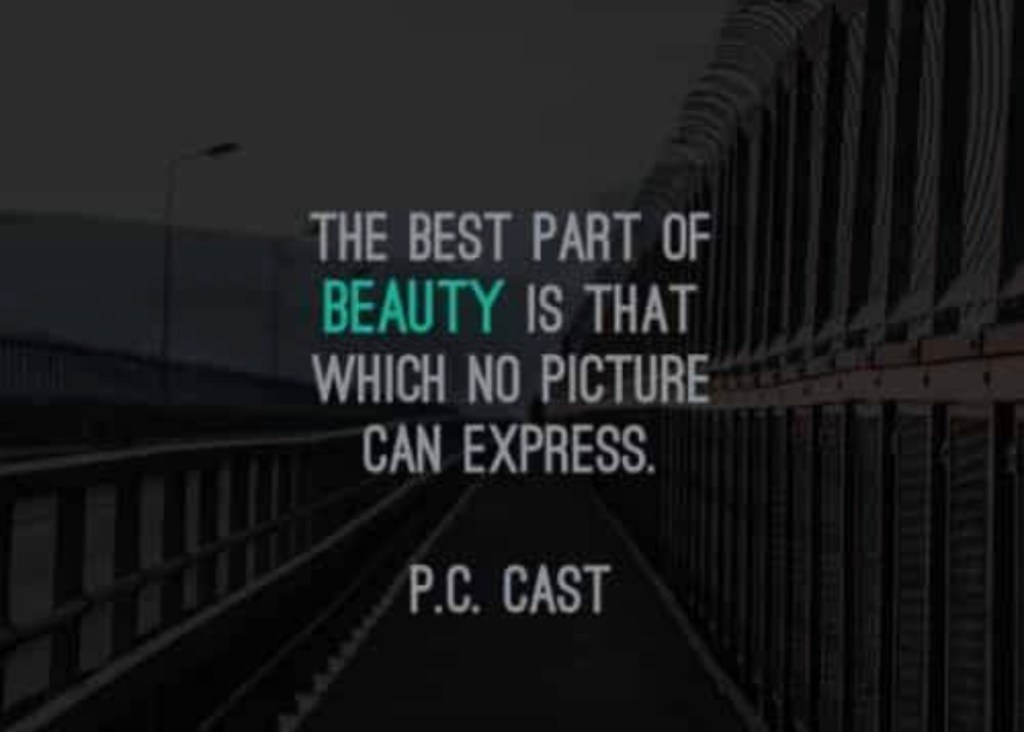
Subjective beauty, on the other hand, is the beauty that arises from our personal perception and interpretation of the world. It is the beauty that lies in the eye of the beholder, influenced by our unique perspectives, emotions, and cultural conditioning. Subjective beauty is not limited to any particular form or object but can be found in everything we encounter.
Subjective beauty is deeply personal and can vary from person to person. It is shaped by our experiences, memories, and associations. It is influenced by our cultural background, upbringing, and individual preferences. For example, a work of art that resonates deeply with one person may leave another person indifferent. The subjective beauty we perceive in an object or experience is a reflection of our own inner landscape.
The beauty of any form encompasses both the objective attributes of the form and the subjective experience of perceiving that form. When we appreciate a natural landscape, for instance, we may be captivated by its colors, textures, and shapes. But the subjective beauty lies in the emotions, thoughts, and feelings it evokes within us—the sense of awe, tranquility, or connectedness we experience when we immerse ourselves in its presence.
The beauty of any form is not limited to its physical attributes alone. It is also influenced by the meanings, associations, and stories we attach to it. For example, a simple flower can hold profound beauty for someone who associates it with cherished memories or symbolic significance. The subjective beauty we find in forms is a reflection of our inner world, our values, and our unique experiences.
The beauty of formless and subjective beauty reminds us that beauty is a multi-dimensional experience that engages our hearts, minds, and souls. It invites us to look beyond the surface and to appreciate the inherent beauty that exists in the diversity of forms and experiences. It encourages us to explore the deeper layers of perception and connect with the universal essence that underlies all manifestations.
To fully appreciate the beauty of formless and subjective beauty, it is essential to cultivate a state of open-mindedness, curiosity, and presence. We must be willing to suspend our preconceived notions and judgments, allowing ourselves to see beyond the surface and delve into the essence of things. This requires a certain degree of inner clarity and awareness, a willingness to let go of conditioned patterns of thinking and perceiving.
The path to recognizing the formless beauty within and perceiving subjective beauty in the world around us begins with self-awareness. By becoming aware of our own thoughts, emotions, and reactions, we gain insight into the filters through which we perceive the world. We can then question our assumptions, biases, and conditioned beliefs, allowing space for new possibilities and perspectives to emerge.
Meditation and mindfulness practices can be powerful tools in cultivating this self-awareness and expanding our capacity to perceive beauty in all its forms. Through meditation, we develop the ability to observe our thoughts without getting entangled in them, creating a space of clarity and stillness within. This inner silence allows us to access a deeper level of consciousness where the formless beauty can be directly experienced.
In this state of heightened awareness, we begin to recognize that the boundaries between the perceiver and the perceived are illusory. We realize that our perception of beauty is not limited to the external world but is a reflection of our inner state. We understand that the beauty we see in others and the world around us is, in essence, a reflection of our own inner beauty and capacity for love, compassion, and appreciation.
As we deepen our understanding of the formless beauty and embrace the subjective beauty in all its diversity, we also develop a profound sense of interconnectedness. We recognize that we are part of an intricate web of existence, intimately connected with all beings and the natural world. This recognition brings a deep sense of belonging and an expanded sense of compassion and empathy.
In this expanded perception, the concept of beauty transcends the limitations of individual preferences or societal standards. We begin to appreciate the uniqueness and inherent beauty of each person, each moment, and each form of expression. We understand that beauty is not confined to what meets the eye but encompasses the vast array of human experiences, emotions, and expressions.
Formless beauty and subjective beauty invite us to embrace the present moment fully. They remind us to let go of attachments to outcomes, expectations, and judgments. Instead, they encourage us to immerse ourselves in the richness of each moment, allowing ourselves to be fully present and receptive to the beauty that unfolds before us.
In the realm of formless beauty, time loses its grip on us. We enter a state of timelessness, where the past and the future dissolve into the eternal present. In this state, we are free from the burden of regrets or anxieties about the future. We are fully engaged with the richness of the present moment, where the beauty of existence reveals itself in all its multifaceted glory.
The journey to experiencing the beauty of formless and subjective beauty is a lifelong process of self-discovery and exploration. It requires a willingness to look beyond appearances, to question our assumptions, and to cultivate a deep sense of presence and awareness. It is an invitation to embrace the mystery of life and to connect with the inherent beauty that exists within and around us.
In the realm of formless beauty, there is a profound sense of interconnectedness. We recognize that we are not separate entities, but rather interconnected threads in the tapestry of life. This awareness brings about a deep sense of compassion and empathy for all beings. We understand that the suffering of one is the suffering of all, and the joy of one is the joy of all. This interconnectedness invites us to cultivate a sense of responsibility and care for the well-being of others, knowing that their happiness and suffering are intimately linked to our own.
Subjective beauty, on the other hand, is a deeply personal experience. It is the beauty that arises from our unique perceptions, emotions, and experiences. What one person finds beautiful, another may not. It is subjective because it is colored by our individual preferences, cultural backgrounds, and personal histories. Yet, even within the realm of subjective beauty, there is a recognition of the interconnectedness and universality of human experience.
When we open ourselves to the beauty of the formless and embrace the subjective beauty of the world around us, we transcend the limitations of duality. We move beyond the notion of good and bad, right and wrong, and begin to see the inherent beauty in all experiences. We understand that even in moments of pain or difficulty, there is an underlying beauty that can be discovered if we are willing to look deeply.
The beauty of formless and subjective beauty invites us to be fully present in each moment. It calls us to let go of our expectations and judgments and to approach each experience with openness and curiosity. When we do so, we allow ourselves to see beyond the surface and to perceive the hidden beauty that lies beneath.
To cultivate an appreciation for the formless and subjective beauty, we can engage in practices that heighten our awareness and deepen our connection with the present moment. Meditation, mindfulness, and contemplative exercises can help us develop a more refined sense of perception and a greater capacity to recognize beauty in its various forms.
Ultimately, the beauty of formless and subjective beauty is a gateway to a deeper understanding of ourselves and the world around us. It is an invitation to explore the depths of our being, to awaken to our true nature, and to live with a sense of wonder and awe. It is through this exploration that we come to realize that beauty is not something to be sought externally, but rather an intrinsic aspect of our existence.
As we embrace the formless beauty within and appreciate the subjective beauty of the world, we discover that beauty is not limited to a specific form or object. It is a quality that permeates everything, from the vastness of the cosmos to the tiniest grain of sand. It is an ever-present, ever-changing expression of life itself.
 Abhishek Fanse