
Diwali – The Luminous Legacy
Diwali, also known as Deepavali, is a major Hindu festival celebrated with great enthusiasm across India and by Indian communities worldwide. Its roots trace back to ancient times and are steeped in various legends and religious traditions, reflecting the richness of Indian culture. The festival spans five days, each with its unique significance and associated rituals. The origins of Diwali are found in ancient Indian texts like the Ramayana. It marks the return of Lord Rama, his wife Sita, and brother Lakshmana to Ayodhya after 14 years in exile and a victory over the demon king Ravana. The people of Ayodhya lit rows of clay lamps (deepas) to welcome them, symbolizing the victory of good over evil, light over darkness. Diwali is also associated with the goddess of wealth, Lakshmi. It’s believed that she visits homes on Diwali night, and so people light lamps to welcome her and seek her blessings for prosperity and well-being.
The term “Diwali” is derived from the Sanskrit word “Deepavali,” which is a conjunction of two words: “Deepa” meaning lamp or light, and “Avali” meaning a row or series. Therefore, “Deepavali” translates to “a row of lamps.” Over time, the word evolved phonetically into “Diwali” in various Indian languages. The name itself is a direct reference to one of the most iconic aspects of the festival: the lighting of oil lamps (diyas) that are arranged in rows around homes, temples, and other buildings. This practice symbolizes the victory of light over darkness and knowledge over ignorance. The lighting of lamps is an integral part of the Diwali celebration and directly ties to the festival’s name, emphasizing its significance as a festival of lights.
In the traditional five-day celebration of Diwali, the days preceding the main Diwali night, namely Ekadashi and Dvadashi (often referred to as Baras), are also significant, though they are less emphasized compared to the other days like Dhanteras, Narak Chaturdashi (Choti Diwali), and Bhai Dooj.
The continuous, linear celebration of Diwali over five days, despite its roots in events that did not occur in a linear or chronological fashion, is a reflection of how cultural, religious, and historical narratives are woven together to form meaningful traditions. This structure of celebration is less about historical accuracy and more about the symbolic representation of themes and values important to the culture. The ordering of the Diwali days creates a thematic continuity that resonates with the overarching themes of light over darkness, knowledge over ignorance, and good over evil. Each day adds a layer to this narrative, building up to the grand celebration of Diwali and then gradually winding down, reflecting a journey from preparation (Dhanteras) to culmination (Diwali) and then reflection (Bhai Dooj).
Ekadashi (Two Days Before Dhanteras):
Ekadashi is the eleventh day of the lunar cycle and is considered sacred in Hinduism. While not directly a part of the Diwali festivities, it holds spiritual significance and is observed by many through fasting and prayers. Devotees often observe a fast (Ekadashi Vrat) dedicated to Lord Vishnu on this day. The fast and associated rituals are believed to bring spiritual benefits and purification.
Dvadashi or Baras (The Day Before Dhanteras):
Dvadashi, the twelfth day, also has its own importance in the lunar calendar. In some regions, this day is observed as Govatsa Dwadashi or Vasu Baras, marking the worship of cows, which are considered sacred in Hinduism. The day typically involves the worship of cows and calves, symbolizing the nurturing aspect of the divine. In agricultural communities, this day is particularly significant, as it honors cattle for their role in farming.
The Five Days of Diwali:
Day – 1 – Dhanteras: Dhanteras typically falls on the thirteenth lunar day of Krishna Paksha (the waning phase of the moon) in the Hindu calendar month of Kartik. In the Puranas, Dhanteras is associated with the Samudra Manthan (churning of the ocean) narrative, where Dhanvantari, the god of Ayurveda, emerged with the pot of amrita (nectar). Traditionally, this day involves the worship of Lord Dhanvantari for health and well-being. The purchase of new utensils or precious metals is a symbolic act, reflecting the emergence of wealth and blessings from the ocean. The day is considered auspicious for wealth and prosperity. Astrologically, it’s believed that purchases made on this day, especially of metal, bring good luck and prosperity due to the favorable positioning of certain planets.

The act of buying metal on Dhanteras goes beyond mere tradition. In Hindu philosophy, metal, especially gold and silver, is considered auspicious, signifying purity and spiritual wealth. The lighting of the first lamp of Diwali on Dhanteras is a ritual symbolizing the drive away from spiritual darkness and the ushering in of knowledge. The worship of Lord Dhanvantari, the god of Ayurveda, on Dhanteras links this day to health and healing. The preparation of traditional sweets and dishes on this day also reflects the convergence of health and prosperity in Hindu culture. According to folklore, a prince, destined to die by a snakebite, was saved when his wife created a barrier of gold and lamps that blinded the serpent. Buying metal on Dhanteras is believed to ward off death and bring prosperity. The lighting of lamps and rangolis (colorful designs) are meant to welcome Lakshmi, the goddess of wealth.
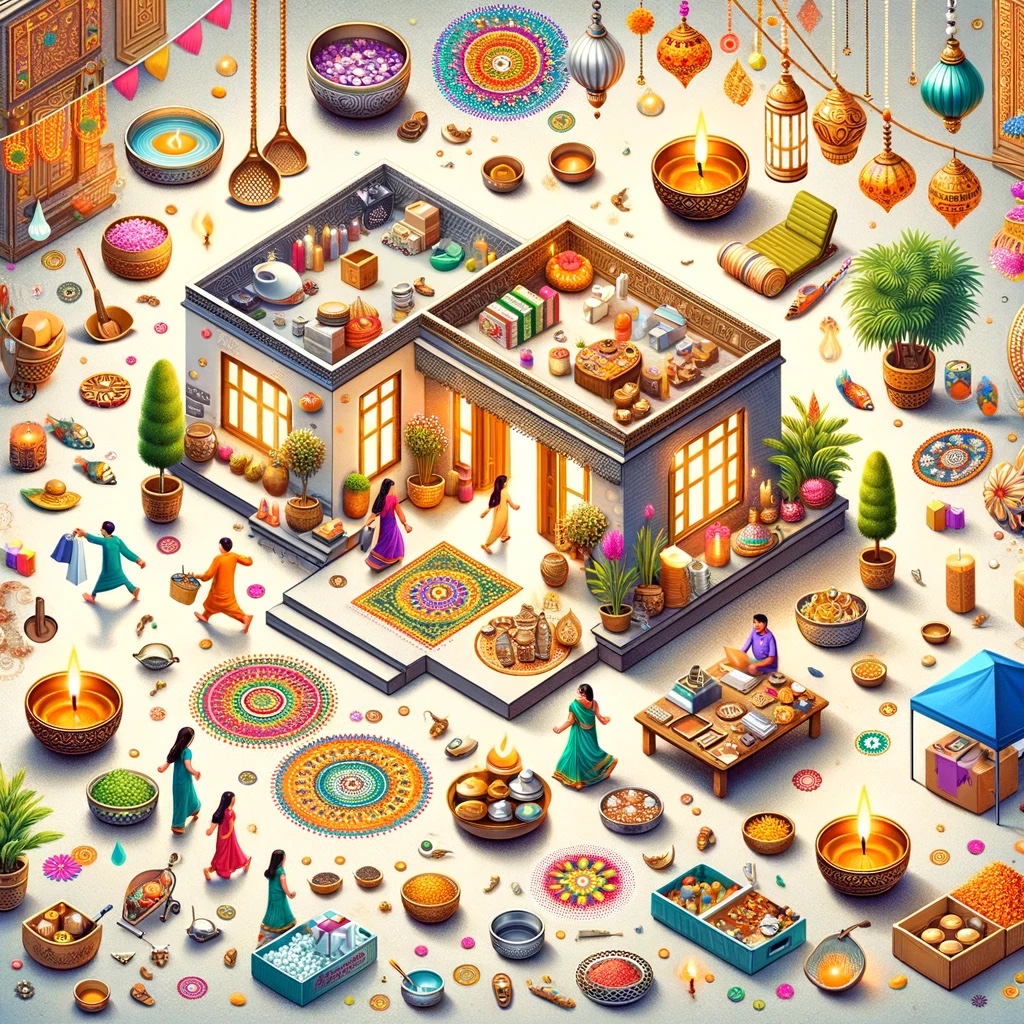
Additionally, in agrarian societies, Dhanteras marks the end of the harvesting season, and farmers celebrate their harvests, attributing their prosperity to divine forces.
Day – 2 – Narak Chaturdashi or Choti Diwali: This day falls on the fourteenth lunar day of Krishna Paksha. Astrologically, this day is considered significant for warding off evil and negativity, as it is believed that certain planetary positions on this day help in cleansing negative influences.
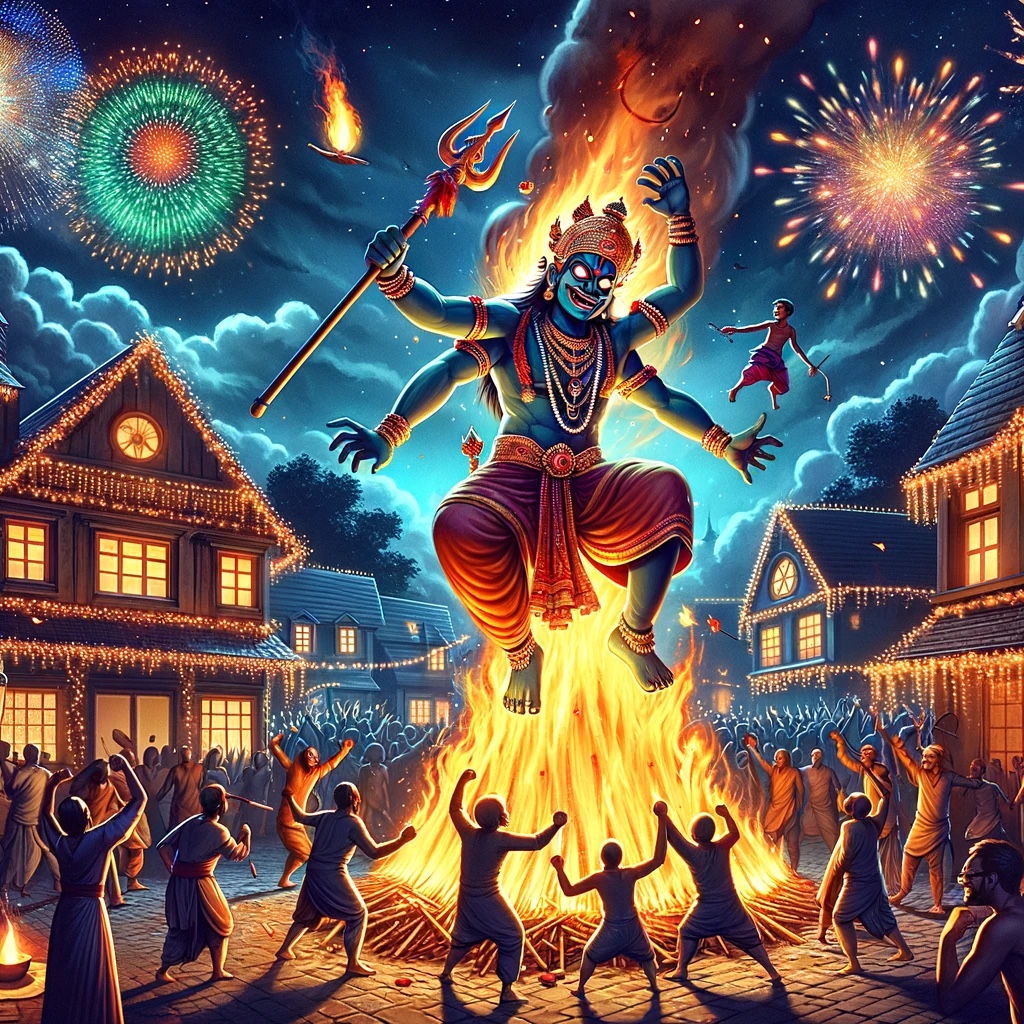
This day is linked to the story of Narakasura, a demon king who was defeated by Krishna. It symbolizes the victory of good over evil and light over darkness. The tradition of taking an oil bath is believed to cleanse the body and spirit, emulating Krishna’s cleansing after slaying the demon. The lighting of lamps and bursting of crackers signify the joyous celebration of the demon’s defeat, while the preparation for the main Diwali night reflects the anticipation of something grand and auspicious.
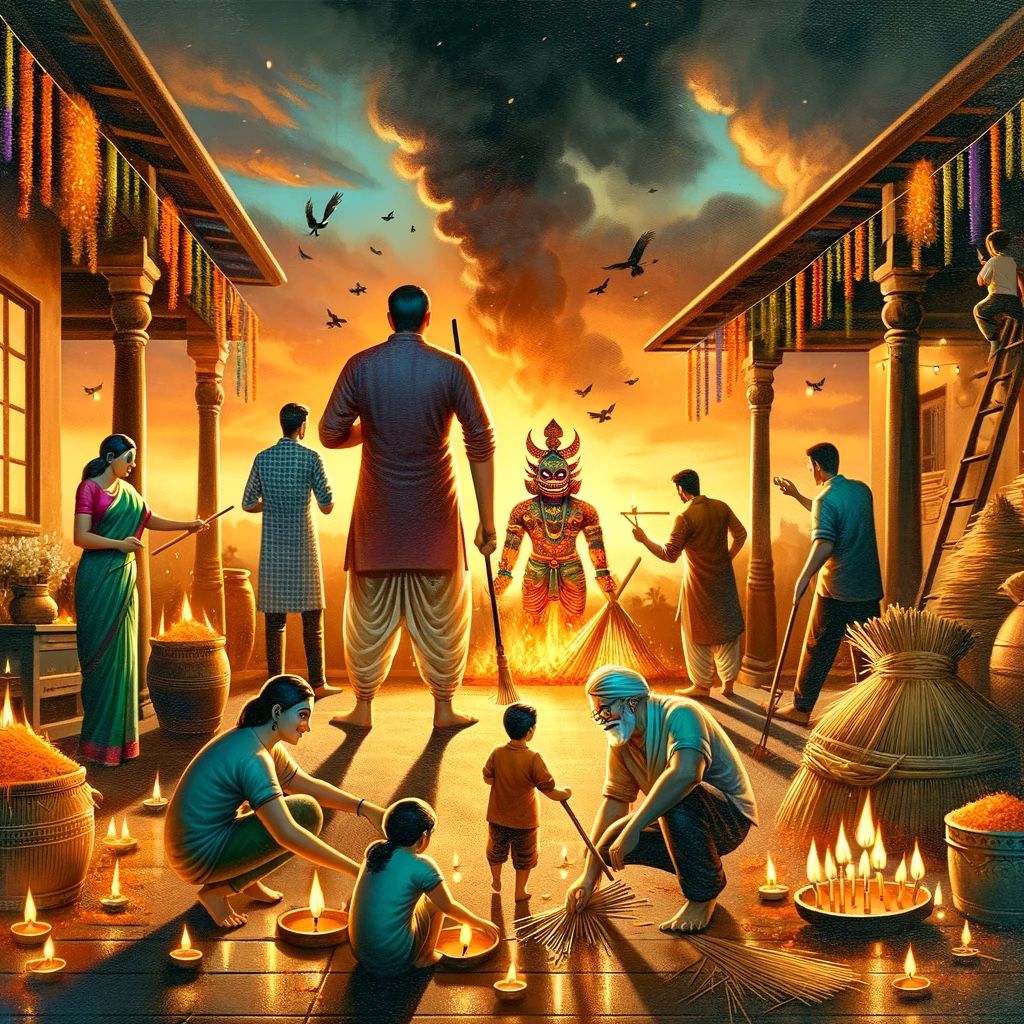
The ritual of the early morning oil bath is not just a physical cleansing act but is also symbolic of spiritual renewal and purification. The application of fragrant oils and the subsequent bath are considered equivalents of a purifying ritual dip in the holy rivers of India. The breaking of dawn after Narak Chaturdashi is symbolic of a new awakening, a metaphor for enlightenment and the dispelling of ignorance, as represented in the story of Krishna and Narakasura.
Day – 3 – Diwali: Diwali is celebrated on the new moon day (Amavasya) of Kartik, which is considered the darkest night of the Hindu lunisolar calendar. The new moon is traditionally associated with honoring ancestors and inviting prosperity. The absence of moonlight is believed to enhance the spiritual and astrological significance of the lamp lighting.
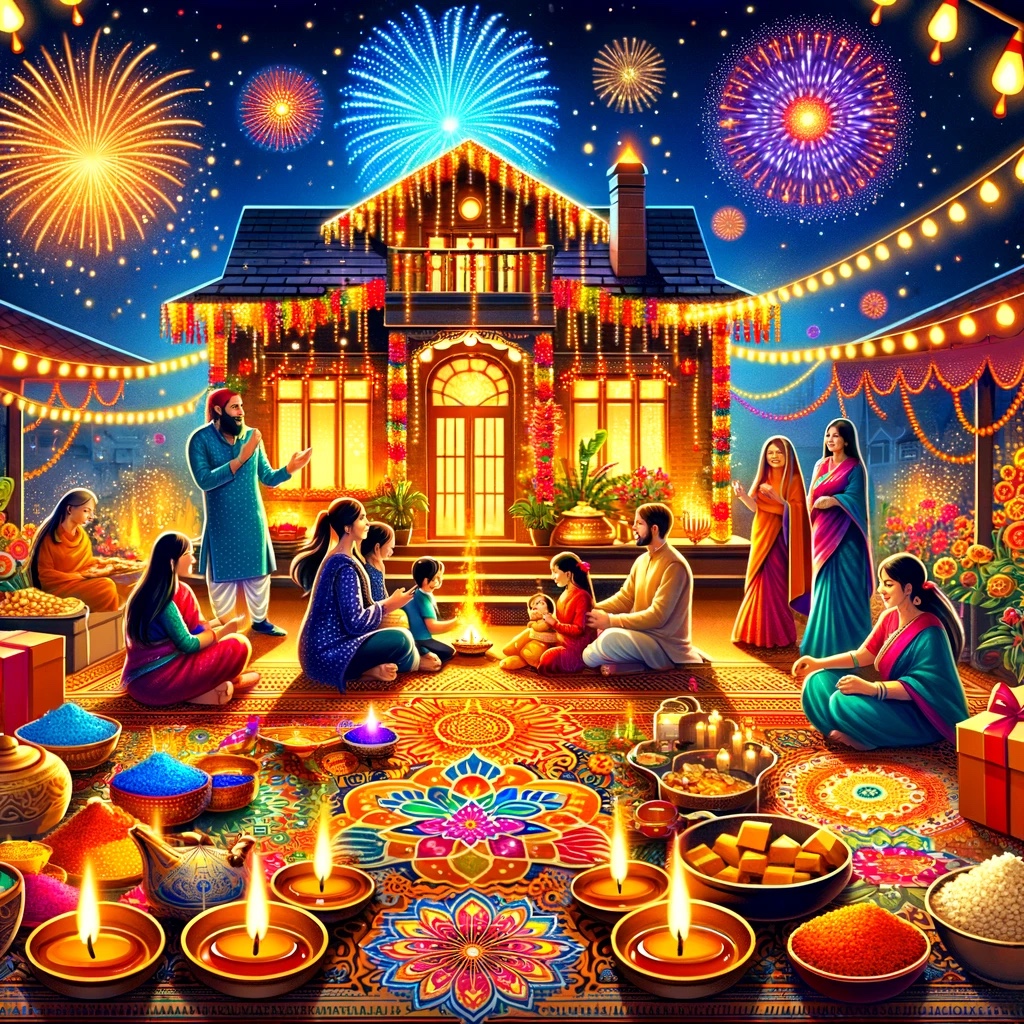
The most significant day of the festival, it celebrates the return of Rama, Sita, and Lakshmana to Ayodhya, as narrated in the Ramayana. The lighting of lamps symbolizes the light Rama brought back to Ayodhya, overcoming the darkness of Ravana’s rule.
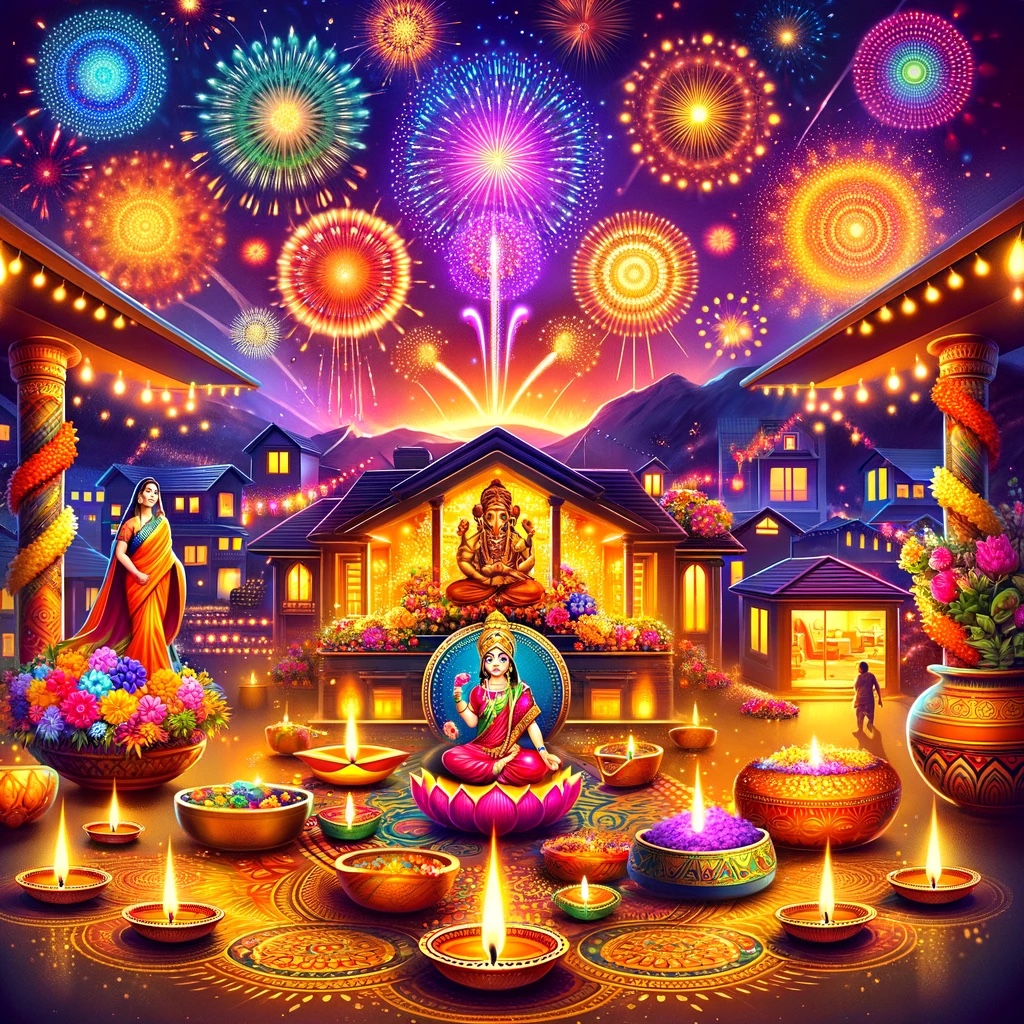
The evening Lakshmi Puja is the core ritual of Diwali. This ritual, performed to invite prosperity and well-being, is not just a plea for material wealth but also a prayer for spiritual richness. The traditional Diwali sweets and delicacies represent the sweetness of life and gratitude for the bounties of nature. Across different regions in India, Diwali is celebrated in various forms, from worshipping Goddess Kali in Bengal to celebrating the victory of Lord Vishnu in his Vamana avatar in Kerala. This diversity reflects the festival’s adaptability and relevance across different cultural and geographic landscapes.
Day – 4 – Govardhan Puja or Annakut: This day falls on the first lunar day of Shukla Paksha (the waxing phase of the moon) in Kartik. The beginning of the waxing phase is traditionally seen as a time of growth and renewal, reflecting the themes of abundance and gratitude expressed in the Govardhan Puja.

This day commemorates Krishna’s miraculous feat of lifting the Govardhan Hill to protect the villagers from Indra’s wrath. The act of preparing a mountain of food (Annakut) symbolizes the hill itself and is an offering of gratitude. This day also aligns with the end of the harvest season in many parts of India, and the food offered represents the bounty of the land. The preparation of Annakut is a homage to the agricultural bounty. This ritual underscores the dependence of human life on nature’s cycles, reinforcing the need for harmonious coexistence with the environment. The story of Krishna lifting the Govardhan Hill serves as a reminder of the power of faith and the need for humility in the face of nature’s and the divine’s immeasurable strength. The circumambulation of Govardhan (Govardhan Parikrama) is also a traditional ritual in some regions.
Day – 5 – Bhai Dooj: Bhai Dooj is observed on the second lunar day of Shukla Paksha. The day is considered auspicious for strengthening bonds between siblings, with certain planetary positions believed to enhance the emotional and spiritual connections.
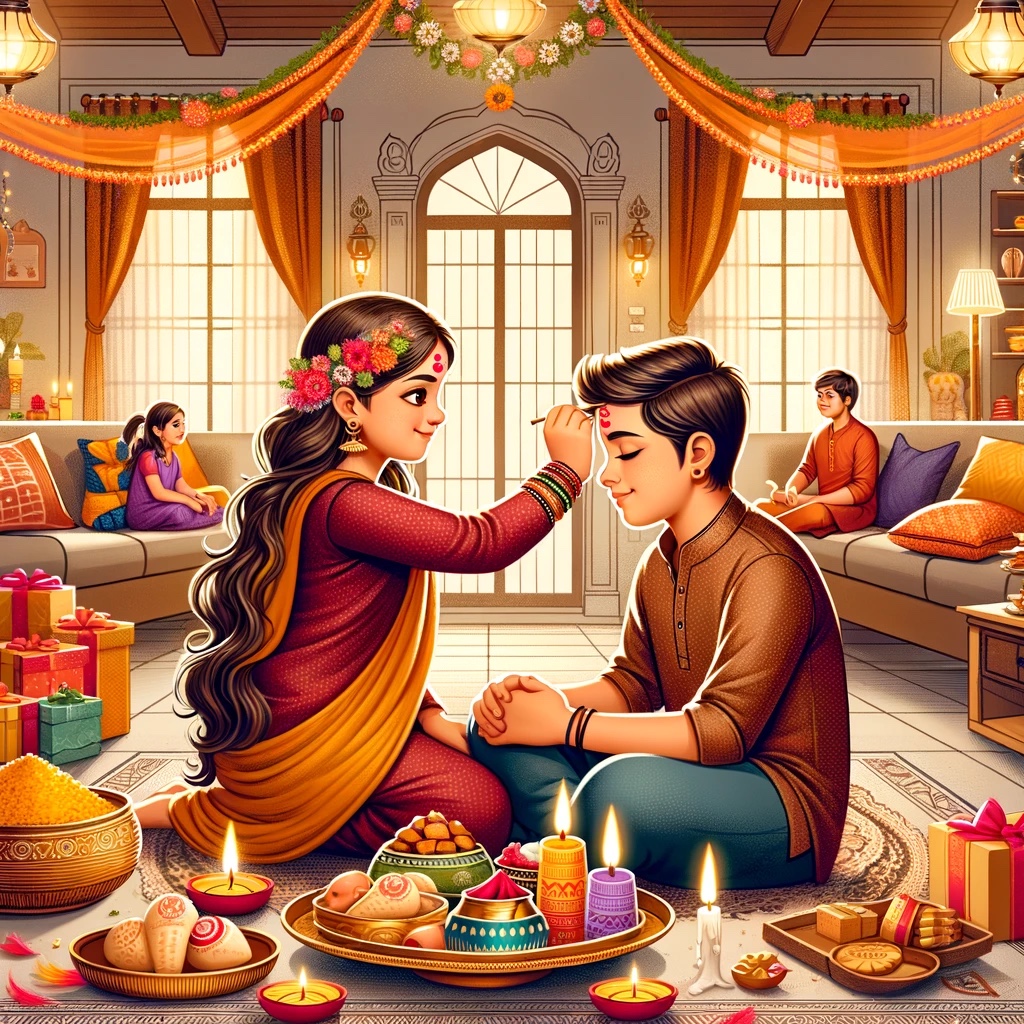
Bhai Dooj celebrates the bond between brothers and sisters, akin to Raksha Bandhan. According to one legend, Yama visited his sister Yami on this day. She applied the ceremonial tilak on his forehead for his welfare. This ritual symbolizes the sister’s prayers for her brother’s long life and well-being. Bhai Dooj is not just a celebration of the bond between brothers and sisters but also a reinforcement of the social fabric. It emphasizes the importance of family in the Hindu way of life and the duties and responsibilities that come with these relationships. The story associated with Bhai Dooj also resonates with the theme of life and death, and the protective power of familial love, as seen in the tale of Yama and Yami.
The ceremony of the sister applying a tilak (vermilion mark) on her brother’s forehead is a ritual of protection and blessing. The exchange of gifts and special meals reinforces familial bonds.
 Abhishek Fanse