
The Mirrored Self: Reflections of the Experiencer and Experienced
Experience, by its very nature, is inherently subjective. It is the culmination of one’s perceptions, interpretations, emotions, and cognitive processes. Every individual, with their unique personal history, values, beliefs, and physiological makeup, encounters the world in a way that is uniquely their own. For instance, two people might stand before a work of art—one sees profound beauty and feels deep emotion, while the other simply sees colors on canvas. Both are valid experiences, but they differ drastically based on the individual’s subjective lens.
Yet, the objective reality of the world persists. The artwork, the physical colors, and brushstrokes remain constant. It’s this duality of the objective and subjective that creates the richness of human experience. We all share the same objective world, but our subjective interpretations of it vary widely, leading to an immense diversity of human thought, emotion, and expression.
Despite the deeply personal nature of experience, there exists within us a contrary desire to communicate and validate our experiences with others. This need can be attributed to our inherently social nature. As social beings, we have an innate drive to connect, to be understood, and to find commonality with others.
However, the act of communication is fraught with challenges. Language, while powerful, often falls short of capturing the full depth and nuance of our experiences. Words are mere approximations, often failing to convey the entirety of what we feel or perceive. When faced with the ineffability of certain experiences, humans may resort to crafting stories, metaphors, or beliefs to encapsulate and convey the essence of their experiences to others. While these may not represent the experience in its entirety, they offer a bridge, a means to connect with others and share a glimpse of our internal world.
Consider an example of observing a tree. The act of seeing is immediate and direct, but the moment we try to articulate the experience, we find ourselves grappling with memory, association, and linguistic constraints. If the tree is of a kind we’ve never seen before, we still try to relate it to what we know, drawing parallels and making distinctions. This process, while it can enrich our understanding, can also distance us from the immediacy of the experience itself.
This leads us to the profound realization that perhaps the “experiencer” is indeed the “experienced.” Every thought, sensation, or emotion we have is not just a passive observation but an active engagement with our internal and external realities. The very act of experiencing reshapes our understanding, influencing future experiences in a continuously evolving cycle. One could argue that the realm of art, music, poetry, and other forms of non-verbal expression arises from this very challenge. When words fail, a painting, a melody, or a dance can capture and convey those intangible feelings and thoughts. They provide a medium that transcends linguistic barriers, offering glimpses into those profound depths of human experience. It’s no surprise that many people, when moved by a piece of art or music, often exclaim, “That’s exactly how I feel!” even if they couldn’t previously articulate that feeling.
Every individual, in their quest to understand and make sense of their experiences, inevitably draws from the collective knowledge and wisdom of humanity. Philosophies, religious teachings, scientific discoveries, and cultural narratives all play a role in shaping how one interprets and understands their experiences. They provide frameworks and lenses through which experiences are viewed, digested, and integrated.
This interplay between the individual and the collective further emphasizes the inherent tension between subjectivity and objectivity. While personal experiences are deeply subjective, the frameworks we use to understand them often have objective, shared components. A sunset viewed by an individual might evoke a personal memory or emotion, but the scientific understanding of why sunsets appear as they do, or the cultural or poetic interpretations of sunsets, come from collective human knowledge. Moreover, as individuals continue to share and communicate their experiences, they contribute to the collective understanding, which in turn shapes future individual and collective experiences. It’s a dynamic, reciprocal relationship, highlighting the interconnectedness of humanity.
The inherent elusiveness of pure experience, the ever-present gap between what is felt and what can be communicated, reminds us of the limitations of our human condition. Yet, it also highlights the beauty and depth of our existence. In our attempts to bridge this gap, we engage in some of the most profound human endeavors: art, literature, philosophy, and spirituality. Through these mediums, we continuously strive to touch the intangible, to grasp the ungraspable, and to share the very essence of what it means to be human.
Experience, in its fullest form, requires presence. To truly experience is to be fully in the moment, unburdened by the past and undistracted by the future. It’s here, in the pure and unfiltered present, that the experiencer and the experienced merge. This idea echoes in various spiritual traditions which posit that in moments of true presence, the duality of observer and observed collapses. Such moments, where one feels at one with the world, are often described as transcendent or mystical. They hint at a deeper interconnectedness, a web of existence that binds all things.
Yet, despite these profound moments, the human condition is also characterized by a fundamental sense of separateness. It’s this very separateness that gives rise to the desire to communicate, to reach out, to bridge the gap between self and other. We yearn to share, to be understood, and to understand. This yearning, however, is fraught with challenges. As earlier mentioned, the depth and richness of personal experience often evade linguistic encapsulation. But it’s not just about the inadequacy of language; it’s also about the limitations of perception.
Going into depths, In day-to-day life, we’re accustomed to distinguishing ourselves from our environment. We say “I am looking at the tree,” naturally separating the ‘I’ (experiencer) from the ‘tree’ (experienced). However, if we deconstruct this process, things become more intriguing. When you observe a tree, light reflected from its leaves and bark enters your eyes, gets processed by your brain, and forms an image. Here, the ‘tree’ you perceive isn’t the physical entity outside; it’s a manifestation within your consciousness. The tree, as you know it, exists within you, blurring the lines between the observer and the observed. Now, extend this idea to all experiences. Sounds you hear, emotions you feel, even thoughts that arise — all these are not ‘external’ or ‘separate’ events, but transformations within your field of consciousness. You never truly experience the world directly; you experience your consciousness’s interpretation of the world. This realization is profound: it suggests that what we consider ‘external’ is intricately woven into our ‘internal’ realms of experience. The division between us and the universe isn’t as sharp as it might seem.
Many spiritual traditions suggest that this feeling of separateness is a kind of illusion, often termed ‘maya’ in Hinduism. Beneath this illusion, it is proposed that there’s a deeper, unified reality where all distinctions merge. The Zen Buddhist concept of ‘interbeing’ beautifully encapsulates this: nothing exists independently; everything inter-is with everything else. So, in this interconnected dance of existence, to say “I am experiencing the tree” might be more aptly expressed as “The universe, in the form of ‘me’, is experiencing the universe in the form of ‘tree’.”
Exploring this further, we confront the nature of the ‘self’. If the experiencer and the experienced are one, what does this mean for our sense of identity? Who is the ‘I’ that experiences? These questions lie at the heart of self-inquiry in traditions like Advaita Vedanta, where meditative introspection is used to peel back layers of identity, seeking the true Self or ‘Atman’ beneath.

When one begins to deeply contemplate these ideas, the boundaries of self start to dissolve. This can lead to transformative experiences, often described as feelings of oneness or unity with all of existence. Such experiences are marked by a dissolution of the ego, a fading of the habitual sense of separateness. Individuals who have undergone such experiences often describe them as the most profound and meaningful of their lives, reshaping their understanding of themselves and the universe. However, embodying this perspective consistently in daily life is challenging. We’re evolutionarily wired to perceive separateness, as it’s useful for survival. But periodic glimpses into the interconnectedness of all things can offer solace, meaning, and a sense of belonging in a vast universe. They remind us that even amidst the diversity and multiplicity of existence, at the deepest levels, perhaps the experiencer truly is the experienced.
If we consider consciousness to be all-encompassing, then everything we experience is a manifestation within this field of awareness. This perspective aligns with the concept of non-duality, where there’s no division between the self and the rest of existence. In this view, consciousness isn’t something we have; it’s what we are. Our individual sense of self, our thoughts, emotions, and the world we perceive are all arising within and made of this same foundational consciousness.
When we say “I am experiencing this,” who is this ‘I’? Psychologically, it refers to the ego—a mental construct that represents our individual identity. The ego is essential for our survival and functioning, but it also gives us a sense of separateness. From birth, we’re conditioned by society, family, and culture, creating layers of beliefs, desires, and fears that shape this ego. We start identifying with our thoughts, our bodies, our roles, and possessions, forgetting our intrinsic connection with the wider universe. The ego, being a construct, is fragile. It seeks validation and fears annihilation. This is why even after a profound experience, there’s an urge to share or validate it. The ego wants assurance that its interpretation of the experience is ‘real’ or ‘valid’. In moments of deep meditation or spiritual insight, the boundaries of the ego can dissolve, giving a person a glimpse of a reality beyond the constructed self—a state where the experiencer and the experienced merge.
Our understanding of reality is based on our sensory perceptions and cognitive interpretations. But our senses have limits. There’s a vast spectrum of light we can’t see, sounds we can’t hear, and dimensions of reality we might be oblivious to. Quantum mechanics, for instance, has shown that at fundamental levels, particles don’t have definite states until observed, challenging our classical views of reality. Could it be that reality, as we perceive it, is just a sliver of what’s truly out there? And if our very observation shapes reality (as quantum mechanics suggests), then the distinction between the observer and the observed becomes even more blurred. The act of experiencing might be intrinsically linked to the shaping of reality itself. Finally, the experience, consciousness, and reality challenges our conventional beliefs and invites us question, to meditate, introspect and to realize that our fundamental nature might be far more interconnected and expansive than our day-to-day experiences suggest. The dance between the experiencer and the experienced isn’t just a philosophical or spiritual inquiry; it’s a journey into the very heart of existence!!
Is harmony defined by us is really harmonious ?
The universe operates on a balance. Dualities like light and dark, joy and sorrow, and so on, are not in contention with each other but rather two sides of the same coin. They provide context and meaning. It’s akin to understanding that one cannot truly appreciate light without having known darkness. Our existence is enigmatic, where a myriad of elements interplay in a vast cosmic dance. Every action, no matter how minute, sends ripples across the fabric of the universe. Such is the interconnectedness and oneness that defines the cosmos. But amidst this vastness, we humans grapple with the age-old questions: Why are we here? Why do we feel disconnected when everything is intrinsically connected? And, why is our life, despite being a part of this vast universe, so often defined by duality?
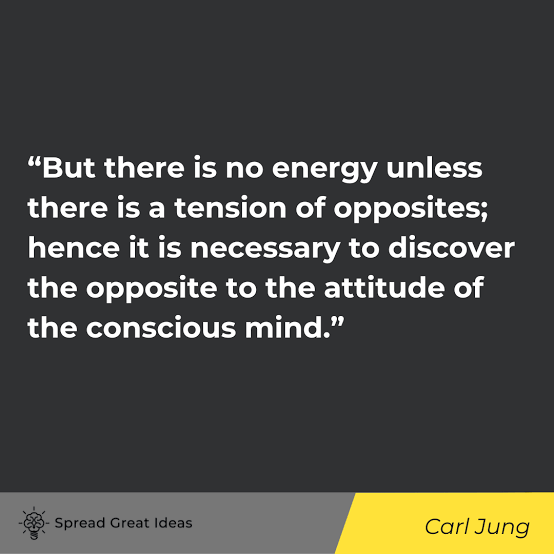
Consider the universe as an immense symphony, where every entity is like a note, contributing to an eternal, harmonious melody. From the most massive stars to the tiniest organisms, everything is in sync, vibrating in tune with the universe. This sense of harmony is a constant, even if it’s not always immediately apparent. However, the human experience often feels at odds with this cosmic harmony. We frequently perceive life through the lens of duality: good vs. evil, happiness vs. sorrow, success vs. failure. Such bifurcations arise primarily from our mental frameworks, shaped by societal norms, personal experiences, and evolutionary predispositions.
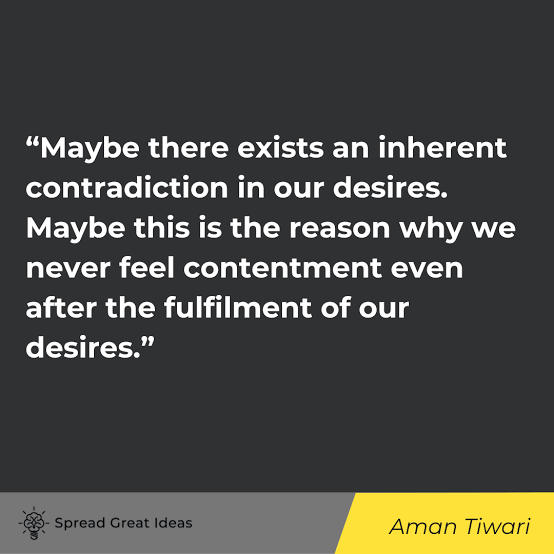
In our evolutionary journey, the human brain developed cognitive systems to categorize, discriminate, and simplify the complex stimuli of the external world, making it digestible and navigable. This cognitive system is a survival tool, enabling us to swiftly identify threats from non-threats, edible food from inedible, and so on. Over time, as societies became more sophisticated, these dualistic mental models began to govern not just our interactions with the environment but also our self-perception, aspirations, and relationships. This dualistic approach further feeds into the illusion of separateness — a feeling that we are distinct from the rest of the universe. Despite being made of stardust and sharing common atomic ancestors with everything around us, we often feel isolated or alienated. Such feelings intensify when we face adversities, leading many to question the harmony and purpose of existence.
Our understanding of freedom is entwined with our perception of duality. True freedom is not just liberation from external constraints but also from internal ones, like prejudices, fears, and limiting beliefs. To break free from the life’s cycle, one needs to reconcile with dualities, recognizing them as constructs rather than inherent truths. As we delve deeper into the framework of existence, we find that duality isn’t inherently detrimental. Instead, it provides contrast, lending depth and dimension to our experiences. Just as the contrasting strokes of a painting give it life and depth, the dualities of our lives add vibrancy and richness to our existence. Without dark, there would be no understanding of light; without sorrow, the true essence of joy would remain unknown.

Much of our attachment to duality stems from societal and cultural conditioning. From childhood, we’re taught to label and categorize experiences: winning is good, losing is bad; happiness is desirable, sadness is not. Over time, these labels solidify into beliefs, shaping our perceptions and reactions. For instance, consider the universally accepted notion of success. Societal metrics of success often revolve around material wealth, social status, and professional achievements. However, if we were to strip away these conditioned beliefs and look at life through an unfiltered lens, we might find that true success lies in inner contentment, meaningful relationships, and personal growth.
Our fixation on the ephemeral aspects of life — fleeting emotions, transient experiences, and temporal possessions — further entrenches us in the duality trap. In the rush of life, we often overlook the eternal — the unchanging, omnipresent essence that underlies all existence. This essence, often referred to in spiritual contexts as the ‘Self’ or ‘Consciousness,’ remains unaffected by the dualities that play out on the surface.
By connecting with this eternal aspect of ourselves, we begin to view dualities with a sense of detachment. They appear as passing clouds against the vast sky of our existence, impactful in the moment but not defining our eternal essence. Aligning with the duality doesn’t mean becoming passive or indifferent. It means engaging with life wholeheartedly, experiencing every emotion, every high and low, but without letting them dictate our inner state. With heightened awareness, we can navigate the complexities of life with grace, recognizing the transient nature of our experiences.
This awareness doesn’t diminish our experiences but rather enriches them. When we embrace both the joys and sorrows of life with equanimity, we live more fully, more authentically. We begin to see challenges as opportunities for growth, failures as lessons, and successes as moments of gratitude.
Our perception of disharmony is influenced by our thoughts, emotions, and our attachments to outcomes. When we find ourselves in situations we didn’t desire or anticipate, our immediate response is resistance. This resistance, this non-acceptance, creates friction – a perceived disharmony.

The journey to non-duality is a continuous process of introspection, reflection, and growth. Various spiritual traditions offer paths to transcend duality: the Yogic tradition advocates for meditation and self-inquiry, Buddhism emphasizes mindfulness and compassion, while Taoism teaches the art of flowing with life, embracing both its yin and yang.
The common thread across these traditions is the idea of returning to one’s true nature — a state of pure consciousness, free from the constraints of duality.
Patanjali Yoga Sutra: yatra yogashchittavrittinirodhah
यत्र योगश्चित्तवृत्तिनिरोधः॥११॥
Transliteration: yatra yogashchittavrittinirodhah
Translation: “The restraint of the modifications of the mind-stuff is Yoga.”
In the eleventh sutra of Patanjali’s Yoga Sutras, we are presented with a profound insight into the essence of Yoga. The sutra encapsulates the fundamental practice of restraining the fluctuations of the mind, which is at the core of the yogic path.
To understand the depth of this sutra, we must explore the meaning of each component. The word “yatra” refers to a state or condition, indicating a specific realm or dimension. “Yoga” is the state of union or connection, often understood as the union of the individual self with the universal consciousness. “Chittavrittinirodhah” refers to the restraint or cessation of the modifications of the mind-stuff.

The mind, with its ever-changing thoughts, emotions, and desires, can be likened to a turbulent ocean. It is constantly in motion, easily swayed by external circumstances and internal fluctuations. This constant agitation of the mind creates a veil that obstructs our true nature and hinders our ability to experience the deeper realms of consciousness.
The practice of Yoga is not merely about physical postures or breathing exercises. It is about gaining mastery over the mind and transcending its limitations. The eleventh sutra emphasizes the importance of restraining the modifications of the mind-stuff to attain a state of clarity and stillness.
When the mind is free from the incessant fluctuations of thoughts and desires, it becomes like a calm and serene lake, reflecting the truth of our being. In this state of stillness, we can directly experience the boundless nature of consciousness and the interconnectedness of all things.
The practice of restraining the mind requires discipline, awareness, and self-inquiry. It involves observing the patterns of the mind, noticing the arising thoughts and emotions without getting entangled in them, and gradually quieting the mental chatter. Through regular practice, we cultivate a space of inner silence where true understanding and insight can arise.
It is important to note that the restraint of the modifications of the mind does not imply suppression or denial of thoughts and emotions. Rather, it is a process of witnessing them with non-judgmental awareness, allowing them to naturally arise and subside without being carried away by their transient nature.
As we delve deeper into this practice, we begin to recognize the intrinsic connection between the mind and our perception of reality. The mind, with its constant fluctuations, shapes our perception and colors our experience of the world. By restraining the modifications of the mind, we gain the ability to see things as they truly are, free from the distortions created by our conditioned patterns of thinking.
In this state of pure awareness, the limitations of the individual self dissolve, and we enter into a state of union with the larger tapestry of existence. We realize our interconnectedness with all beings and the underlying unity that permeates the universe. This realization brings profound peace, harmony, and a sense of oneness.
The eleventh sutra serves as a reminder of the transformative power of Yoga. By restraining the modifications of the mind-stuff, we unlock the door to higher states of consciousness, expanding our perception and deepening our connection to the divine. It is an invitation to go beyond the surface-level fluctuations of the mind and discover the vastness of our true nature.
Incorporating the practice of restraining the mind into our daily lives, both on and off the mat, allows us to cultivate a state of inner stillness where clarity and wisdom can naturally arise. It is a journey of self-discovery, where we learn to observe our thoughts and emotions without judgment, and cultivate a sense of detachment from the constant stream of mental activity.
As we delve deeper into the practice, we may encounter challenges and resistance. The mind, accustomed to its habitual patterns, may rebel against the discipline of restraint. It may tempt us with distractions, enticing us to indulge in the endless stream of thoughts and desires. But it is through perseverance and dedication that we can gradually loosen the grip of the mind’s fluctuations and find moments of genuine stillness.
In the state of mind-stuff restraint, we discover the freedom to choose our responses rather than being driven by unconscious reactions. We become aware of the choices available to us in every moment and can act from a place of clarity and authenticity. This cultivates a sense of empowerment and enables us to navigate life’s challenges with grace and equanimity.
The practice of restraining the modifications of the mind also has a profound impact on our relationships. As we become more attuned to the present moment, we develop a deeper sense of empathy and understanding towards others. We listen attentively, without the burden of preconceived judgments or projections. This fosters authentic connections and enhances our capacity for compassionate communication.
It is important to acknowledge that the process of restraining the mind’s fluctuations is not a quick fix or a one-time achievement. It is an ongoing practice that requires patience, self-compassion, and gentle persistence. We may experience moments of progress followed by periods of regression, but with each step, we deepen our understanding and strengthen our capacity to abide in a state of stillness. May the practice of restraining the mind’s modifications lead us to a state of profound peace, liberation, and the unshakable recognition of our interconnectedness with all of existence.
Patanjali Yoga Sutra: Abhava Pratyaya Alambana Vritti Nidra
Sutra 10 (in Devanagari script): अभाव प्रत्ययालम्बना वृत्तिनिद्रा (Abhava Pratyaya Alambana Vritti Nidra)
Sutra 10: “Abhava Pratyaya Alambana Vritti Nidra” – Sleep is the state where the mind no longer grasps external objects due to the absence of mental modifications
Patanjali’s Yoga Sutra 10 brings our attention to the nature of sleep and its relation to the mind. Sleep is a state where our consciousness temporarily withdraws, and the mind ceases its engagement with external objects. In this state, the mental modifications or vrittis that usually arise during our waking state are absent. Patanjali points out that by understanding the dynamics of the mind and non-identification with its fluctuations, we can transcend the state of sleep.
- Sleep as Unconsciousness: Sleep is a state of temporary unconsciousness where the mind’s engagement with the external world ceases. In this state, our awareness is not actively focused on sensory perceptions or mental activities.
- Non-Identification with Mental Modifications: Patanjali emphasizes the importance of non-identification with the mental modifications or vrittis of the mind. These modifications include thoughts, emotions, and sensory experiences. By recognizing that our true nature is beyond these fluctuations, we can overcome the grip of sleep and awaken to higher states of consciousness.
- Transcending Sleep: Through self-awareness and self-realization, we can transcend the state of sleep. By understanding the impermanence of mental modifications and disidentifying from them, we become aware of the underlying consciousness that transcends all states, including sleep.
- Awakening to Pure Consciousness: Sutra 10 invites us to awaken to our true nature, which is pure consciousness. By going beyond the fluctuations of the mind, we tap into the eternal source of awareness that is unaffected by the states of waking, dreaming, or deep sleep.

How to apply:
- Cultivate Mindfulness: Practice mindfulness throughout the day to enhance your awareness of mental modifications. Observe your thoughts, emotions, and sensory experiences without judgment or attachment, cultivating a sense of detachment from the ever-changing nature of the mind.
- Practice Self-Inquiry: Engage in self-inquiry to inquire into the nature of your true self beyond the fluctuations of the mind. Reflect on questions like “Who am I?” or “What is the nature of my consciousness?” to deepen your understanding of your essential nature.
- Explore Meditation: Incorporate meditation into your daily routine to develop greater self-awareness and non-identification with the mental modifications of the mind. By observing the breath, mantra, or a chosen object of focus, you can cultivate a state of centeredness and transcendent awareness.
- Cultivate: a Sleep Routine: Establishing a consistent sleep routine can help optimize the quality of your rest. Create a conducive sleep environment, maintain regular sleep and wake times, and engage in relaxation techniques before bed, such as gentle stretching, deep breathing, or meditation.
- Practice Pranayama: Explore the practice of pranayama, the control and regulation of breath. Certain pranayama techniques, such as Nadi Shodhana (alternate nostril breathing) or Shitali Pranayama (cooling breath), can help balance the mind, calm the nervous system, and enhance overall relaxation.
- Cultivate Awareness of Consciousness: Throughout your day, pause and bring your attention to the underlying field of pure consciousness that is present in every moment. Recognize that your true essence is beyond the fluctuations of the mind and that sleep is just one aspect of your existence.
Benefits of Sutra-10:
- Enhanced Conscious Awareness: By understanding the nature of sleep and non-identification with mental modifications, we develop a deeper sense of conscious awareness. We awaken to the ever-present field of pure consciousness that transcends the limitations of the mind.
- Improved Sleep Quality: Through the practices of mindfulness, relaxation techniques, and a consistent sleep routine, we can enhance the quality of our sleep. By reducing the grip of mental fluctuations, we experience more restful and rejuvenating sleep.
- Transcendence of Limitations: Understanding Sutra 10 allows us to transcend the limitations imposed by the mind. We tap into our inherent capacity for expanded consciousness, unlocking our true potential for self-realization and spiritual growth.
Patanjali Yoga Sutra: Vyutthana Nirodha Samskarayor Abhibhava Pradurbhavau Nirodh Kshana Chitta Anvayah Nirodh Parinamah
Sutra 9: “Vyutthana Nirodha Samskarayor Abhibhava Pradurbhavau Nirodh Kshana Chitta Anvayah Nirodh Parinamah” – The control of the fluctuations of the mind is achieved through Nirodha. The result of this control is the uninterrupted flow of the mind towards the chosen object of focus.
Nirodha, as mentioned in Sutra 9, refers to the control and cessation of the incessant fluctuations and movements of the mind. It is the practice of stilling the mind, allowing it to rest in a state of focused concentration and tranquility. Nirodha provides the foundation for deeper states of meditation and paves the way for self-realization.
Nirodha holds immense transformative power on the path of yoga and self-realization. Through the practice of controlling the fluctuations of the mind, we enter into a state of deep inner stillness, heightened awareness, and expanded consciousness. Nirodha liberates us from the grip of incessant thoughts and distractions, allowing us to connect with our true nature and experience the peace and bliss that lie within.
- Control of Mental Fluctuations: Nirodha involves gaining mastery over the incessant movements of the mind. It is the process of bringing the wandering mind under control and channeling its energy towards a chosen object of focus, such as the breath, a mantra, or a visualization.
- Attaining Inner Stillness: Through Nirodha, we enter a state of inner stillness and tranquility. As we learn to quiet the mind and minimize its distractions, we experience a profound sense of peace, clarity, and heightened awareness.
- Uninterrupted Focus: Nirodha allows us to develop uninterrupted focus on the chosen object of concentration. With practice, the mind becomes more absorbed in the present moment, free from external distractions and internal chatter.
- Cultivation of Self-Awareness: Nirodha enhances self-awareness and self-observation. As we control the fluctuations of the mind, we develop a heightened sense of introspection, witnessing our thoughts, emotions, and sensations with clarity and detachment.
- Expansion of Consciousness: Through the practice of Nirodha, we expand our consciousness and open the doors to deeper states of meditation and self-realization. As the mind becomes more still and focused, we gain access to higher levels of awareness, transcending the limitations of the ego and connecting with the universal consciousness.
Applications:
- Cultivate a Regular Meditation Practice: Dedicate regular time to meditation, creating a sacred space where you can sit in stillness and quiet the mind. Start with shorter sessions and gradually increase the duration as your practice deepens.
- Choose an Object of Focus: Select a suitable object of focus for your meditation, such as the breath, a mantra, or a visualization. Allow your attention to rest on this chosen object and gently guide your mind back whenever it wanders.
- Witness Thoughts and Emotions: As you meditate, observe your thoughts and emotions with a sense of detachment. Instead of getting lost in the stream of thoughts, simply witness them as they arise and pass away, without judgment or attachment. Cultivate the role of the observer, allowing thoughts to come and go, while maintaining your focus on the chosen object.
- Practice Breath Awareness: One effective technique for cultivating Nirodha is breath awareness. Direct your attention to the sensations of the breath as it enters and leaves the body. Notice the rise and fall of the abdomen or the gentle touch of the breath at the nostrils. This anchors your awareness and helps still the mind.
- Embrace Mindfulness in Daily Life: Extend the practice of Nirodha beyond formal meditation sessions. Cultivate mindfulness in your daily activities by being fully present in each moment. Whether you are eating, walking, or engaging in any task, bring your complete attention to the present experience, free from distractions.
Benefits:
- Enhanced Focus and Concentration: Nirodha strengthens our ability to concentrate and sustain focus. With a disciplined mind, we become more efficient and effective in our daily activities, experiencing greater productivity and clarity of thought.
- Stress Reduction and Emotional Well-being: By controlling the fluctuations of the mind, Nirodha helps reduce stress and promote emotional well-being. We gain the capacity to respond to life’s challenges with equanimity and inner calm, reducing anxiety and emotional turbulence.
- Heightened Self-Awareness: Nirodha enhances self-awareness and self-observation. By becoming more attuned to our thoughts, emotions, and reactions, we develop a deeper understanding of ourselves, leading to personal growth and transformation.
- Expansion of Consciousness: Through the practice of Nirodha, we expand our consciousness and awaken to higher states of awareness. As the mind becomes still and focused, we connect with the universal consciousness, experiencing a sense of unity and interconnectedness.
Patanjali Yoga Sutra: Tatra Pratyayaikatanata Dhyanam
This sutra is Sutra 7, which introduces the concept of Dharana, the practice of concentration and single-pointed focus. Dharana is a vital step in the path of yoga, leading us to harness the power of our mind and cultivate unwavering attention. Let us dive into the essence of Sutra 7 and discover how Dharana can enhance our practice and elevate our lives.

Sutra 7 encapsulates the essence of Dharana, emphasizing the continuous flow of attention towards a chosen object or point of focus. Dharana involves training the mind to sustain unwavering concentration, free from distractions and wavering thoughts.
Dharana is derived from the Sanskrit word “dhar,” which means “to hold” or “to concentrate.” It refers to the practice of directing and sustaining our attention on a specific object, such as the breath, a mantra, a visualization, or a chosen point of focus. Through Dharana, we cultivate the ability to hold our mind steady and prevent it from wandering aimlessly.
Practical Application of Dharana:
- Selecting a Point of Focus: Begin by selecting a point of focus for your concentration practice. This could be the sensation of the breath at the nostrils, a specific image or object, a mantra, or even a particular part of the body. Choose an object that resonates with you and facilitates concentration.
- Creating a Distraction-Free Environment: Find a quiet and calm space where you can practice Dharana without distractions. Create an environment that supports your practice, free from external disturbances.
- Steadying the Mind: As you begin your practice, gently bring your attention to the chosen object of focus. Allow your mind to settle and rest upon this focal point. When distractions arise, acknowledge them without judgment and gently guide your attention back to the chosen object.
- Cultivating Mental Discipline: Dharana requires discipline and persistence. Gradually increase the duration of your practice, starting with shorter periods and gradually extending them over time. This cultivates mental strength and trains the mind to sustain focus for more extended periods.
- The Power of Anchoring Techniques: Utilize anchoring techniques to enhance concentration. This can include visualizations, repetition of a mantra, or counting the breath. These techniques provide a focal point for the mind, allowing it to rest and remain anchored in the present moment.
Dharana holds immense significance on the yogic path. Through the cultivation of concentration, we develop a heightened state of awareness, mental clarity, and focus. Dharana enables us to penetrate the layers of the mind, transcend distractions, and tap into our innate potential.
Benefits:
Enhanced Mental Clarity: Dharana sharpens the mind and enhances mental clarity. As we practice sustained concentration, the mind becomes more focused, allowing us to cut through mental chatter and gain insight into the nature of our thoughts and emotions.
Heightened Sensory Awareness: Dharana enhances sensory awareness, enabling us to perceive the world with greater clarity and depth. By directing our attention to a chosen object, we become attuned to its subtleties and nuances, cultivating a profound connection with our environment.
Expanded Mindfulness: Dharana deepens our capacity for mindfulness, the art of being fully present in the moment. As we train our mind to stay focused on a single point, we develop a heightened sense of awareness and engage in the present experience with greater clarity and attentiveness.
Improved Mental Discipline: Dharana cultivates mental discipline, strengthening our ability to direct and sustain our attention. This discipline extends beyond the yoga mat, positively impacting other areas of our lives, such as work, relationships, and creative endeavors.
Harnessing the Power of the Mind: Dharana empowers us to harness the immense power of our mind. With focused attention, we gain control over our thoughts, emotions, and reactions, allowing us to respond to life’s challenges with clarity, equanimity, and wisdom.
With patience, persistence, and regular practice, we can develop a laser-like focus that permeates every aspect of our being. Through Dharana, we invite a state of unwavering concentration, opening the doors to self-discovery, transformation, and profound spiritual growth.
 Abhishek Fanse