
Patanjali Yoga Sutra: Detachment is the perception of mastery or control over the craving for objects seen or heard
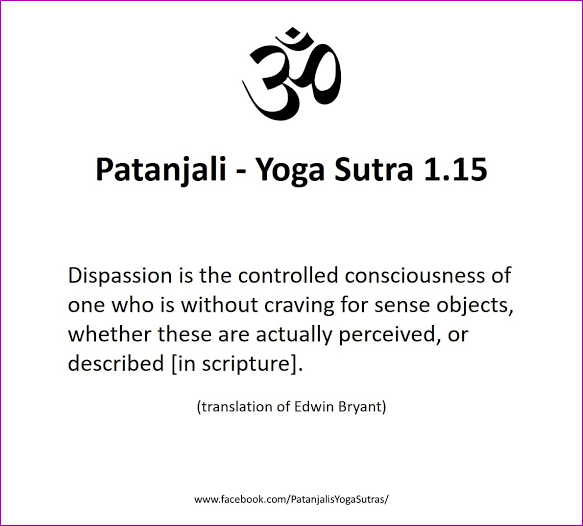
Sutra 1.15: “Dṛṣṭānuśravika-viṣaya-vitṛṣṇasya vaśīkārasaṃjñā vairāgyam”
Translation: “Detachment is the perception of mastery or control over the craving for objects seen or heard.”
In Sutra 1.15 of Patanjali’s Yoga Sutras, the concept of vairagya, or detachment, is introduced. Vairagya is an essential aspect of the yogic path and plays a significant role in achieving liberation and inner freedom. This sutra explains that detachment is the ability to master or control the desires and cravings for external objects that are seen or heard.
Detachment does not imply a complete withdrawal from the world or a rejection of worldly possessions. It is not about denying ourselves pleasure or living an ascetic life. Instead, it is about developing a balanced and healthy relationship with the objects and experiences of the world.
The sutra uses the term “dṛṣṭānuśravika-viṣaya” to describe the objects of perception that can trigger cravings. These objects refer to the things we see and hear in our daily lives. It could be material possessions, sensory pleasures, or even emotional attachments. The sutra suggests that the perception of mastery or control over these cravings leads to detachment.
Detachment is not indifference or apathy towards the world. It is an inner state of freedom where we are no longer bound by our desires and attachments. It is the ability to observe and engage with the world without being consumed by it. We become aware of our cravings, but we do not let them dictate our thoughts, actions, and emotions.
The practice of detachment involves cultivating a deep sense of self-awareness and mindfulness. We observe our desires and attachments without judgment or identification. We become witnesses to our thoughts, emotions, and the external objects that trigger them. Through this observation, we gain insight into the impermanent and transient nature of these cravings. We begin to see that clinging to them only leads to suffering and bondage.
Detachment does not mean suppressing or repressing our desires. It is about understanding their nature and the underlying causes of our attachment. We examine our motivations, expectations, and fears that drive our cravings. By shining the light of awareness on these patterns, we can start to loosen their grip on us.
Practicing detachment requires inner discipline and discernment. It is about making conscious choices and aligning our actions with our deeper values and aspirations. We learn to differentiate between genuine needs and superficial wants. We develop the ability to let go of what no longer serves our growth and well-being.
Detachment is not an overnight achievement but a gradual process that unfolds over time. It requires patience, perseverance, and self-reflection. As we continue to cultivate detachment, we experience a sense of inner freedom and peace. We are no longer at the mercy of external circumstances or the demands of our desires. We find contentment and fulfillment within ourselves, independent of external conditions.
The practice of detachment also deepens our understanding of the transient nature of the world. We realize that everything is impermanent and subject to change. By letting go of our attachments, we open ourselves to the flow of life and embrace the present moment with equanimity. We become less affected by the ups and downs of life and find a sense of stability and serenity within.
Through the practice of detachment, we free ourselves from the constant cycle of desire and dissatisfaction. We gain clarity, inner peace, and the ability to navigate life’s challenges with grace and resilience.
Detachment does not mean that we become detached from our responsibilities or relationships. It is not about withdrawing from the world or becoming indifferent to the suffering of others. Instead, it is a state of being where we are no longer enslaved by our desires and attachments. We can fully engage in life while remaining grounded in our own inner center.
Practicing detachment requires self-awareness and mindfulness. It starts with observing our thoughts, emotions, and desires without judgment or attachment. We cultivate the ability to detach ourselves from the stories and narratives that we create around these desires. We begin to see them as passing phenomena, arising and dissolving in the field of awareness.
Detachment also involves letting go of our identification with external roles, possessions, and achievements. We recognize that our true essence is not defined by these external factors. We connect with the unchanging core of our being that is beyond the transient realm of form.
One of the key aspects of detachment is developing non-attachment to outcomes. We learn to release our attachment to specific results and surrender to the natural flow of life. This does not mean that we stop setting goals or making efforts. It means that we detach ourselves from the need for a particular outcome to define our happiness and well-being. We learn to trust in the inherent intelligence of the universe and have faith that everything unfolds as it should.
Detachment also involves cultivating compassion and unconditional love. When we are not caught up in our own desires and attachments, we can truly empathize with others and offer support without expecting anything in return. We develop a deep sense of interconnectedness and recognize that we are all part of the same tapestry of life.
In the journey of detachment, challenges may arise. We may encounter resistance from our ego, fear of the unknown, or societal conditioning that emphasizes attachment and accumulation. It requires courage and a willingness to question our beliefs and conditioning. But as we continue to practice detachment, we gradually break free from the chains of attachment and experience a newfound sense of liberation.
The practice of detachment is not a destination but a lifelong journey. It is a continuous process of self-discovery and inner transformation. It requires patience, self-compassion, and a commitment to self-awareness. As we deepen our practice, we become more attuned to the present moment and the subtle workings of our mind.
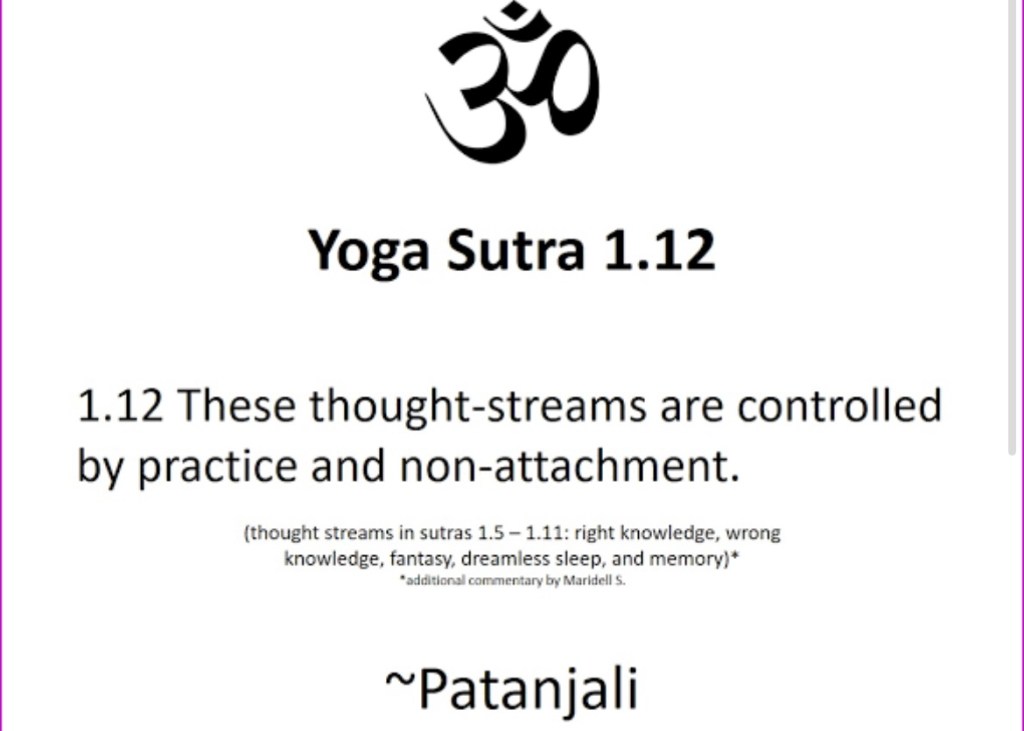
Patanjali Yoga Sutra: Abhyāsa-vairāgyābhyāṁ tan-nirodhaḥ
Sutra-12: अभ्यासवैराग्याभ्यां तन्निरोधः।
(Translation: Abhyāsa-vairāgyābhyāṁ tan-nirodhaḥ)
This translates to: “The cessation of all mental modifications can be achieved by practice and non-attachment.”
1. Abhyasa (Practice)
The first part of Sutra-12 mentions “Abhyasa” which directly translates to practice. The context in which it is used here refers to the practice of controlling and focusing the mind. It signifies persistent effort in a disciplined and dedicated manner. Just as physical skills, such as playing a musical instrument, require regular and consistent practice to master, so too does the calming and focusing of the mind.
By this, Patanjali suggests that to master our thoughts and control our mind, we must commit to persistent practice, to gently direct our attention back whenever it wanders. Over time, this practice can lead to deeper concentration, greater mindfulness, and, ultimately, a state of meditation.
2. Vairagya (Non-Attachment)
The second part of the sutra talks about “Vairagya” or non-attachment. Vairagya doesn’t denote a physical abandonment of worldly possessions or relationships, but it refers to an inner state of freedom from desires and attachments. It is the ability to be in the world, fully engaged, yet not bound by it.
It requires an understanding of the transient nature of all things, a recognition that clinging to the impermanent will invariably lead to suffering. By practicing Vairagya, we learn to enjoy the world around us without becoming entangled in it, to be at peace regardless of circumstances, and to maintain equanimity in all situations.
The Interplay of Abhyasa and Vairagya
Patanjali proposes that the mind’s modification and the attainment of inner tranquillity require both Abhyasa and Vairagya to work in conjunction. While Abhyasa provides the mind with the discipline it requires to maintain focus and concentration, Vairagya allows the mind to let go of distracting desires and attachments. When these two are practiced in tandem, they help one to quiet the mind and lead to a state of stillness and equanimity.
Patanjali’s Yoga Sutra-12 can be a potent guide to living a fulfilled life. In our daily existence, it encourages us to embrace a disciplined practice of mental focusing – be it through meditation, prayer, or mindfulness. Simultaneously, it advocates for a detached interaction with worldly matters, teaching us not to be swayed by success or failure, and to find peace amidst chaos.
It is a challenging yet liberating practice that can lead to increased mental clarity, reduced stress, and ultimately, a deeper understanding of oneself and the world.
Applying the Sutra in Your Yoga Practice
The teaching of this sutra can be reflected upon during asana (physical postures), pranayama (breathing exercises), and dhyana (meditation) practices. Here are some ways to do this:
- Asana Practice: While practicing yoga poses, make it a regular habit (Abhyasa) to observe your body’s alignment, breath, sensations, and thoughts. This will help in training your mind to focus and be present. Simultaneously, cultivate Vairagya by not becoming attached to any specific outcome, such as perfecting a pose. Instead, appreciate the journey of progressing in each posture.
- Pranayama Practice: Regular practice of pranayama techniques can enhance concentration and control of the mind. While practicing, cultivate Vairagya by accepting where you are in your practice, not striving for more breaths or deeper inhalations and exhalations. Accept the flow of your breath as it is.
- Meditation Practice: Meditation is the most direct form of practice (Abhyasa) for achieving the mind’s control. When you meditate, practice Vairagya by not attaching to or judging any thoughts or feelings that arise. Observe them and let them pass like clouds in the sky.
 Abhishek Fanse