
Is harmony defined by us is really harmonious ?
The universe operates on a balance. Dualities like light and dark, joy and sorrow, and so on, are not in contention with each other but rather two sides of the same coin. They provide context and meaning. It’s akin to understanding that one cannot truly appreciate light without having known darkness. Our existence is enigmatic, where a myriad of elements interplay in a vast cosmic dance. Every action, no matter how minute, sends ripples across the fabric of the universe. Such is the interconnectedness and oneness that defines the cosmos. But amidst this vastness, we humans grapple with the age-old questions: Why are we here? Why do we feel disconnected when everything is intrinsically connected? And, why is our life, despite being a part of this vast universe, so often defined by duality?
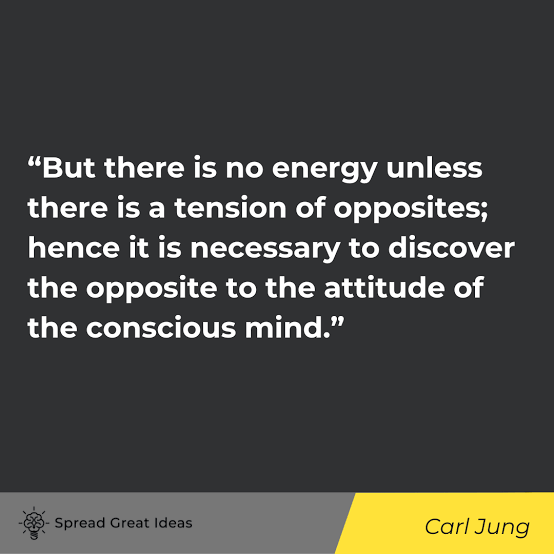
Consider the universe as an immense symphony, where every entity is like a note, contributing to an eternal, harmonious melody. From the most massive stars to the tiniest organisms, everything is in sync, vibrating in tune with the universe. This sense of harmony is a constant, even if it’s not always immediately apparent. However, the human experience often feels at odds with this cosmic harmony. We frequently perceive life through the lens of duality: good vs. evil, happiness vs. sorrow, success vs. failure. Such bifurcations arise primarily from our mental frameworks, shaped by societal norms, personal experiences, and evolutionary predispositions.
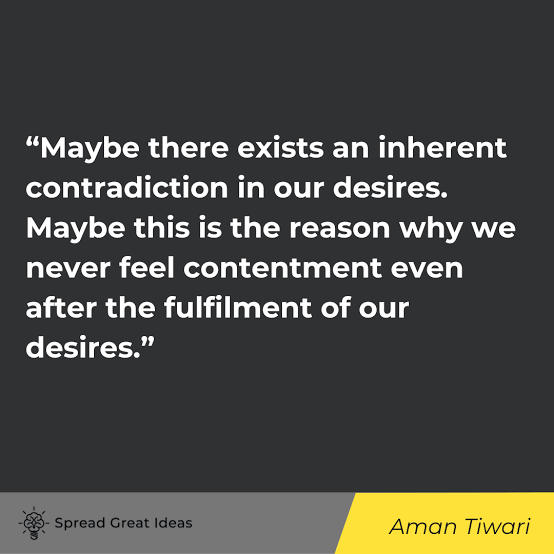
In our evolutionary journey, the human brain developed cognitive systems to categorize, discriminate, and simplify the complex stimuli of the external world, making it digestible and navigable. This cognitive system is a survival tool, enabling us to swiftly identify threats from non-threats, edible food from inedible, and so on. Over time, as societies became more sophisticated, these dualistic mental models began to govern not just our interactions with the environment but also our self-perception, aspirations, and relationships. This dualistic approach further feeds into the illusion of separateness — a feeling that we are distinct from the rest of the universe. Despite being made of stardust and sharing common atomic ancestors with everything around us, we often feel isolated or alienated. Such feelings intensify when we face adversities, leading many to question the harmony and purpose of existence.
Our understanding of freedom is entwined with our perception of duality. True freedom is not just liberation from external constraints but also from internal ones, like prejudices, fears, and limiting beliefs. To break free from the life’s cycle, one needs to reconcile with dualities, recognizing them as constructs rather than inherent truths. As we delve deeper into the framework of existence, we find that duality isn’t inherently detrimental. Instead, it provides contrast, lending depth and dimension to our experiences. Just as the contrasting strokes of a painting give it life and depth, the dualities of our lives add vibrancy and richness to our existence. Without dark, there would be no understanding of light; without sorrow, the true essence of joy would remain unknown.

Much of our attachment to duality stems from societal and cultural conditioning. From childhood, we’re taught to label and categorize experiences: winning is good, losing is bad; happiness is desirable, sadness is not. Over time, these labels solidify into beliefs, shaping our perceptions and reactions. For instance, consider the universally accepted notion of success. Societal metrics of success often revolve around material wealth, social status, and professional achievements. However, if we were to strip away these conditioned beliefs and look at life through an unfiltered lens, we might find that true success lies in inner contentment, meaningful relationships, and personal growth.
Our fixation on the ephemeral aspects of life — fleeting emotions, transient experiences, and temporal possessions — further entrenches us in the duality trap. In the rush of life, we often overlook the eternal — the unchanging, omnipresent essence that underlies all existence. This essence, often referred to in spiritual contexts as the ‘Self’ or ‘Consciousness,’ remains unaffected by the dualities that play out on the surface.
By connecting with this eternal aspect of ourselves, we begin to view dualities with a sense of detachment. They appear as passing clouds against the vast sky of our existence, impactful in the moment but not defining our eternal essence. Aligning with the duality doesn’t mean becoming passive or indifferent. It means engaging with life wholeheartedly, experiencing every emotion, every high and low, but without letting them dictate our inner state. With heightened awareness, we can navigate the complexities of life with grace, recognizing the transient nature of our experiences.
This awareness doesn’t diminish our experiences but rather enriches them. When we embrace both the joys and sorrows of life with equanimity, we live more fully, more authentically. We begin to see challenges as opportunities for growth, failures as lessons, and successes as moments of gratitude.
Our perception of disharmony is influenced by our thoughts, emotions, and our attachments to outcomes. When we find ourselves in situations we didn’t desire or anticipate, our immediate response is resistance. This resistance, this non-acceptance, creates friction – a perceived disharmony.

The journey to non-duality is a continuous process of introspection, reflection, and growth. Various spiritual traditions offer paths to transcend duality: the Yogic tradition advocates for meditation and self-inquiry, Buddhism emphasizes mindfulness and compassion, while Taoism teaches the art of flowing with life, embracing both its yin and yang.
The common thread across these traditions is the idea of returning to one’s true nature — a state of pure consciousness, free from the constraints of duality.
The Essence of Zen Buddhism: An Exploration of its History, Teachings, and Practices
Zen Buddhism is a unique and profound branch of Mahayana Buddhism that emphasizes the direct experience of reality through meditation and mindfulness. Originating in China and later spreading to Japan, Korea, and Vietnam, Zen has captured the imagination of spiritual seekers around the world with its emphasis on simplicity, directness, and the cultivation of a non-dualistic, present-moment awareness. In this blog, we will delve into the history, teachings, and practices of Zen Buddhism, providing an overview of this rich and transformative tradition.
History of Zen Buddhism:
Zen Buddhism traces its origins to the teachings of Siddhartha Gautama, the historical Buddha, who lived in India around 2,500 years ago. The Zen tradition, however, began to take shape in China during the 6th century CE with the arrival of the Indian monk Bodhidharma. Bodhidharma is considered the first patriarch of Zen, and his teachings emphasized the importance of meditation and direct, experiential realization of one’s true nature.
Over the centuries, Zen Buddhism continued to evolve in China, giving rise to various schools and lineages, such as the Linji (Rinzai) and Caodong (Soto) schools. In the 12th and 13th centuries, Zen Buddhism was introduced to Japan, where it further developed and eventually became an influential cultural and spiritual force.
Teachings of Zen Buddhism:
At its core, Zen Buddhism is centered around the direct, experiential realization of one’s true nature, which is often referred to as “Buddha-nature” or “original mind.” This realization transcends concepts, beliefs, and dualistic thinking, pointing to a non-conceptual, present-moment awareness that is free from the constraints of ordinary thought.
Some of the key teachings of Zen Buddhism include:
- The Four Noble Truths: The foundational teachings of the Buddha, which outline the nature of suffering, its causes, its cessation, and the path leading to the cessation of suffering.
- The Eightfold Path: A set of guidelines for ethical conduct, mental discipline, and wisdom, which serve as the foundation for the Buddhist path to enlightenment.
- The Middle Way: The Buddha’s teaching on avoiding the extremes of self-indulgence and self-mortification, instead, pursuing a balanced approach to spiritual practice.
- Emptiness (Sunyata): The teaching that all phenomena are devoid of inherent, independent existence, emphasizing the interdependence and interconnectedness of all things.
- Non-duality: The idea that reality is not divided into separate, independent entities but is instead a seamless, unified whole.
Zen Practices:
Zen Buddhism offers a variety of practices designed to help practitioners cultivate mindfulness, insight, and direct experience of reality. Some of the key practices include:
- Zazen (Seated Meditation): The foundational practice of Zen, which involves sitting in a cross-legged posture, focusing on the breath, and maintaining a non-conceptual, non-judgmental awareness.
- Koan Study: A practice unique to Zen, in which students work with paradoxical statements, questions, or stories to break through habitual thought patterns and gain insight into the nature of reality.
- Shikantaza (Just Sitting): A form of meditation practiced primarily in the Soto Zen tradition, which emphasizes the direct experience of reality without any specific focus or technique.
- Mindfulness: The practice of paying attention to one’s thoughts, feelings, and sensations in a non-judgmental manner, cultivating self-awareness and reducing suffering.
- Chanting: Reciting sacred texts, mantras, or sutras as a form of meditation and devotion, helping to focus the mind and connect with deeper spiritual truths.
- Dharma Talks: Discourses given by Zen teachers to convey teachings, offer guidance, and provide inspiration for students. These talks often explore various aspects of Zen practice and can serve as a source of insight and motivation.
- Sesshin: Intensive meditation retreats, typically lasting several days to a week, during which participants engage in extended periods of zazen, koan practice, and other Zen practices. Sesshins provide an opportunity for students to deepen their practice and gain insights into the nature of reality.
- Work Practice (Samu): Engaging in daily tasks and chores with mindfulness and full attention, turning everyday activities into opportunities for spiritual growth and realization.
- Tea Ceremony: A traditional Japanese ritual involving the preparation and serving of tea, emphasizing mindfulness, harmony, and the appreciation of beauty in everyday life.
- Calligraphy and Sumi-e (Ink Painting): Artistic practices that serve as a form of meditation and self-expression, encouraging mindfulness, concentration, and the cultivation of a non-dualistic awareness.
Zen Buddhism is a rich and profound spiritual tradition that offers a path to the direct experience of reality and the cultivation of a non-conceptual, present-moment awareness. With its emphasis on simplicity, directness, and meditation, Zen provides a unique and transformative approach to spiritual practice that has resonated with seekers around the world. By engaging with the teachings and practices of Zen Buddhism, one can develop greater self-awareness, reduce suffering, and ultimately awaken to the true nature of reality.
 Abhishek Fanse