
Patanjali Yoga Sutra: Abhyāsa-vairāgyābhyāṁ tan-nirodhaḥ
Sutra-12: अभ्यासवैराग्याभ्यां तन्निरोधः।
(Translation: Abhyāsa-vairāgyābhyāṁ tan-nirodhaḥ)
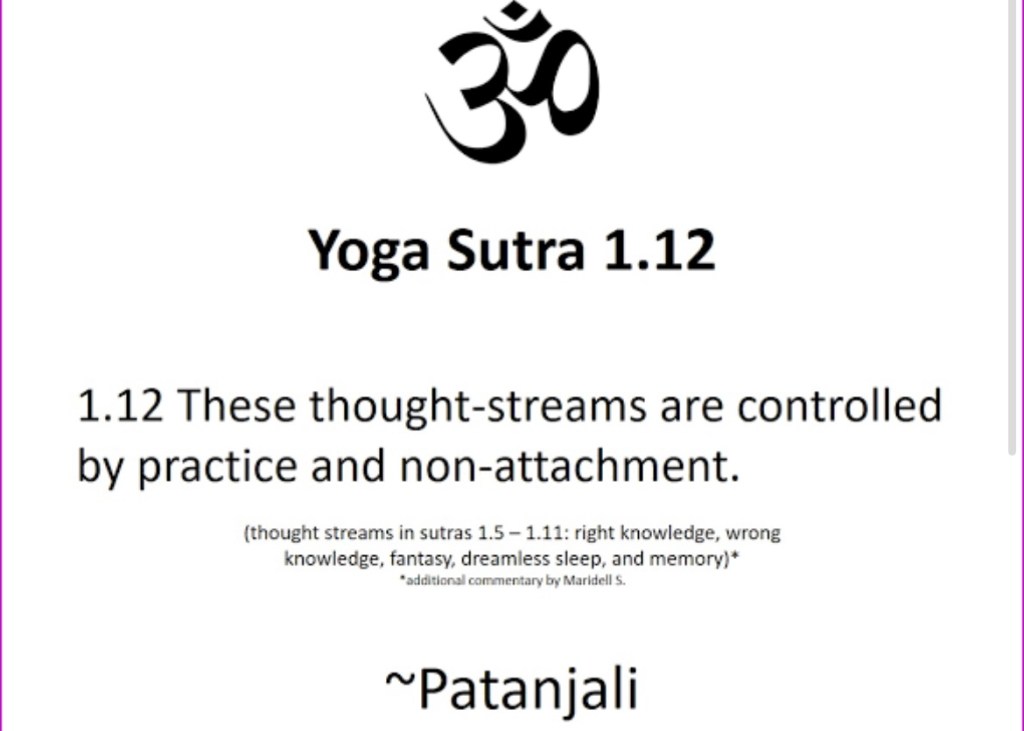
This translates to: “The cessation of all mental modifications can be achieved by practice and non-attachment.”
1. Abhyasa (Practice)
The first part of Sutra-12 mentions “Abhyasa” which directly translates to practice. The context in which it is used here refers to the practice of controlling and focusing the mind. It signifies persistent effort in a disciplined and dedicated manner. Just as physical skills, such as playing a musical instrument, require regular and consistent practice to master, so too does the calming and focusing of the mind.
By this, Patanjali suggests that to master our thoughts and control our mind, we must commit to persistent practice, to gently direct our attention back whenever it wanders. Over time, this practice can lead to deeper concentration, greater mindfulness, and, ultimately, a state of meditation.
2. Vairagya (Non-Attachment)
The second part of the sutra talks about “Vairagya” or non-attachment. Vairagya doesn’t denote a physical abandonment of worldly possessions or relationships, but it refers to an inner state of freedom from desires and attachments. It is the ability to be in the world, fully engaged, yet not bound by it.
It requires an understanding of the transient nature of all things, a recognition that clinging to the impermanent will invariably lead to suffering. By practicing Vairagya, we learn to enjoy the world around us without becoming entangled in it, to be at peace regardless of circumstances, and to maintain equanimity in all situations.
The Interplay of Abhyasa and Vairagya
Patanjali proposes that the mind’s modification and the attainment of inner tranquillity require both Abhyasa and Vairagya to work in conjunction. While Abhyasa provides the mind with the discipline it requires to maintain focus and concentration, Vairagya allows the mind to let go of distracting desires and attachments. When these two are practiced in tandem, they help one to quiet the mind and lead to a state of stillness and equanimity.
Patanjali’s Yoga Sutra-12 can be a potent guide to living a fulfilled life. In our daily existence, it encourages us to embrace a disciplined practice of mental focusing – be it through meditation, prayer, or mindfulness. Simultaneously, it advocates for a detached interaction with worldly matters, teaching us not to be swayed by success or failure, and to find peace amidst chaos.
It is a challenging yet liberating practice that can lead to increased mental clarity, reduced stress, and ultimately, a deeper understanding of oneself and the world.
Applying the Sutra in Your Yoga Practice
The teaching of this sutra can be reflected upon during asana (physical postures), pranayama (breathing exercises), and dhyana (meditation) practices. Here are some ways to do this:
- Asana Practice: While practicing yoga poses, make it a regular habit (Abhyasa) to observe your body’s alignment, breath, sensations, and thoughts. This will help in training your mind to focus and be present. Simultaneously, cultivate Vairagya by not becoming attached to any specific outcome, such as perfecting a pose. Instead, appreciate the journey of progressing in each posture.
- Pranayama Practice: Regular practice of pranayama techniques can enhance concentration and control of the mind. While practicing, cultivate Vairagya by accepting where you are in your practice, not striving for more breaths or deeper inhalations and exhalations. Accept the flow of your breath as it is.
- Meditation Practice: Meditation is the most direct form of practice (Abhyasa) for achieving the mind’s control. When you meditate, practice Vairagya by not attaching to or judging any thoughts or feelings that arise. Observe them and let them pass like clouds in the sky.


Great quotes thanks for sharing.
LikeLiked by 1 person